Select date

What Cape Independence Could Mean for Us, by Gregory Hood


A few years ago, after violent riots in South Africa killed more than 70 people, Revolver christened the country the first to be built on Critical Race Theory. It could also be the first to be broken up by CRT. Even hardly far-right Der Spiegel argued in 2023 that South Africa “now finds itself, following decades of economic malpractice and political incompetence, on the brink of the abyss.” Riots, mountains of trash, crime, breakdown of infrastructure, and even the inability to keep the lights on now blight what was once a civilized country. History has redeemed the defenders of white South Africa, but the falling white population and the failure to keep control of key institutions such as the army probably mean the country can’t be wholly reclaimed.
Orania, a small Afrikaner settlement, is a beacon of hope and a model for whites everywhere, but it is just one town, reliant on constitutional protections that the African National Congress could take away at any time. Another possible model is the movement for Cape Independence.
The Western Cape province is unusual for South Africa. It has no racial majority, with a plurality of Coloured people, slightly fewer blacks, and a sizable white minority. The opposition Democratic Alliance (DA) has governed it since 2009, making it a political outlier as well. The former Cape Colony also has a distinct history; it had all-race voting at a time when the other provinces were under exclusive white control. Paradoxically, that may be why the Cape is now to the right of the rest of South Africa. While the black majority elsewhere sees the current regime as an explicit repudiation of white South Africa, activists in the Cape can plausibly claim that in an area with no racial majority, non-racial politics is the only path forward.
The Cape Independence Party, a single-issue party, has two members on the 231-seat Cape Town city council. Western Cape premier Alan Winde blasts the party as ineffective, but its nickname, CAPEXIT, reminds us that what was thought a “fringe” party managed to persuade Britain to leave the EU.
Polls also suggest Cape Independence is popular, especially since the COVID-19 outbreak in 2020. The latest poll shows over 68 percent of voters support a referendum on independence, and almost 60 percent would vote for it outright. Most whites and Coloureds think independence would improve their lives, with Coloureds even more optimistic than whites. Fewer than 40 percent of blacks agree.
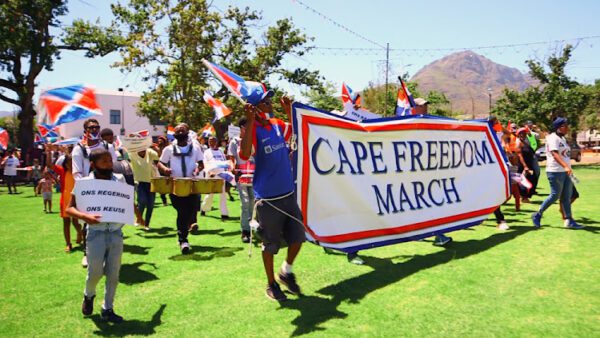
Although more than 60 percent of whites want independence for the province, even more Coloureds want independence. Almost 60 percent of blacks want to stay in the republic. A plurality of both Coloureds and whites think South Africa will get worse in the next 25 years; a plurality only of blacks think things will get better.
The Economic Freedom Fighters of Julius Malema, not surprisingly, is the party with the greatest hostility to independence, with more than 77 percent of members opposed. Despite the DA leadership’s scorn for independence, most party members support it.
Here is Mr. Malema:
Julius Malema puts Cape Independence movement to shame.
EFF 2024 ✊