Select date

The Middle East: Home of the Earliest Civilizations in World History


All Global Research articles can be read in 51 languages by activating the Translate Website button below the author’s name (only available in desktop version).
To receive Global Research’s Daily Newsletter (selected articles), click here.
Click the share button above to email/forward this article to your friends and colleagues. Follow us on Instagram and Twitter and subscribe to our Telegram Channel. Feel free to repost and share widely Global Research articles.
***
The Middle East was the home of the earliest civilizations in the world’s history. The first urbanizations and literacy started there.
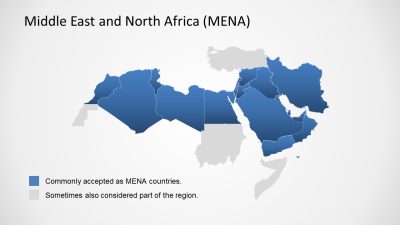
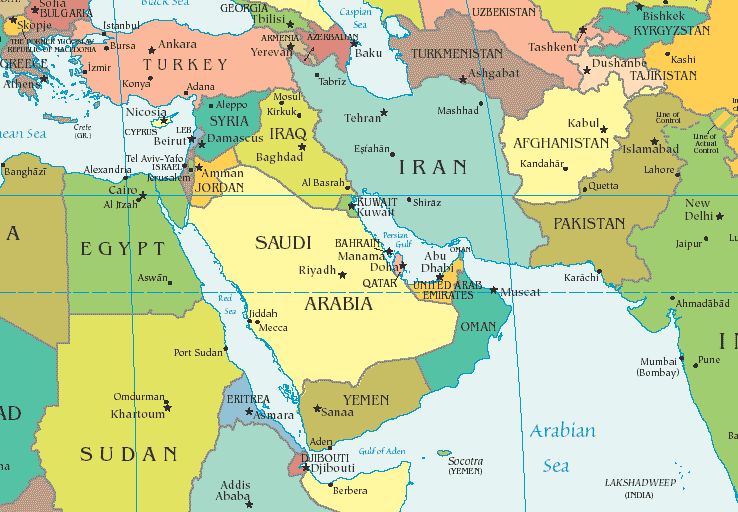
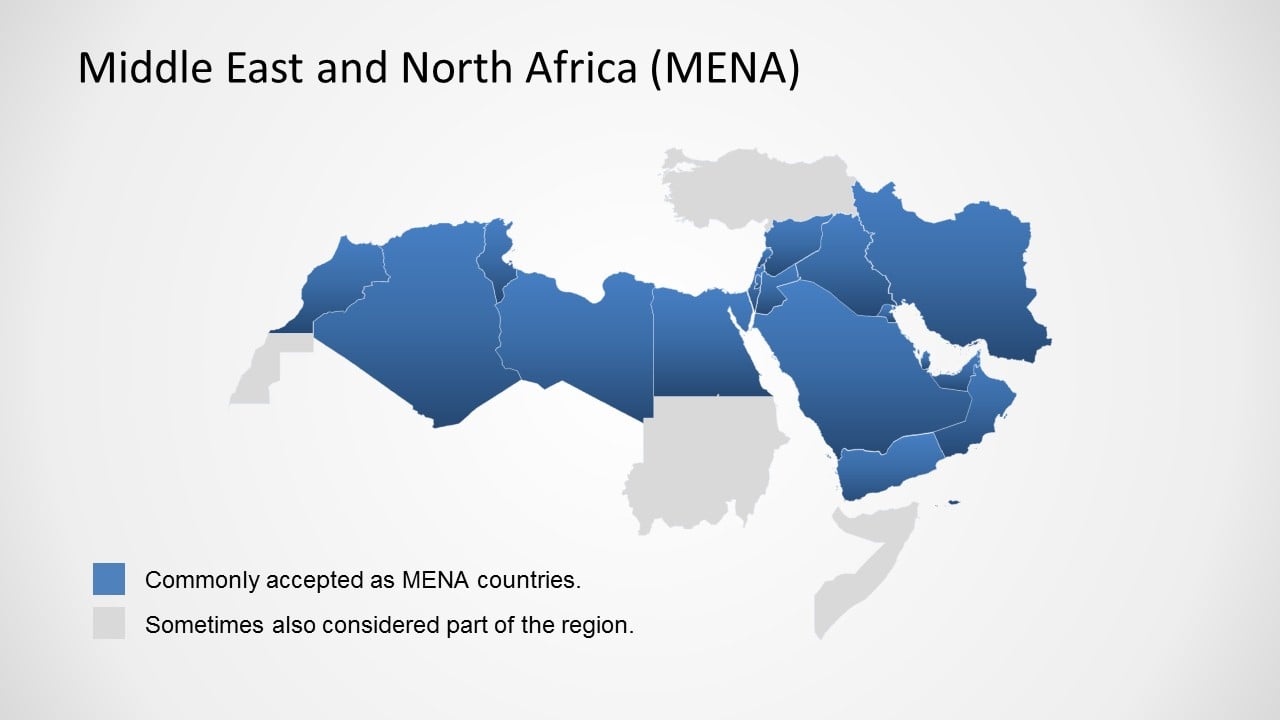
The region of the Middle East usually covers the territories from the eastern littoral of the Mediterranean Sea up to India in the East. In a broader sense, geographically, the region encompasses territories of the East Mediterranean and Central Asia but many Americans followed by other Western academicians, politicians, and journalists regard as a single region the Middle East and North Africa (MENA).
The majority of the inhabitants of MENA have many things in common like the Arab language and culture, confession of Islam, etc., but on the other, different ethnic minorities exist in each of those regional countries while the Islamic religion is divided into two factions: the Sunni (majority) and the Shia (minority).
All states of the region of the Middle East and North Africa (MENA) can be selected into four ethnic-geographic sub-regions (groups):
1) The North African states;
2) The Persian Gulf States;
3) The Central Arab states; and
4) Iran and Israel.
The combined number of inhabitants of all of those states is more than 250 million (for the matter of comparison, in the EU 28, i.e. with the UK, there were some 500 million people).
The region itself is experiencing culture and civilization back some 6000 years but the majority of the present-day nations are relatively new.
In other words, except for Iran and Egypt, all other regional states appeared in their present form only in the last century, largely after WWI, but some of them even after WWII (Israel).
The number of states in MENA can be fixed by taking into account at least three criteria:
1) The historical period;
2) Political conditions; and
3) Geopolitical perspective.
Today usually is applied that there are 24 states (with Palestine) in the region of MENA (but with Turkey and Sudan 26).
However, the state of Palestine is still not generally and formally recognized as independent, as it was expected to appear as such taking into consideration the results of the Israeli-PLO negotiations (Roadmap for Peace).
It is worth noticing that the first modern Arab country became Egypt of Muhammad Ali in the first half of the 19th century when due to the French (Napoleonic) occupation Egypt became familiar with some features of the “European progress”.
Muhammad Ali started certain modernization reforms of the society like the creation of a modern and more effective governance organization, rational economic system, and a modern army restructured and reorganized according to West European principles of warfare at that time. It was established in Cairo as the first Western-type institute, the Egyptian Institute, in the Arab world with the crucial function of spreading out Western European (mainly the French) philosophers’ writings (like Russo and Volter).
The majority of the regional populations are Arabs and Muslims. Pan-Arabism is one of the focal political issues in MENA in the 20th and 21st centuries.
In recent times, leadership within the Pan-Arab movement, however, initially passed to the hands of the Christian Arabs in Lebanon and Syria. Nevertheless, all political attempts to form some kind of United Arab Republic failed but there are successful stories of macro-regional economic integration, for instance, the economic integration of six states of the Persian Gulf as they created a Gulf Cooperation Council.
Nonetheless, instead of the United Arab Republic existing an Arab League (est. 1945 with 22 member states today) which promotes better communication systems for the region using the Arabic language and the ARABSAT (the Arab Regional Satellite System).
Oil discovery and production are probably the focal special features of MENA (but particularly of the Middle East) in contemporary history.
The economic and social development of all oil-rich Gulf countries depends almost totally on the policy of oil export and, therefore, for better mutual economic cooperation, Middle Eastern oil-producing nations established their Organization of Arab Petroleum Exporting Countries (the OAPEC) that is the regional variant of global OPEC (the Organization of Petroleum Exporting Countries). In fact, some 65−70% of global petroleum reserves are located in the territory of the Middle East. Oil extraction and refining play a significant role in both regional and world economies, and, therefore, have a significant impact on the welfare and politics of the majority of Western (post-industrial) countries (especially of G7).
A lack of a full type of Western “liberal democracy” is another crucial feature of MENA as today, regional forms of governance are ranging from pure authoritarianism (Saudi Arabia) to some forms of democratic experiments based on the Western pattern (Lebanon or Israel) which are followed by Muslim regimes governed by religious leaders (Iran after 1979). Out of 22 Arab League’s states today, 8 of them are republics (including the Islamic Republic of Mauritania and the Baath Socialist Republic of Syria), 7 are monarchies, 4 have a one-party rule, the UAE is a political federation of sheikdoms, Somalia that is, in fact, lacking functioning governance, and finally, Palestine with not clear governmental type and even statehood. In general, regarding politics, the region is still in evolutionary transition as a result of modernization, Westernization, and globalization including references to economic and educational development with current tendencies of the radicalization of Islam as anti-colonial ideology against the post-industrial Western imperialism and the Zionist Israeli (backed by the USA) policy of apartheid (segregation and discrimination) and ethnic cleansing.
An ancient conflict between two Islamic factions – the Sunni and the Shia Muslims – is another feature of the division of the region of the Middle East and North Africa. The first division within Islam was born soon after the death of his Prophet Muhammad in 632 A.D. when the Islamic world of Arabs became divided between those who had the pretensions to inherit the religious power after the death of the Prophet. They created two principal factions with different claims. The Sunni faction claimed that the religious power of the Caliph after 632 A.D. passed to Abu Bakr – Muhammad’s father-in-law, while the Shia faction (“Followers of Ali”) claimed the religious power to the cousin and son-in-law of the Prophet – Ali ibn Abi Talib. The assassination of the third Caliph, Uthman ibn Affan in 656, and the election of Ali ibn Abi Talib fueled the first armed conflict (civil war) among the Muslims which ended with the Battle of the Camel on November 7th, 656 in present-day Iraq in Basra between Aisha’s supporters (widow of the Prophet) and Ali ibn Abi Talib’s supporters (the fourth Caliph and son-in-law of the Prophet) who won the battle against Aisha. However, it was only after the murder of Ali, and a few years later, of his son Hussein ibn Ali in the Battle of Karbala on October 10th, 680 in present-day Iraq, that Islam went to a dogmatic and political split. The Shia Muslims reject the legitimacy of the first three Caliphs whom, however, the Sunni Muslims follow, having at the same time some doctrinal and political differences with the Sunnis. The biggest percentage of Shia Muslims today in the Middle East is in Iran (90−95%), Bahrain (65−75%), Iraq (60−70%), Lebanon (45−55%), and Yemen (30−40%).
The last important feature of the Middle East is the sectarian violence and its impact in some regional states. Several cases are going to be mentioned below:
- The Saudi government is composed of Sunnis and the monarchy itself in power belongs exclusively to the Sunni faction which is in constant competition with the Shia Iran. The government of Saudi Arabia fears that the Shia theocratic Islamic Republic of Iran could create serious unrest within both the Saudi and the Gulf’s Shia communities. However, both Iran and Saudi Arabia, in fact, are pretending to become the leading power in the region.
- The majority of Bahrain’s population is the Shia believers but there is a ruling Sunni monarchy. Inspired by the Arab Spring in 2011, the Shia believers started to demonstrate their political rights but without support from the US administration. The Bahraini Sunni governmental authorities and its allies, including Saudi Arabia, have violently cracked down on protests, killing hundreds of civilians.
- In Iraq, for a long time, the country’s Shia majority had been oppressed by the Sunni regime in Baghdad. We have to keep in mind that in Iraq exist the most sacred religious sites for the Shia Muslims. After the fall of Saddam Hussein in 2003, they came to power and the Shia population began to target the Sunni community. The Sunni believers have been persecuted and tortured by the Shia death squads and in response to the increasing violence against them, Iraqi Sunnis have committed several suicide attacks and bombings. As a consequence, the Shia-Sunni religious sectarianism in Iraq exacerbated the nationalistic and fundamentalistic attitudes of the Shia Muslims in power and has contributed to the strengthening of the Sunni support to ISIS (ISIL, DAESH).
- For Iran, the most important thing is to protect its regional interests among them the rights of the Shia population abroad. For instance, after the Iranian Islamic revolution of 1979 that brought the Shia government to power in Tehran, Iran began to fund and encourage the Shia revolts in the eastern region of Saudi Arabia which is rich in oil reserves. The Iranian government is also supporting the government of Alawite (a branch of Shia Islam) Assad in Syria, which bridges with Lebanon.
- In Yemen, the Houthi rebels, located predominantly in the northern part of the country, are Shia Muslims and represent about 1/3 of the total population. The Houthis were able to force the resignation of President Hadi, recognized by the international community. Regardless of the fact that during the revolt in 2014−2015, Shia rebels took political control, the majority of Sunni tribes in South Yemen do not recognize the Shia authority. In 2015 it was formed a coalition of Arab states under the leadership of Saudi Arabia to support former President Hadi against the Houthi rebels, who are pro-Iranian. Large parts of the territory of Yemen are also under the control of the Sunni militant group al-Qaeda which is opposed to both Shia Houthi and the ex-government of Hadi. The Sunni al-Qaeda in Yemen has been several years targeted by the controversial US drone campaign inside of the country.
- Finally, behind the Syrian civil war which started in 2011 is, in essence, sectarian violence. Syrian President al-Assad belongs to the minority of Alawite Muslims who are a branch of the Shia sect. The Alawites take their name from Ali ibn Abi Talib who was a cousin, son-in-law, and the first male follower of the Prophet Muhammad (Alawite = “Follower of Ali”). The protests against Assad’s rule started in March 2011 and have been violently repressed. Nevertheless, the Syrian civil war has in part contributed to exacerbating the feelings of hatred and resentment between the Shia and the Sunni communities in the country. During the conflict, Shia Iran and the Shia Hezbollah from South Lebanon, in the moment of greatest difficulty for Assad’s regime, have flocked to the side of President Assad to prevent the deposition. However, similarly, the Sunni fighters from Jabhat al-Nusra Front and the Sunni ISIS are fighting in Syria against Assad. We have to keep in mind that Jabhat al-Nusra is the Syrian branch of al-Qaeda and that the Sunni monarchies of the Persian Gulf and Sunni Turkey are financially and militarily supporting the Sunni opposition fighters in Syria.
The region of the Middle East and North Africa is an area where geography and history are important factors in the contemporary lives of the people.
There are many native peoples of the region for whom MENA is considered as the Arab homeland. It refers to those lands in which the Arabic language (with all dialects) is spoken. It is, basically, a unique region in the world regarding geography, geopolitics, and geostrategy as here three continents are meeting each other (Europe, Africa, and Asia) and as the region which was a focal point of the development of the first civilizations.
Geologically, its topography was transformed after the Ice Age from a climate that supported the grasslands and waterways into vast steppes and deserts. Around 2000 B.C., the pastoral people of Aryans, or called as well as Indo-Iranians migrated into India and West as well as Central Asia, including today’s Iran (Persia) and surrounding countries. Strategically, MENA was considered all the time to be an extremely valuable geostrategic territory as being a crossroad for trade, faith, conflicts, or cultural development.
In principle, the crucial mark of the region is the predominant Arab culture with some contrasts in the cultural habits between, for instance, Saudi Arabia and Egypt. Besides, the cultural features of several other ethnic and confessional groups of MENA give a more comprehensive picture of the region’s peoples and challenges.
*
Note to readers: Please click the share button above. Follow us on Instagram and Twitter and subscribe to our Telegram Channel. Feel free to repost and share widely Global Research articles.
Dr. Vladislav B. Sotirović is a former university professor in Vilnius, Lithuania. He is a Research Fellow at the Center for Geostrategic Studies. He is a regular contributor to Global Research.