Select date

The Struggle for Ireland, by Gregory Hood


Race realists and white advocates can disagree on Ireland. Some say the Ulster/Republic division is best. Some want a united Ireland. Some may even say that the break from Britain was unnecessary and tragic.
What is indisputable is that those who fought for modern Ireland weren’t fighting for a nation of ideas. They were fighting for a nation. The Irish independence movement was preceded by a revival of Gaelic language, culture, and history. Many of the nationalist heroes of the Irish independence movement were champions of political and cultural independence. This even included sports; the Gaelic Athletic Association said in 1884 that British sports were not “racy [sic] of the soil, but rather alien to it.”
Patrick Pearse, who was executed after the Easter Rising of 1916, was also one of Ireland’s literary giants. For him, Gaelic culture was essential to the struggle. At his court martial, he said that his purpose was to fight for Irish freedom, and though Germany meant no more to him than England did, he would have welcomed German aid.
My object was to win Irish freedom. We struck the first blow ourselves, but I should have been glad of an ally’s aid. I assume that I am speaking to Englishmen who value their freedom, and who profess to be fighting for the freedom of Belgium and Serbia. Believe that we too love freedom and desire it. To us it is more than anything else in the world. If you strike us down now, we shall rise again, and renew the fight. You cannot conquer Ireland, you cannot extinguish the Irish passion for freedom. If our deed has not been sufficient to win freedom, then our children will win it by a better deed.
In other words, even working on the side of the Germans during a war to “make the world safe for democracy” was justified in the name of Irish freedom.
At the most recent American Renaissance conference, Keith Woods explained the Irish nationalist struggle in the context of protests against immigration. What is happening now makes it worthwhile to rewatch his speech. He explained that the original Irish revolutionaries viewed the struggle as one for “a people, a culture, and a land.” He quoted Arthur Griffith, the founder of Sinn Féin, who said that the use by the colonial powers of non-white troops in The Great War was a “crime against Europe.” Racial awareness and a thirst for national freedom were complementary and obvious.
Mr. Woods also pointed out that the move away from tradition and national consciousness by bourgeois strivers was common in the West. It is part of a drive to attract foreign investment by pursuing globalization. Nationalist paramilitaries were fighting for Irish unification in living memory, so this makes the speed of cultural and racial suicide especially dramatic. Mr. Woods said that the Irish national struggle is now portrayed as a fight for civil rights. It was no longer a conflict between Ulster Scots and the Irish — two groups that didn’t want to share the same state. All along, it was really about inequality and discrimination.
For anyone who believes that, “nations” are pointless, even malevolent. If a nation belongs to a particular people with a shared history, that means it belongs to some people and not others. Abolishing identities paves the way for global capital to turn the world into a huge market of deracinated consumers. Every once-white nation is on this path, and it ends with national extinction. It follows that you must welcome mass immigration; better national death than discrimination.
“Ireland is no longer simply orange and green.
“Ireland is a rainbow of identities and cultures.
“A place where diversity and difference can be embraced.
“Ireland is changing” – @MaryLouMcDonald #SFAF18 pic.twitter.com/mUFcZ5ARYK
— Sinn Féin (@sinnfeinireland) June 16, 2018
Most people don’t like such stark terms. The American nation was undermined gradually, with familiar symbols, slogans, and institutions twisted until they become the opposite of what they once were. If Americans had been able to see the future, many things we now take for granted — mass immigration, Southern desegregation, anti-white racial preferences — would never have happened. Most people believed their leaders’ promises that nothing fundamental would change.
Still, Ireland is different. Nationalists took up arms within living memory, and the Republic of Ireland was an ethnostate. Its institutions, political parties, and legitimacy all derived from a bloody war for independence. To deny this is to deny Ireland.
Even in the United States, the Left still can’t fully demonize the Founding Fathers. Our Capital City is still named for a slaveholder. In Ireland, the Easter Rising was little more than a century ago, so it’s too soon for Ireland’s rulers to say they don’t care about it. This puts them in a strange position. They can’t repudiate Irish identity but they fear traditional patriotism, so we get rhetoric about Ireland being about immigration and non-whites.
Now, we are to assume that the struggle for independence didn’t end with the republic and won’t end with unification. Instead, the true challenge is to build a Celtic-tinged “nation of ideas” devoted to fighting discrimination, even if that means trampling tradition. Whether borne from idealism, status-seeking, capitalist profiteering, or Marxism, the results are the same. Universalism leads first to xenophilia and then to hatred of one’s own people.
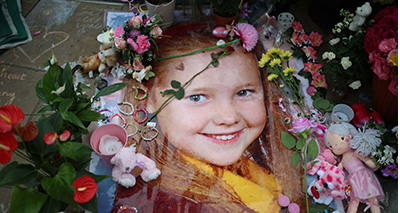
We’ve seen all this in the reaction to a crime. A man with a knife grievously injured three young children and woman. Sinn Féin’s leader said it was “random.” Politico, The Guardian, USA Today and others were curiously vague about the perp, with the latter saying that there were simply “rumors” he was a “foreign national.” He was Algerian and had a deportation order, but the government didn’t boot him, which is typical. He eventually became a citizen. The Washington Post idiotically thinks this means he wasn’t an immigrant.
Online rumors claimed the perpetrator of a stabbing attack was an immigrant. The BBC found that the man was an Irish citizen who had lived in the country for 20 years. Police blamed a “lunatic faction driven by a far-right ideology” for the riot in Dublin. https://t.co/cMrCCOKNGQ
— The Washington Post (@washingtonpost) November 25, 2023
Irish people rioted after the attack, and Irish media and politicians were furious.
Irish newspaper front pages the day after the horrific stabbing spree by an Algerian migrant.
The media are the enemy of the people. pic.twitter.com/fRGx8JwksH
— Keith Woods (@KeithWoodsYT) November 26, 2023
Immigrants were among the looters, but this got almost no coverage.