Select date

East vs. West?


by Max Frantel

Jul 11, 2024

Max Frantel engages in an interview with René Guénon, who scathingly criticises Western materialism and predicts the West’s downfall due to its neglect of spiritual values in contrast to the East’s contemplative traditions.
(Originally published in Comœdia, 14 February 1927. This interview was translated and annotated by Yaro Deli.)
Will this be an interview or a tale of the time that Queen Bertha was spinning? I met the orientalist Monsieur René Guénon in an old house on the Île Saint-Louis, where Bishop Affre was brought back to whilst he was dying. M. René Guénon, the author of Orient et Occident (East and West) and Le Roi du Monde (The King of the World), was leafing through Hindu books with a friend, and, near them, by the fireplace, a mother and a venerable grandmother were sewing or embroidering.
M. René Guénon, though young, does not ply to the American fashion: he has a black moustache which, at the top of a tall, lean body, falls vaguely from an elongated, dreamy, pale face. He has a very soft voice, and it is with a veiled timbre, with hints of pianissimo, that he launches an anathema against Europe.
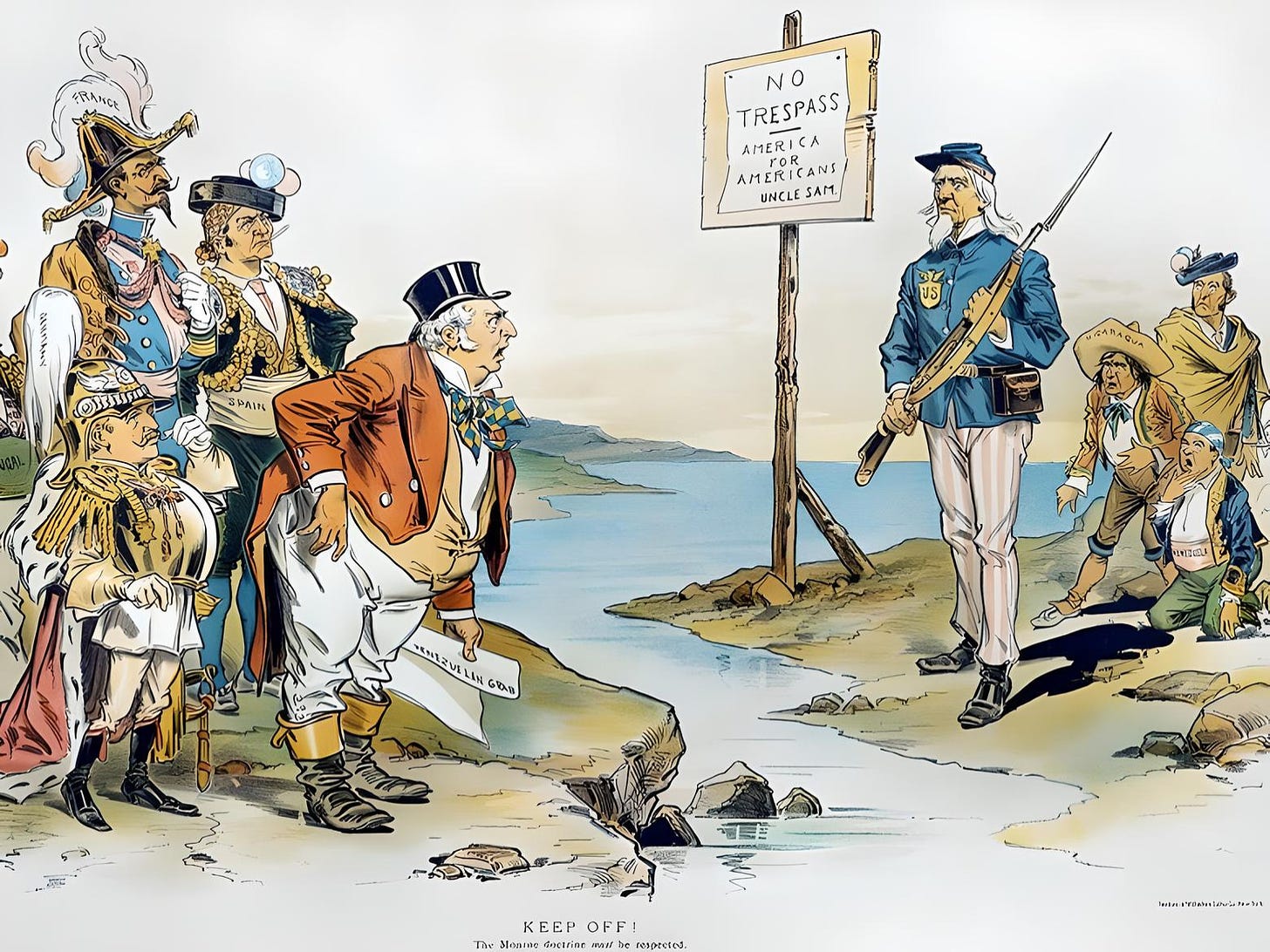
Guénon: ‘One talks about a threat from the East? I think we should rather talk about a threat from the West. It seems to me that it is the West that has invaded the East! It is the West that seeks to impose its spirit everywhere. Changing things? It is part of the mentality of the West. And the West is heading straight for its doom and risks dragging the rest of the world with it! It is he who is the evil spirit.’
Frantel: ‘And the Oriental spirit?’
Guénon: ‘It is the one who is in the right. For it admits the predominance of intelligence. Spirituality is essential for it. It prioritises the contemplative life. The Orientals do not despise action, but they consider it inferior to thought and subordinate it. These relations of knowledge and action were the subject of one of my latest articles, in which I studied the possibility of an understanding between East and West. One thing is certain, and that is that the West of the Middle Ages was much more like the East, which has changed little over the centuries. But the West has been transformed, and the West is now the antithesis of the East. The Orient represents the spirit of tradition; the West is the very negation of this spirit. No conciliation is possible. You only have to hear the Orientals speak about this.’
Frantel: ‘Have you been to the East?’
Guénon: ‘No. But I have conversed for many years with Orientals, especially Hindus. However, the Orientals I’ve seen aren’t Orientals one would mock. Those who have a famous name in Europe have, for the most part, been trained in the school of the West.’
Fantel: ‘But what about Tagore?’
Guénon: ‘He is a man whose intelligence I certainly esteem greatly. But he is very far from having the authority in his country that he has here. We know him better here at home than people know him where he comes from. And besides, he is not a racially pure Hindu. Do you believe that he can really speak for the East? Remember his visit to China. His message from the East was very badly received there. ‘Tell us’, he seemed to have been told, ‘aren’t the Chinese as Oriental as you are?’ I know friends of Tagore who deplore his easy conciliations, and the concessions he made at one moment to the English. Did he send back their decorations? Yes! But he did accept them in the first place! There are so many Hindus who have never abandoned their haughty intransigence towards foreigners!
’For, it must be said, the English behaved there in an odious manner. It is not so much their administration that has irritated the Hindus as that spirit of arrogance which the English possess more than any other nation in Europe. Their character has an unbearable insolence. Besides, what European country doesn’t have vanity? We imagine that it is only our civilisation that counts! You must admit that this is a strange spirit! You study the ideas of other peoples, and you think you understand them better than they do themselves? What pretentiousness! So, one should talk to Orientals who are not cheap Orientals!’
Frantel: ‘What do they think of us?’
Guénon: ‘Nothing good! They despise us for attributing superiority to the material force and for regarding intelligence as pure nothingness. If there are any among them who think of using this force themselves, it is only to get rid of us and this with our own weapons! There are others who do not even think of it and for whom this very force cannot count.’
Frantel: ‘But what about Japan?’
Guénon: ‘The case of Japan is an anomaly. Besides, did it ever have a culture of its own? The Japanese have, above all, a spirit of imitation! They once went to the school of China; they are now at that of the West. This is no doubt suited to their restless, active character. Japan, I repeat, is an exception. It doesn’t seem to have a truly Oriental mentality. It is a hybrid race. They are the only ones who are not peaceful.’
Frantel: ‘But the war in China?’
Guénon: ‘Don’t judge China by the Chinese who are fighting. These are just a few factions. There are perhaps two hundred and fifty thousand of them! And there are four hundred and fifty million Chinese! These soldiers belong to whoever pays them; this is nothing but a struggle for foreign influence! Believe me, if there were ever to be a yellow peril, it wouldn’t come from China.’
Frantel: ‘And from India?’
Guénon: ‘No way! The Moslem element spread out throughout Asia is the only one that could, if possible, go on a crusade against the West. No! The danger is not there, it is within ourselves! Henri Massis pretends that the Orient is being manipulated by Germany and Russia. I don’t think they can unite against us at all! By the way, no matter what anyone says, Russia and Germany are Western powers! There is nothing Oriental about Keyserling’s ideas! And then, who made Keyserling’s reputation, if not Massis and a few others? Even in Germany, Keyserling doesn’t have a lot of influence. His ideas, no doubt, may be a danger. They are, at bottom, only the product of that decomposition of the intellect which is the characteristic sign of modern times. No! I don’t understand Henri Massis.
‘Rather, we who wish to safeguard the intellect should seek support, a moral alliance with the true Orientals. This Hindu elite, which, disdainful of modern science, is still occupied only with pure metaphysics, must be an example to us. Let us become contemplative again, and these men of the East will feel close to us. There will be between them and us, in spite of the diversity of philosophies and religions, a tacit understanding of souls. We can only gain from this. It’s up to us to correct ourselves! If the West has to defend itself, it is above all against itself!’
Thus spoke M. René Guénon, and as he did, I often saw two familiar and beloved faces nodding in agreement. Occasionally, three whispered words would express their assent: ‘Yes! Of course!’ It was infinitely charming.
(Link to the original: Index de l’œuvre de René Guénon)