Select date

American Pravda: JFK, Richard Nixon, the CIA, and Watergate, by Ron Unz


 Two weeks ago I published a long article on the JFK Assassination, pointing to the overwhelming evidence that Kennedy’s own successor Vice President Lyndon B. Johnson had very likely been a central figure in the plot.
I closed the essay by quoting several early paragraphs from a different article that I had published more than six years earlier:
…I never had any interest in 20th century American history. For one thing, it seemed so apparent to me that all the basic political facts were already well known and conveniently provided in the pages of my introductory history textbooks, thereby leaving little room for any original research, except in the most obscure corners of the field.
Also, the politics of ancient times was often colorful and exciting, with Hellenistic and Roman rulers so frequently deposed by palace coups, or falling victim to assassinations, poisonings, or other untimely deaths of a highly suspicious nature. By contrast, American political history was remarkably bland and boring, lacking any such extra constitutional events to give it spice. The most dramatic political upheaval of my own lifetime had been the forced resignation of President Richard Nixon under threat of impeachment, and the causes of his departure from office—some petty abuses of power and a subsequent cover-up—were so clearly inconsequential that they fully affirmed the strength of our American democracy and the scrupulous care with which our watchdog media policed the misdeeds of even the most powerful.
In hindsight perhaps I should have asked myself whether the coups and poisonings of Roman Imperial times were accurately reported in their own day, or if most of the toga-wearing citizens of that era might have remained blissfully unaware of the nefarious events secretly determining the governance of their own society.
Over the last dozen years my understanding of the past century of American history has been upended by several huge revelations, explosive discoveries that had long been concealed from me by the propaganda-bubble of mainstream media coverage in which I’d lived my entire life.
Of these, one of the most important was the true story of the Kennedy assassinations of the 1960s. I had always gullibly accepted the official narrative that a pair of deranged lone gunmen had killed our president and his younger brother. Meanwhile I had totally ignored the vague claims of conspiracy that were very occasionally mentioned with ridicule in the books and articles upon which I relied. Therefore, I was stunned to eventually discover that those vitally important historical events had become the subject of a vast subterranean world of solid scholarship, whose analysis and reconstruction seemed far more substantial and persuasive than what my trusted media sources had ever provided.
After carefully digesting and analyzing all this shocking new information, I eventually published my conclusions in a series of articles over the last six years, notably including these:
- American Pravda: The JFK Assassination, Part I – What Happened?
Ron Unz • The Unz Review • June 18, 2018 • 4,800 Words - American Pravda: The JFK Assassination, Part II – Who Did It?
Ron Unz • The Unz Review • June 25, 2018 • 8,000 Words - American Pravda: The JFK Assassination and the Covid Cover-Up
Ron Unz • The Unz Review • December 19, 2022 • 6,900 Words - RFK Jr. vs. I.F. Stone on the Kennedy Assassinations
Ron Unz • The Unz Review • July 31, 2023 • 5,100 Words - American Pravda: JFK, LBJ, and Our Great National Shame
Ron Unz • The Unz Review • June 24, 2024 • 10,200 Words
Discovering the truth of the JFK Assassination had completely overturned my accepted framework of modern history. But over the years I’ve encountered numerous lesser surprises as well, not nearly as world-shattering but still quite significant in their own right.
One of these, closely intertwined with Kennedy’s own story, has been my considerable reappraisal of Richard Nixon, the man whom Kennedy very narrowly defeated in 1960 and whose later political resurrection placed him in the White House eight years later. In some respects, their ultimate fates were paired, with Kennedy becoming the only modern American president to died by assassination, while Nixon became the first in more than a century to be impeached, a legal blow that prompted his resignation, the first in our national history.
I’d known that Kennedy and Nixon had been political contemporaries and the media narrative that I’d casually absorbed had always portrayed them as polar-opposites in their political and ideological characteristics.
Together with his glamourous young wife Jackie, Kennedy had conjured the image of an American Camelot during the early 1960s. Presiding over our country as its royal couple, the youthful Kennedys had been adored by our national elites, ranging from Hollywood stars to leading academic intellectuals. Although the life of that handsome young prince was suddenly cut short by an assassin’s bullet, his heroic achievements remained in our national consciousness throughout the decades that followed. Probably no American political figure of the last century has received such glowing support from our national media and intellectual elites, and their hagiography has pulled along the rest of our citizens. For example, although he served less than three years in office, JFK was recently ranked as our third most popular president after Abraham Lincoln and George Washington.
Meanwhile, that same survey placed Nixon close to the bottom, well below any other modern president. Indeed, prior to the appearance of Donald Trump, I doubt that any other American president of the last one hundred years was so generally hated and despised by our media, a harsh verdict that long preceded his shameful departure from office. Since I was only a child during the Nixon Administration, I had unthinkingly absorbed those sentiments, partly because they were so widely and casually echoed by most of my friends and family members. But although I had never closely studied modern American history, in later years I sometimes wondered why that hostility had been so widespread in our elite media and academic circles.
My impression was that the main charges against Nixon had been his dishonesty, his political ruthlessness, and his cynicism, as demonstrated in the Red-baiting tactics that had helped him climb the greasy political ladder. But as I sometimes turned those notions over in my mind, they left me a little puzzled. Similar criticism seemed almost endemic to our entire political class and I wondered whether Nixon was really so much worse than all of his peers. After all, it was grudgingly conceded that Kennedy’s paper-thin victory in the 1960 presidential race had involved massive voter fraud in Texas and Chicago, so the balance of dishonesty and political ruthlessness hardly seemed entirely one-sided.
Elected to Congress in 1946, Nixon’s meteoric early career had been ignited when he boldly championed the “Pumpkin Papers” charges of Whitaker Chambers against Alger Hiss, in which the rumpled former Communist accused the ultra-respectable New Dealer of having been a longtime Soviet agent. Hiss was a pillar of the East Coast Establishment and the founding Secretary-General of the United Nations Conference, so although he was convicted of perjury and sent to prison, claims that he’d been railroaded spent decades as a leading liberal cause celebre and that surely explained much of the lasting animus the media directed towards the congressman who had ruined him. But the eventual release of the Venona Decrypts in the 1990s conclusively proved that Hiss had been guilty as charged, completely vindicating Nixon.
When Nixon’s political success inspired Sen. Joseph McCarthy to launch an anti-Communist crusade along similar lines, the latter was often far more slipshod and careless in his accusations, and Nixon attracted considerable right-wing animosity when he obliquely criticized McCarthy on those grounds in 1954 at the height of the senator’s power and influence. Ironically enough, it was actually the Kennedys who were close political allies of McCarthy, with Robert Kennedy serving as assistant counsel on his Senate Permanent Subcommittee on Investigations in 1953 after losing out to Roy Cohn in the effort to become McCarthy’s top aide.
It can even be argued that Kennedy had unfairly Red-baited Nixon during their famous 1960 televised presidential debates. The Democratic candidate had been officially briefed on some of the secret plans of the Eisenhower Administration for overthrowing Castro’s Communist regime in Cuba, but then publicly accused Vice President Nixon of doing nothing in that regard, knowing that his opponent was sworn to secrecy on that project and therefore would be left looking weak on Communism.
Sometimes the friendship or hostility of our media determines whether controversial facts are widely broadcast to the world or are instead ignored. During the late 1930s patriarch Joseph Kennedy had made great efforts to discourage Britain from going to war against Nazi Germany and after that war broke out, he did his best to prevent America from joining the conflict. JFK’s famous Pulitzer Prize-winning 1956 bestseller Profiles in Courage included a chapter praising the political courage of Republican Senate leader Robert Taft for loudly denouncing the blatant illegality of the postwar Nuremberg War Crime Trials, quoting Taft as declaring they “may discredit the whole idea of justice in Europe for years to come.” And in a 2019 article, I noted the shocking revelation of Kennedy’s own private postwar views of the dead German dictator.
A couple of years ago, the 1945 diary of a 28-year-old John F. Kennedy travelling in post-war Europe was sold at auction, and the contents revealed his rather favorable fascination with Hitler. The youthful JFK predicted that “Hitler will emerge from the hatred that surrounds him now as one of the most significant figures who ever lived” and felt that “He had in him the stuff of which legends are made.” These sentiments are particularly notable for having been expressed just after the end of a brutal war against Germany and despite the tremendous volume of hostile propaganda that had accompanied it.
I strongly suspect that if any of these same items had instead appeared on Nixon’s record, they would have received far greater negative public attention over the decades.
The liberal media later castigated Nixon for not ending the Vietnam War after he reached the White House in 1968. But although that charge was reasonable, he was merely continuing a conflict begun and greatly escalated under his Democratic predecessors Kennedy and Johnson.
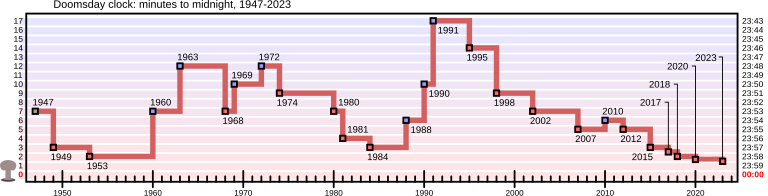
Meanwhile, Nixon’s remarkable diplomatic breakthrough to Maoist China completely reset the international stage and laid the foundation for his subsequent detente with the Soviet Union, which greatly reduced the risk of global nuclear war. The personal ideological roots of Prof. Jeffrey Sachs are probably not so very different from my own and in a recent interview, he mentioned that although he’d grown up deeply disliking Nixon and his policies, the latter had been one of our few postwar presidents who sharply pushed back the hands of the famous Doomsday Clock maintained by the liberals of the Bulletin of Atomic Scientists. Greatly reducing the risk of thermonuclear destruction is hardly a trivial achievement, and one that should certainly appeal to the good-thinking progressives who dominate the media and academic worlds, yet Nixon has received relatively little credit.
Movement conservatives have gloried in America’s later victory in the long Cold War, whose honors they regularly give to President Ronald Reagan, while most of them deeply distrusted Nixon as much as did their liberal counterparts. Yet without Nixon’s success in enlisting Communist China as our Cold War quasi-ally, Reagan’s policies might have been impossible. Indeed, our thick-headed conservatives had always so detested China that they often regarded Nixon’s remarkable geostrategic gambit as one of the worst black marks against him. Nixon was a political pragmatist rather than any sort of conservative ideologue, so the latter naturally disliked him.

ORDER IT NOW
Over the years some of these scattered facts had steadily chipped away at my assumptions about Kennedy and Nixon, and I sometimes wondered if they had truly been the polar opposites suggested by our media. But I still retained that vague impression of those two American political figures of the postwar era, so I assumed that they had always been arch-rivals or even bitter political enemies, as was implicit in their starkly different media treatments. However, about a decade ago I read Kennedy & Nixon by Chris Matthews, a longtime San Francisco Chronicle journalist who eventually gained far greater national visibility as the pugnacious television host of Hardball, a political interview show on MSNBC. His joint political biography completely overturned my assumptions and rereading it again now confirmed that verdict.
Matthews emphasized the intertwined political history of those two leaders, and from the first half-dozen pages of his introduction, he brought numerous surprising facts—and ironies—to my attention that I’d never suspected. Nixon and Kennedy had both been World War II veterans, who won their races for the first postwar Congress on trans-ideological grounds, with Kennedy having run as a “fighting conservative” while Nixon had committed himself to “practical liberalism.” While not exactly close friends, they were certainly on friendly terms, sometimes exchanging longhand notes or doing political favors for each other, and when Nixon ran for the Senate in 1950 by denouncing his opponent Democratic Rep. Helen Gahagan Douglas as soft on Communism, Kennedy personally hand-delivered a large donation check from his family. Years later, Nixon told that story in an interview:
Nixon won his Senate race in a huge landslide at the age of 37. That victory combined with his earlier success in the Hiss case persuaded Dwight Eisenhower to put him on the national ticket two years later, so Nixon’s meteoric political rise placed him a heart-beat away from the Presidency before he’d celebrated his 40th birthday, becoming one of the youngest vice presidents in our national history.
Following a step behind, Kennedy also reached the Senate in that same 1952 election. As Presiding Officer of the Senate, Nixon spent the 1950s in an office across from that of Kennedy, with whom he remained quite friendly. When Kennedy required dangerous back surgery in 1954, Nixon regularly stopped by to see how he was doing and bent the parliamentary rules to assist him politically, leading Jackie Kennedy to write him a personal Thank You note: “There is no one my husband admires more.” After Nixon heard reports that Kennedy was near death, a Secret Service agent saw him cry: “Poor brave Jack is going to die. Oh, God, don’t let him die.” Even prior to the 1960 election, Kennedy told his friends that if he didn’t receive the presidential nomination himself, he’d vote for Nixon as the Republican candidate, and his father, Joseph Kennedy, told Nixon the same thing: “Dick, if my boy can’t make it, I’m for you.” Four years earlier in 1956 Robert Kennedy had voted to reelect the Eisenhower-Nixon ticket instead of supporting Adlai Stevenson, the Democratic candidate.
Obviously, the world of politics involves conflict when two successful figures are in rival parties, and there are also various anecdotes in which Kennedy and Nixon criticized or opposed each other, especially since so much of the powerful liberal base of the Democratic Party loathed Nixon. But the overall picture of their long relationship was very different than I’d always been led to believe.
Ironically enough, while Kennedy and Nixon seem to have remained quite friendly prior to the 1960 election, their relationships with other political figures were sometimes far more strained. Nixon and Eisenhower were not at all on good terms, while Kennedy and Johnson were always bitterly hostile to each other.
The backgrounds of the two political figures were certainly a study in contrast, with Kennedy’s family being one of the wealthiest in America, while Nixon’s parents owned a small, struggling grocery during the depths of the Great Depression. Kennedy had attended the most expensive, elite prep schools before matriculating at Harvard, his father’s alma mater, but although Nixon’s academic ability had won him a full Harvard scholarship, his family lacked the money to pay for his travel or rooming costs, so he was forced to attend local Whittier College instead, then afterward worked his way through law school at Duke. But by the time they entered Congress in 1946, the two men were not so far apart ideologically, with both of them being critical of the New Deal establishment and also strongly anti-Communist.
The public perceptions of the Communist threat greatly expanded after Mao’s 1949 victory in China shifted the world’s most population country into the Communist camp and such concerns further escalated once the Korean War broke out the following year, with American troops suffering some severe initial military defeats after a large Chinese army intervened in the conflict. There was a widespread belief that many of these setbacks had been due to Communist political subversion at highest ranks of the American government so Communism became an important issue in many 1950 races.
Matthews provides some fascinating, unexpected examples of how Communism played out in some of the early campaigns of both Nixon and Kennedy. Although all my history textbooks had always vilified Nixon for winning his 1950 Senate race by Red-baiting his opponent the very liberal Rep. Helen Gahagan Douglas by dubbing her “the Pink Lady,” she had actually first raised that issue, putting out campaign materials accusing Rep. Nixon of having voted the Communist line against aid for Korea.
Similarly, Kennedy’s successful 1952 Senate race against Republican incumbent Henry Cabot Lodge, a staunch anti-Communist, had partly relied upon dishonest insinuations that Lodge was soft on Communism, accusing him of being a “100 percent” supporter of Truman’s “appeasing administration policy in China and the Far East,” while “straddling” on Sen. McCarthy’s charges of Communist subversion in the State Department. Meanwhile, Kennedy later publicly defended McCarthy as “a great American patriot.”
Thus, both Kennedy and Nixon emphasized the Communist issue in their political campaigns in much the same way, while Nixon was hardly the unprincipled Red-baiter my textbooks had always suggested.
On those ideological issues in which Kennedy and Nixon took sharply different stands, their contrasting positions were not always what we might expect. For example, in 1957 Kennedy took the Dixiecrat position on the Civil Rights Act of that year, hoping thereby to consolidate his support from Southern Democrats for his planned 1960 presidential primary race, while Nixon fully backed that legislation, having always been a staunch supporter of black civil rights.
When Martin Luther King Jr. was imprisoned in Atlanta in 1960, Kennedy’s famous phone call of support to his wife Coretta King shortly before the presidential vote was hotly debated within his campaign, with his brother Robert being strongly opposed for fear of losing white Southern votes. The campaign’s unlimited budget allowed it to resolve this dilemma by recruiting black leaders to praise Kennedy’s action and condemn Nixon for his silence, then printing two million copies of a pamphlet highlighting these statements and distributing these to black churches the Sunday before Election Day, thereby minimizing the risk of any white Southern backlash.
Matthews himself is Catholic, Irish on his mother’s side, and he was a teenager during the Kennedy Administration while still in his early 20s when RFK was assassinated. His political roots are strongly Democratic, and before entering journalism, he spent many years working as an aide to various Democratic Congressmen, including serving as chief of staff to Tip O’Neill, the Speaker of the House who had actually inherited Kennedy’s own seat. Given that personal background, I assume that Matthews had long admired or even idolized Kennedy while despising Nixon, and I got the sense that his discovery of the true political positions of those two men and their personal relationship surprised him just as much as it did me. But to his tremendous credit, his book seemed unflinchingly candid about those actual facts.
My introductory textbooks and the media coverage I absorbed always portrayed Nixon as “Tricky Dick,” a ruthless political operator whose long history of dishonesty finally culminated in Watergate, while Kennedy was often cast as an idealistic white knight. And sure enough, Matthews’ nearly 400 page text was filled with a long record of huge financial payoffs, political dirty tricks, and outright illegality; but nearly all of these were committed by Kennedy in his various races and during his brief presidency, beginning with his very first 1946 campaign. Although Joseph Kennedy had freely spent some of his massive wealth to get his son into Congress, the careless young candidate had forgotten to file his nomination petitions by the legal deadline, so he and a confederate committed a serious felony by personally burglarizing the Boston Statehouse, using their break-in to deposit the petitions in the appropriate government office. Meanwhile, Nixon’s own illegal actions beginning around 1970 seem to have been largely reactive, driven by his tremendous fear that Sen. Ted Kennedy might defeat him for reelection in 1972 by waging the sort of ruthless campaigns for which the Kennedys had become notorious.
Matthews seems a very shrewd political observer, providing insights I’d never seen elsewhere. After Nixon lost the Presidency in 1960, he decided to challenge popular incumbent California Gov. Pat Brown in 1962, severely damaging his political career when he lost that race as well. Although the hostile media usually portrayed Nixon’s campaign as a cynical attempt to position himself for another run against Kennedy in 1964, Matthews convincingly argues that Nixon’s intent was the exact opposite. Since he assumed that Kennedy would be unbeatable for reelection, he decided to avoid the likely pressure to enter the 1964 presidential race by running for California governor and immediately pledging to serve a full term if elected while preparing himself for a second run for the White House in 1968.
Matthews’ otherwise excellent book devoted only a few paragraphs to the JFK Assassination and those stuck very closely to the official narrative long promoted by our mainstream media. The author blandly endorsed the long-discredited belief that Oswald was a deranged lone gunman, a fanatic Marxist who hated and killed Kennedy because of the latter’s hostility to Cuban Communism. I found it rather difficult to believe that Matthews had never encountered any contrary evidence during his long career in politics and media, but I could easily understand his determination to maintain that position in his text. As a highly-successful television host, he understood the lethal consequences to his career if he included so much as a single sentence supporting any “conspiracy theory” involving the Kennedy assassination. Furthermore, any such passage, no matter how glancing or minimal, would inevitably become a lightning rod capturing the entire focus of everyone discussing his book, and diverting all attention away from the important historical material he had uncovered. Mainstream publishers might be reluctant to release such a book and he would lose any hopes of substantial sales and favorable media reviews. So the approach Matthews adopted seemed a very reasonable one.

ORDER IT NOW
A couple of years ago I’d read Rick Perlstein’s massive four-volume history of America’s modern conservative movement, and although conservatives had never regarded Nixon as one of their own, he had been featured as a central political figure in that account, with the second volume even entitled Nixonland. But although Perlstein’s 3,500 page narrative provided an enormous wealth of detailed material regarding Nixon’s long political career, the author seemed an extremely establishmentarian historian, so I’d gotten far more interesting and surprising Nixon insights out of the Matthews book though it was barely one-tenth the length.
Nixon, Kennedy, and the many conservatives who crowded Perlstein’s volumes had launched their careers in the early postwar years by denouncing the threat of Communist subversion and espionage in America, but Perlstein treated those concerns as cynical or irrational political ploys, having little basis in reality. However, the Venona Decrypts had been declassified years before Perlstein published the first of his volumes, and the flood of resulting academic scholarship absolutely confirmed those political claims so blithely dismissed by Perlstein. Back in 2019 I’d described the strange circumstances of the 1940 election and sharply critiqued Perlstein’s total unwillingness to recognize such facts.
FDR selected Wallace as his third-term Vice President, perhaps as a means of gaining support from the powerful pro-Soviet faction among the Democrats. But as a consequence, even as FDR’s health steadily deteriorated during the four years that followed, an individual whose most trusted advisors were agents of Stalin remained just a heartbeat away from the American presidency.
Under the strong pressure of Democratic Party leaders, Wallace was replaced on the ticket at the July 1944 Democratic Convention, and Harry S. Truman succeeded to the presidency when FDR died in April of the following year. But if Wallace had not been replaced or if Roosevelt had died a year earlier, the consequences for the country would surely have been enormous. According to later statements, a Wallace Administration would have included Laurence Duggan as Secretary of State, Harry Dexter White at the helm of the Treasury, and presumably various other outright Soviet agents occupying all the key nodes at the top of the American federal government. One might jokingly speculate whether the Rosenbergs—later executed for treason—would have been placed in charge of our nuclear weapons development program…
Consider, for example, the prize-winning volumes of political history that Rick Perlstein has written since 2001, tracing the rise of American conservatism from the pre-Goldwater era up to the rise of Reagan in the 1970s. The series has justly earned widespread acclaim for its enormous attention to detail, but according to the indexes, the combined total of nearly 2,400 pages contains merely two glancing and totally dismissive mentions of Harry Dexter White at the very beginning of the first volume, and no entry whatsoever for Laurence Duggan, or even more shockingly, “Venona.” I’ve sometimes joked that writing a history of post-war American conservatism without focusing on such crucial elements is like writing a history of America’s involvement in World War II without mentioning Pearl Harbor.
So the undeniable reality is that just the decade before the beginning of Perlstein’s narrative, control of America’s federal government had very nearly been seized by a network of Stalinist agents. These facts went entirely unreported in the mainstream media of the time and are just as widely ignored today, so both Perlstein and most of his reviewers either seem blissfully unaware of them or at least try to pretend that they are. But they were widely believed or at least suspected by the conservative activists who are the early protagonists of Perlstein’s narrative, and that probably helped to explain their apparent “paranoia.”
Thus, Kennedy and Nixon entered Congress in 1946 just a couple of years after a Stalinist takeover of the U.S. federal government had been narrowly averted. This reality surely helps explain why both of them had such similar views on the serious threat of Communist subversion in American society.
Meanwhile, Perlstein along with virtually every other historian remained silent on another important matter. Once Nixon finally reached the White House in 1968 his Presidency was overwhelmingly dominated by the Vietnam War and the domestic unrest it had unleashed in American society. Perlstein obviously despised Nixon, yet ironically his extreme unwillingness to challenge any official narratives led him to conceal from his readers the most shameful crime committed by our 37th president, a decision that became a monumental national scandal that has been ignored for the last half-century by our entire mainstream media.
The new President was facing a powerful anti-war movement that had already brought down his predecessor, and after years of fighting, few Americans had a clear idea of why we were there, with our original war aims having evaporated. So as Perlstein tells the story, Nixon’s audacious strategy was to refocus public attention upon the sad fate of the many hundreds of American POWs being held by the Vietnamese, suggesting that the true aim of our continuing war effort was to gain the return of the servicemen previously captured because we were fighting it. Although our Vietnamese opponents said they were certainly willing to return these men as part of a peace agreement once we left their country, Nixon regularly suggested otherwise, and in politics, emotion often trumps logic, especially when emotion is backed by control of the media megaphone.
This volume ended with Nixon’s 1972 reelection landslide, and The Invisible Bridge released in 2014 began with the signing of the peace agreement. A chapter described the triumphal return of the Vietnam POWs in “Operation Homecoming,” with most of an additional chapter also given over to that same subject. It is obvious that Perlstein utterly despised Nixon and the cynical and deceptive strategy the latter had used in exploiting the issue of the POWs to outmaneuver his political opponents, thereby continuing a war that could have been ended on similar terms years sooner, probably saving many tens of thousands of lives; and the author clearly relished the shift of his narrative to Watergate and the President’s subsequent downfall. But the true story of what happened was probably far darker and more cynical than what our “hypercaffineinated Herodotus” could willingly admit in the pages of his history.
As Perlstein emphasized, by the end of the war Nixon had successfully established the safe return of all our POWs as our overriding national objective, so the entire country basked in the triumph of their freedom once the planes began to touch down in 1973. But there is actually very strong evidence that only about half the POWs were ever returned, with the others living out the remainder of their lives in miserable Vietnamese captivity while Nixon and his accomplices suppressed this truth in order to desperately claim a victory as the growing Watergate Scandal threatened his political survival. Our media, both at the time and during the decades that followed, have been entirely complicit in concealing this outrage, one of the most shameful incidents in American history, and rather than setting the story straight, Perlstein clung to the standard narrative of this cover-up, never raising a word of doubt, even though it protected the reputation of a President whom he deeply loathed.
These passages were drawn from my lengthy discussion of Perlstein’s history of the conservative movement, which recognized the exhaustive detail he provided but also noted his striking omissions.
Although these facts regarding the abandoned Vietnam POWs had been quietly known or suspected at the time by many government officials, only years later were they extensively documented by Pulitzer Prize winner Sydney Schanberg, a former top-ranking editor at the New York Times, and one of our leading war reporters during that conflict. I’ve discussed the issue on numerous occasions and knowledgeable observers have usually found the evidence provided in Schanberg’s seminal research quite convincing, as I recounted in a 2016 article.
I do believe that the evidence is simply overwhelming to anyone with an open mind, and the universal silence of our media is the only slight contrary indicator. A few months ago I served on a government secrecy panel with Daniel Ellsberg, whose role in leaking the Pentagon Papers had established him one of America’s leading voices on cover-ups of embarrassing military secrets. A major portion of my talk focused on Syd’s POW findings, and the way in which the government and media had successfully colluded to keep the story hidden for over four decades. Ellsberg found the claims totally astonishing, and saying he’d never previously heard a word about them, eagerly took home copies of the article and some related material. At the dinner reception the next evening, he told me he’d carefully read them, and was fully convinced that everything was probably true.
John F. Kennedy died more than six decades ago after spending less than three years in the White House, and I think the vast majority of today’s Americans remember only three incidents from his truncated presidency: the failed Bay of Pigs invasion of Cuba in 1961, the Cuban Missile Crisis of 1962, and most of all his shocking assassination in late 1963.
But the historical memory of Richard Nixon, who died thirty years ago in April 1994, is even more abbreviated. He ran on five presidential tickets, winning four times, with his 1972 reelection landslide being one of the largest in American history. He served eight years as vice president and nearly six more as president, spending a generation as one of America’s most powerful and influential Republicans, with Matthews noting that prominent liberal columnist Murray Kempton even characterized the 1950s as “the Nixon decade.” During his presidency, Nixon created the Environmental Protection Agency, began Affirmative Action, and ended the Draft and the Vietnam War. His diplomatic openings to China and the Soviet Union transformed the geopolitical landscape of the world and allowed him to negotiate the SALT and ABM arms control agreements and the Biological Weapons Convention. But these days I suspect that nine out of ten Americans remember him only for the Watergate Scandal, which ended his presidency. That name even provided a suffix that has become the regular mark of our subsequent political scandals such as Koreagate, Irangate, and most recently Russiagate.

ORDER IT NOW
In 1995 Oliver Stone followed up the huge success of JFK with his three hour biopic Nixon. Once again the film was brilliantly directed and acted, and it covered Nixon’s entire life and career, including his hard-scrabble childhood with his deeply religious Quaker mother and the death by illness of two of his brothers. Nixon’s political rise and his landmark negotiations with China and the Soviets were given considerable coverage, but Watergate and his fall from power heavily dominated the script. Unfortunately, these important events lacked the drama of a conspiratorial plot culminating in the assassination of a president, and perhaps for this reason the film was far less successful in the theaters and apparently lost money.

ORDER IT NOW
Three years after Nixon resigned in disgrace he was persuaded to do a lengthy series of television interviews with British host David Frost, and disputes about Watergate questioning overwhelmingly dominated the negotiations that preceded that agreement. Nixon’s controversial admissions on that topic were what drew the massive interest of the public, resulting in a syndicated television broadcast audience of 45 million, the greatest for any political interview in history. Decades later, the story of those exchanges became a successful 2006 play entitled Frost/Nixon, soon followed by a highly-regarded 2008 film of the same name directed by Ron Howard.
The Watergate Scandal and the televised Senate Hearings that broke it wide open were the first major domestic political events that I closely followed as a child. Even at my young age I noticed that none of the accusations seemed very serious compared to the shootings and deadly plots that were so common in the fictional spy films and television thrillers that I sometimes watched. But since all the television commenters described the alleged crimes of the Nixon Administration as unprecedented, constituting such a dire threat to our Constitutional freedoms, I somewhat doubtfully nodded my head at the time and decided that must have been the case. Apparently, the American political system was so bland and spotlessly clean that even those very minor misdeeds of Nixon’s political henchmen and his furtive efforts to conceal them represented an indelible blot upon our national honor.

ORDER IT NOW
I never read any of the Watergate books but I did see the Oscar-winning 1974 film All the President’s Men starring Robert Redford and Dustin Hoffman, which established Bob Woodward and Carl Bernstein as the world’s most famous journalists. Although I remember finding the movie a little dull at the time, it was quite successful and such films reach an audience that is vastly larger than even the best-selling books, thereby creating our own shared historical reality. So a week or two ago I decided to watch it again for the first time in half a century, and the experience was certainly worth the $3.99 that I paid Amazon Prime for the privilege.
Woodward and Bernstein were the intrepid cub reporters at the Washington Post lucky enough to be given the story of a minor burglary at the Watergate headquarters of the Democratic National Committee. That tiny thread eventually allowed them to unravel Nixon’s entire presidency with the help of Deep Throat, their secret insider source who regularly steered them in the right direction. Over the years, their success inspired an entire generation of young Americans to enter journalism in hopes of changing the world and gaining such public laurels.
The acting was outstanding and the plot was fine, but just as I’d remembered, the events that ultimately brought down the Nixon Administration and sent so many of its leading officials to prison seemed ridiculously trivial. In one scene, Bernstein confronted attorney Donald Segretti at home, with the political dirty trickster terrified that the media revelations of his activities on behalf of the president would get him disbarred and sent to prison, just as later happened. The Nixon conspirator defended himself by claiming that he’d actually done far worse things back in his USC student government days, years before a fraternity brother had brought him into the presidential reelection campaign to repeat his dirty tricks on a national scale.
Although the film was nominated for eight Oscars and won four, the only major prize it snared was Best Supporting Actor, won by Jason Robards, who played Post editor Ben Bradlee. As portrayed in the film, Bradlee was initially very skeptical of the story his young reporters were pursuing, doubting it was important enough to warrant any heavy coverage by his newspaper. However, Woodward and Bernstein persevered and gradually won him over, so that he later backed them to the hilt. Nixon’s eventual political fall thus established Bradlee as one of America’ most powerful editors, similarly burnishing his newspaper’s reputation, which joined the New York Times in our media firmament. Just the previous year, the Times and the Post had both stood up to the legal threats of the Nixon Administration by publishing the leaked Pentagon Papers, revealing many of our embarrassing national secrets about the Vietnam War.
Yet viewed in hindsight from 2024 I found that many of the film’s scenes between Bradlee and his two young reporters seemed almost like satirical political sketches, containing ironies that nearly reached absurdist levels. But almost none of the Americans watching it in 1974 would have been aware of those facts, and that probably still remains largely true today.
From the distance of half a century, Bradlee’s doubts about the political importance of that minor political burglary were easy for me to understand. For many years, one of Bradlee’s closest friends had been John F. Kennedy, and less than a decade earlier, JFK had been assassinated in Dallas. We now know that most of the slain president’s friends and close family members soon became privately convinced that a conspiracy had been responsible, but they never said a word about this in public, while the Post and all our other media outlets instead proclaimed that a deranged lone gunman named Lee Harvey Oswald, himself killed immediately afterwards, had solely been responsible.
Bradlee had also known that his own sister-in-law, the lovely artist Mary Meyer, had been JFK’s very influential mistress, and less than a year after the assassination, she too was dead, shot down in broad daylight on the streets of her elite Georgetown neighborhood of DC, with no one ever convicted of that crime. Meyer had been the former wife of high-ranking CIA official Cord Meyer, and when Bradlee went to her home immediately after the killing, he discovered longtime CIA counterintelligence chief James Angleton attempting to break in, with the latter explaining that he was in search of Meyer’s explosive diary. Bradlee later stated that he found that diary and gave it to Angleton to destroy.
During the 1968 presidential campaign, Robert Kennedy won the huge winner-take-all California primary and seemed on the verge of gaining the White House himself, having told his friends that one of his most important projects would be to track down and punish the conspirators who had killed his brother five years earlier. But then he, too, was suddenly struck down and killed, allegedly by another deranged lone gunman. By the time of Bradlee’s 1972 conversations with Woodward and Bernstein, the editor had probably become aware that RFK had also died in a conspiracy, with the official autopsy revealing that the fatal bullet had been fired at point-blank range from behind his head while the gunman arrested had been standing at least several feet in front of him.
These secret facts, all probably known to Bradlee, obviously constituted elements of a story far more dramatic and politically potent than any of the petty abuses and sophomoric political dirty tricks of the Nixon reelection campaign, but in 1972 none of these had ever been revealed to the world, whether in the pages the Post or anywhere else. So we can easily understand why the powerful editor initially showed such little interest in the paltry discoveries of Woodward and Bernstein. Indeed, he may have inwardly smiled to himself at his excited young reporters, while thinking “I could tell you about some real political crimes…”

ORDER IT NOW
As he supervised his young Watergate reporters, the Post editor remained silent about all these important facts that my JFK Assassination research had brought to my attention over the last dozen years. But just a few days ago, I finally read Mary’s Mosaic by Peter Janney, a 2012 account of the life and background of Kennedy’s slain mistress that suggested Bradlee’s hidden secrets may have included even darker elements.
Janney’s own family had been very close to the Meyers, and while growing up his best friend had been Mary’s son Michael. Like Cord Meyer, the author’s father was a high-ranking longtime CIA officer, one of the reasons for their connectio