Select date

Containing China’s Development: “U.S. Funds Wars, China Funds Development”


All Global Research articles can be read in 51 languages by activating the Translate Website button below the author’s name (only available in desktop version).
To receive Global Research’s Daily Newsletter (selected articles), click here.
Click the share button above to email/forward this article to your friends and colleagues. Follow us on Instagram and Twitter and subscribe to our Telegram Channel. Feel free to repost and share widely Global Research articles.
Global Research Referral Drive: Our Readers Are Our Lifeline
***
The U.S.’ growing urgency in ‘containing’ China’s development was thrown in sharp relief this week as Janet Yellen arrived in Beijing for what turned out to be an execrable beggar’s tour. Just days prior to her arrival, she had buzzed the punditry with her historically memorable exclamation that China was now operating at “overcapacity”(!!).
What is overcapacity, you ask? It’s a new word for me, too—so let’s consult the dictionary together:
overcapacity
noun
o·ver·ca·pac·i·ty: ō′vər-kə-ˈpa-sə-tē
1: When an insolent upstart nation’s surging economic activity totally humiliates the reigning hegemon’s own faltering economy, causing the many expensive dentures and porcelain veneers of the ruling class gerontocracy to rattle and grate with moral outrage and jealousy.
1b: An undesirable situation causing Janet Yellen and Nancy Pelosi’s stock portfolio to droop like a pair of botox-sapped jowls.
Granted…my dictionary might be slightly different to yours, I have a rare edition. That said, are we on the same page? Good.
The above definition may be missing in the new official regime argot pamphlet, but it’s safe to say the inept leaders of the U.S. are down to making up creative new euphemisms for describing China’s total undressing and upending of the economic order.
But if you were skeptical about the meaning behind Yellen’s risible “overcapacity” solecism, her speech from inside of China confirms precisely what’s on the regime’s mind:
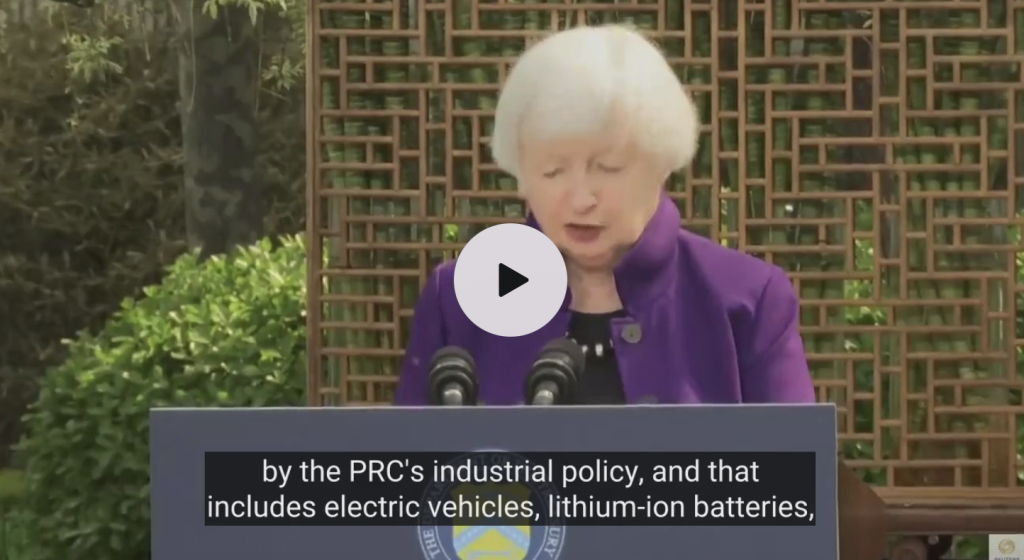
Click here to watch the video.
“China is now simply too large for the rest of the world to absorb this enormous capacity. Actions taken by the PRC today can shift world prices….”
And the bombshell:
“When the global market is flooded with cheap Chinese goods, the viability of American firms is put into question.”
Well, I’ll say.
The important distinction to note in the above statement is that for a long time the ‘cheap’ moniker used to describe Chinese goods often underhandedly referred to their quality, in the secondary definitional sense. Here, Yellen is referring to cheap as in price: the distinction is significant because it’s referential to the fact that Chinese manufacturing processes have simply far exceeded the efficiency in the West, as recently highlighted by videos of the Xiaomi e-car factory with its own native Giga Press that’s claimed to be able to pump out a car every 17 seconds.
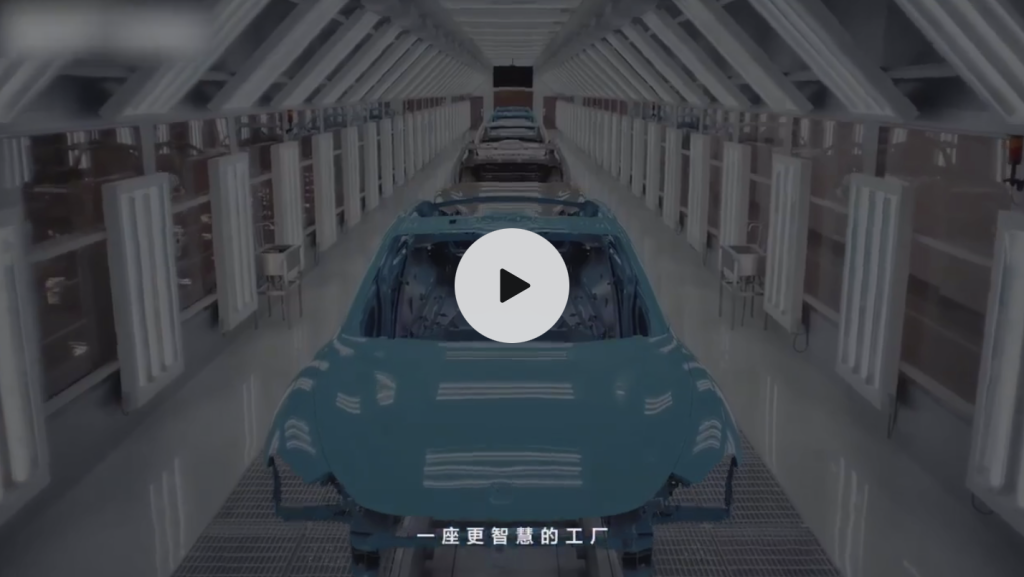
Click here to watch the video.
The fact of the matter is, China is simply leaping ahead of the decrepit, deteriorating U.S. by every measure and the panicked elites have sent Yellen to beg China to “slow down” and not embarrass them on the world stage.
How is China doing this? Let’s run through a few of the most poignant ways:
[1] First and foremost, it’s become almost a passe bromide to observe:
“The U.S. funds wars, while China funds development.” But it really is true. Think about this for a moment:
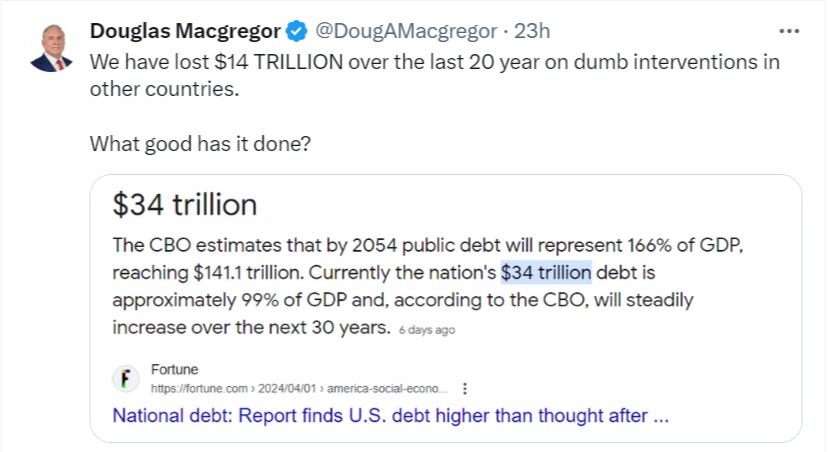
The above is factual: Esquire reported that a Brown University investigation found the U.S. has spent an ineffable $14T on wars since 9/11:
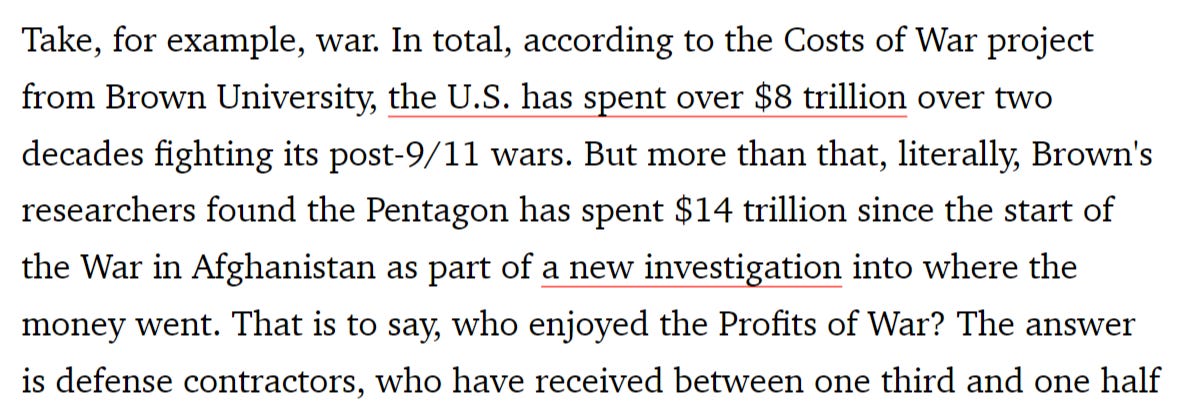
And yes, the current U.S. debt is a massive $34T. That means quite literally almost half of the entire current U.S. debt was blown on endless, mindless, genocidal wars in the Middle East.
The U.S. has wasted its entire blood and treasure on war. Imagine what the U.S. could have built with $14 trillion dollars? Where the U.S. could have been in relation to China for that amount? As someone else noted, the U.S. could have very well built its own “one belt and road” project for that money, connecting the world and reaping untold benefits.
China hasn’t spent a cent on war, and puts everything right back into economic development and wellbeing for its own people.
China is winning lion’s share of construction projects in Africa
Chinese companies accounted for 31% of African infrastructure contracts valued at US$50 million or more in 2022, compared with 12% for Western firms, according to a new study.
It is worth to be noted that in the 1990s, about eight out of 10 contracts to build infrastructure in Africa were won by Western companies.
The illustrative statistics for this are endless:
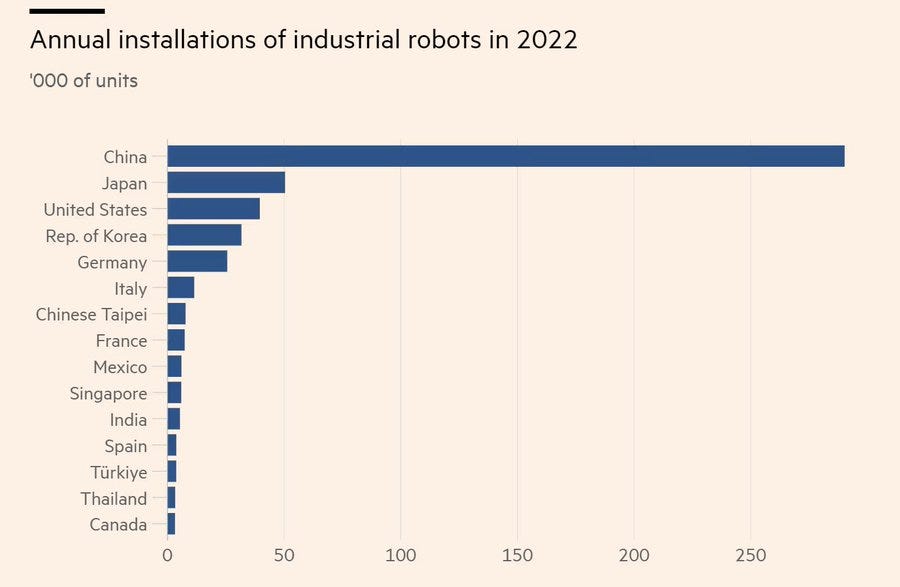
What makes this historic mal-appropriation of American funds most tragic is that none of it came at the benefit of American people. The entire operation was carried out by an ethnic cabal within the U.S. government with loyalties only to Israel, and no one else. I’m speaking of course of the PNAC clan, who masterminded the entire breadth of the 21st century wars which have engulfed America in wretched shame and misery, irreversibly gutting the country and squandering its global standing. These wars had nothing whatsoever to do with America’s national interests or security, and have done naught but make Americans less safe and the entire world more dangerous and unstable.
China doesn’t have this problem: there is no inimical ‘out’ group parasitizing their country’s leadership, literally assassinating (JFK) and blackmailing their presidents (Clinton). China is therefore able to focus on the interests of its own people.
And yes, for those wondering, it’s now fairly proven that Lewinsky was a Mossad honeytrap used to blackmail Clinton in assenting to various Israeli demands vis-a-vis the Oslo Accords, Wye River Memorandum, etc.
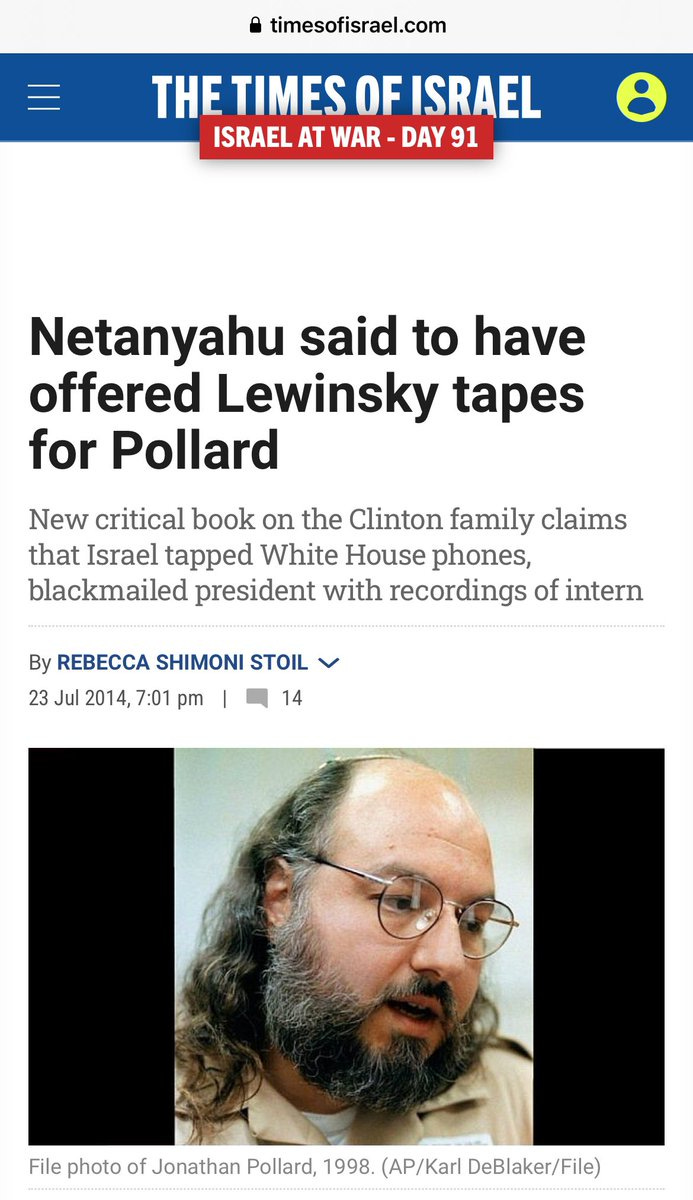

The fact is, Israel is a destructive parasite sucking the lifeblood out of America, causing the host to wage unnecessary wars on its behalf which have utterly removed every advantageous and competitive edge the country might have had over its Chinese ‘rival’
[2] As a corollary of the above, beyond just the simple kinetic nature of the profligately wasteful wars, America wastes an exorbitant amount of money just on maintenance and upkeep of its global hegemony. The reason is, it costs a lot of ‘enforcement’ money to strongarm vassals who hate you into compliance.
China doesn’t form vassals, it forms partners. That means it spends comparatively far less spreading its influence because that influence has compounding abilities owing to the fair bilateral nature of China’s arrangements. The U.S. has to spend comparatively inordinate amounts of blood and treasure to maintain the same level of ‘influence’ because that ‘influence’ is totally artificial, confected out of a poisonous mixture of fear, strong-arming tactics, economic terrorism that leads to blowback which hurts the U.S. economy, etc. In short, it is mafia tactics versus real business partnerships.
One big difference between China and the U.S. is that China is open to sharing the earth, willing to co-prosper with the U.S. Conversely, the U.S. is unwilling to abdicate its global domination:
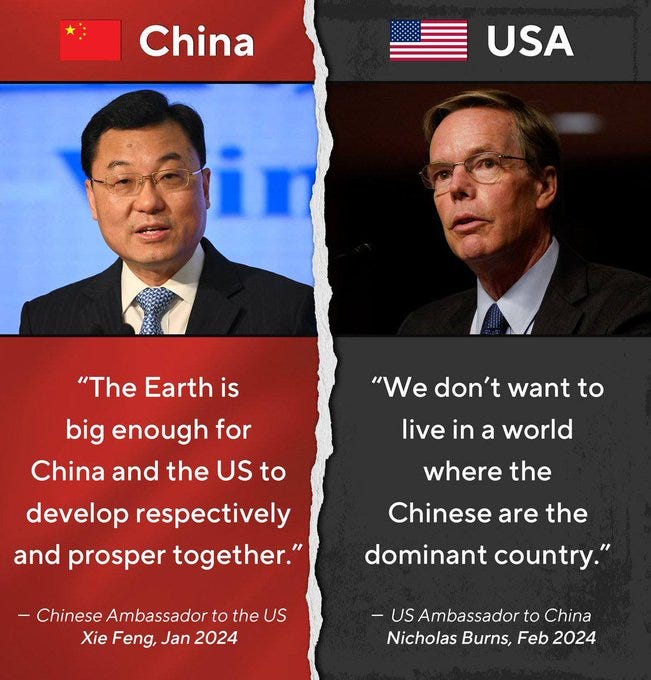
The above was highlighted by Graham Allison, coiner of the Thucydides Trap idiom in relation to U.S./China. The Thucydides Trap, as some may know, describes a situation where an emerging power begins to displace the incumbent global power, and how historically this almost always leads to major war. To popularize the theory apropos U.S./China, Graham Allison used the historical example of the Peloponnesian war, where a cagey Sparta was forced to take on the rising power of Athens.
Allison was recently invited by President Xi to a forum for U.S. business leaders where Xi told him directly:

Contrast President Xi’s magnanimous statements with those of the seething, guilt-wracked, bloodthirstily conniving Western ‘executives’. In fact, Xi called for more exchanges between China and the U.S. in order to entwine the two countries in mutual understanding, to avoid the Thucydides Trap:
This is the enduring image of what global leadership truly looks like, and the principles it embodies.
Meanwhile, when one thinks of America’s progressive decline, the one enduring image that comes to mind is of a bitterly frightened but dangerous, beady-eyed cornered rodent, conspiring on how to inflict damage and suffering onto the world in order to mask its own downfall.
[3] The U.S. government does a grave disservice to its own development by cooking all of its economic books. Every country does it at times to some degree—and going by U.S.’ notoriously frequent accusations of China in this regard, one would think China to be the most flagrant violator—but in fact, no one does this more than the current U.S. regime.
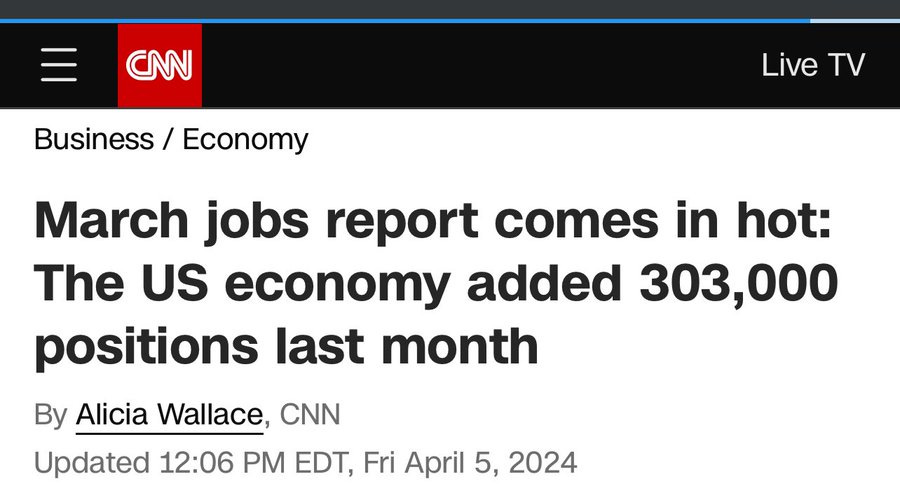
The recent “jobs” report touted as a major victory by the Biden administration was a disgraceful travesty. The admin touted major jobs figures:
But it turned out every job was either part time, a federal job, or went to illegals:
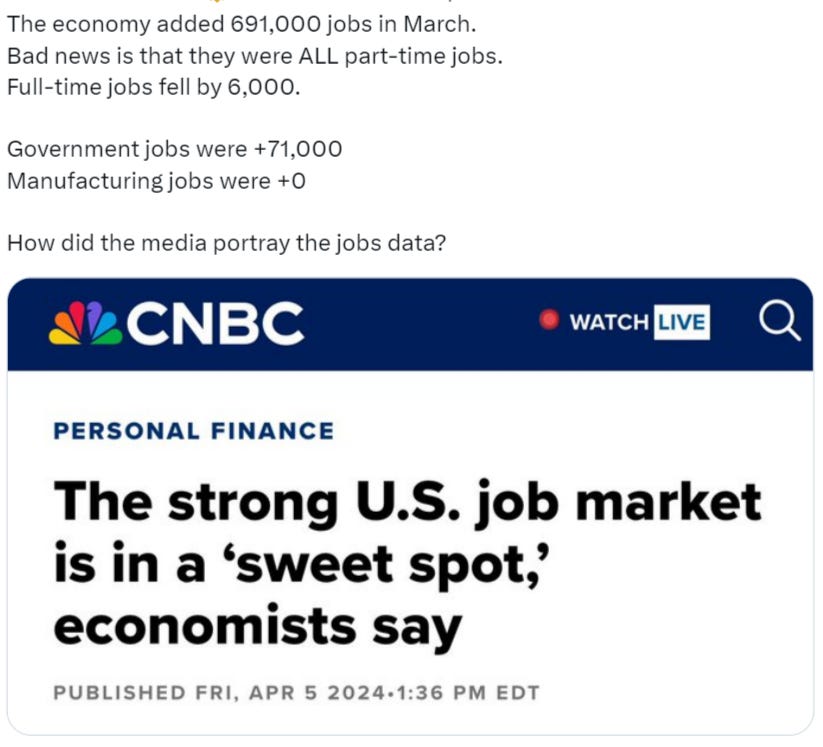
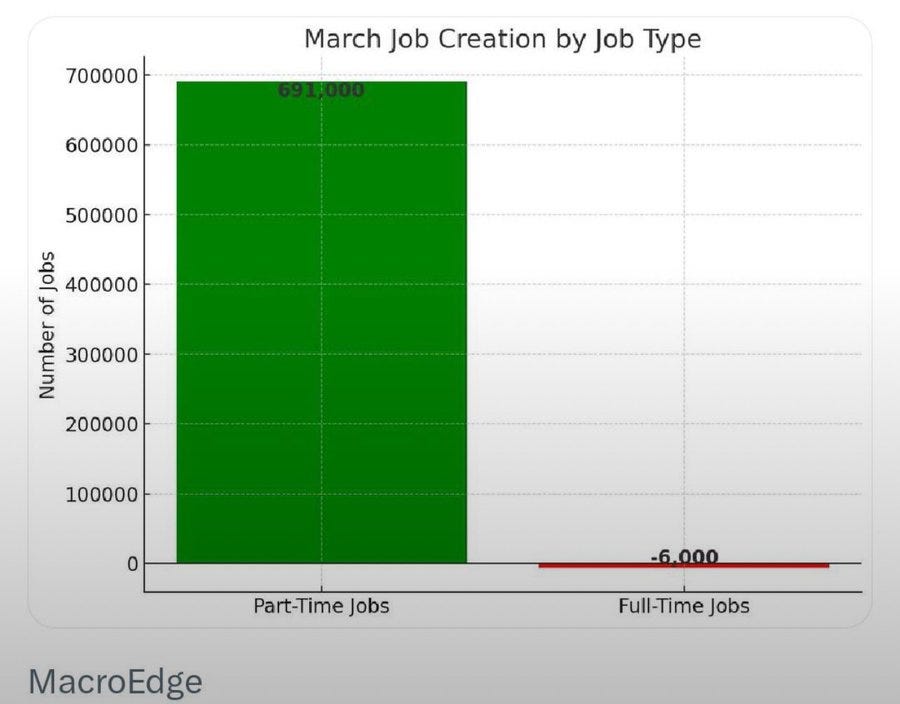
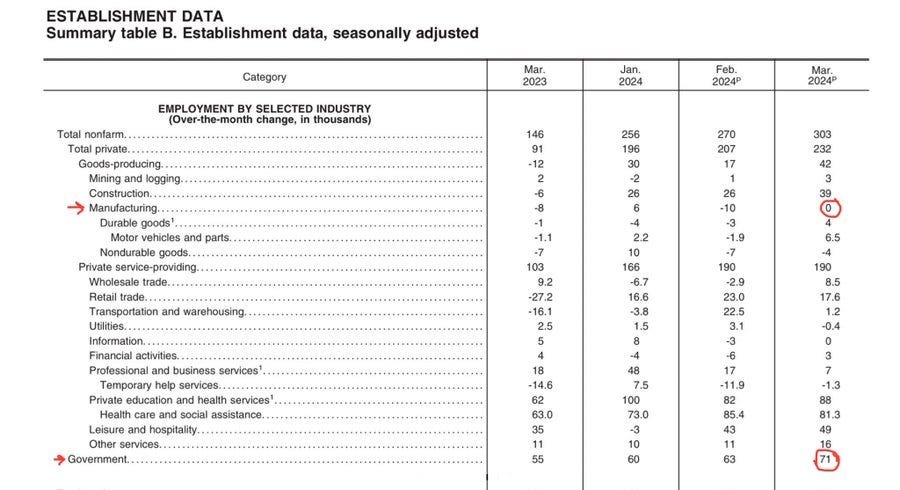
In reality, the U.S. economy is in atrocious shape with sky-high inflation.
Here’s Jesse Watters revealing that:
“The Fed chair just confessed that #Bidenomics is just a migrant job fair. There is actually a million less American citizens working today than there were in 2020.”
Biden created 5 million migrant jobs! So don’t be fooled by his propaganda that’s spewed by the liberal machine. YOU DONT MATTER!
The data is cooked even more when comparing to China’s economic situation. As the following Tweeter explains:
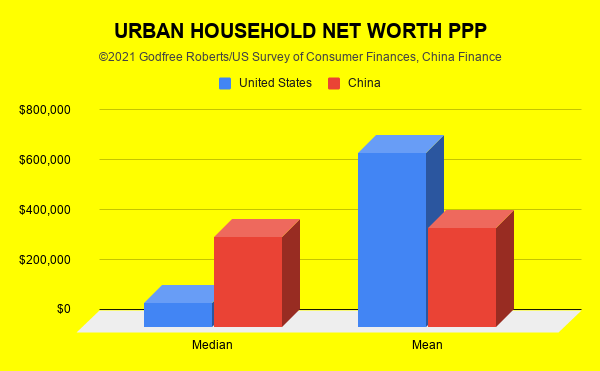
While Chinese INCOMES are below American INCOMES, Chinese have much higher NET WORTH than Americans. How? They own apartments at a much higher rate and with a lot more equity than Americans. The MEAN and MEDIAN insight is even more beautiful. This graphic here is pretty much the only thing you need to understand about the difference between the economies of China and United States. But you really need to understand it and you need to have a deep understanding of what it means.
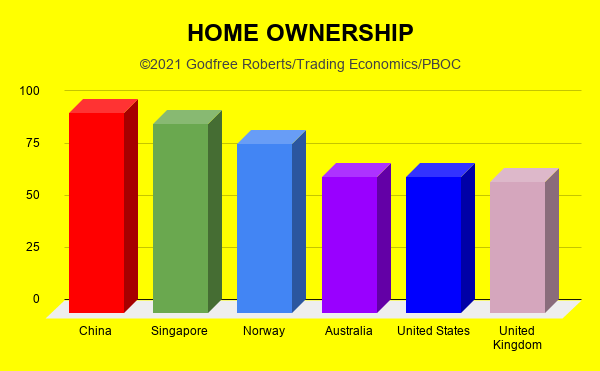
U.S. home ownership is on a precipitous decline toward the low ~60s%, while China now has over 90% home ownership rate:
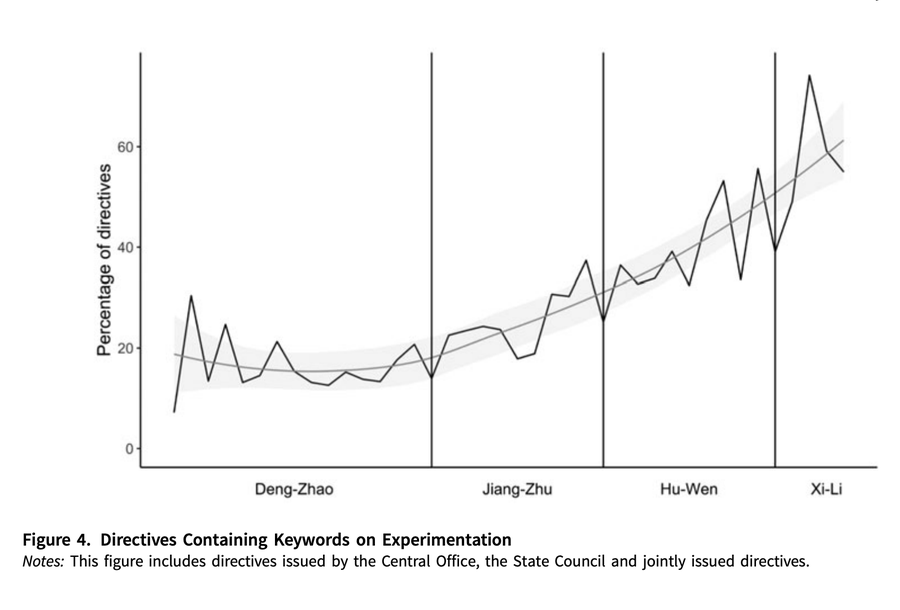
In short, a deep study of thousands of official documents shows a huge upswing in language promoting economic experimentation in the directives issued under Xi’s government.
This is further compounded by the most important point of all: that under President Xi, China has embarked on a meticulous plan of curbing financialization and speculation of the ‘Western model’ in its economy. This is where it starts getting important so buckle up.
A good breakdown of that is given here by Chinese academic Thomas Hon Wing Polin, who pulls from this recent article:
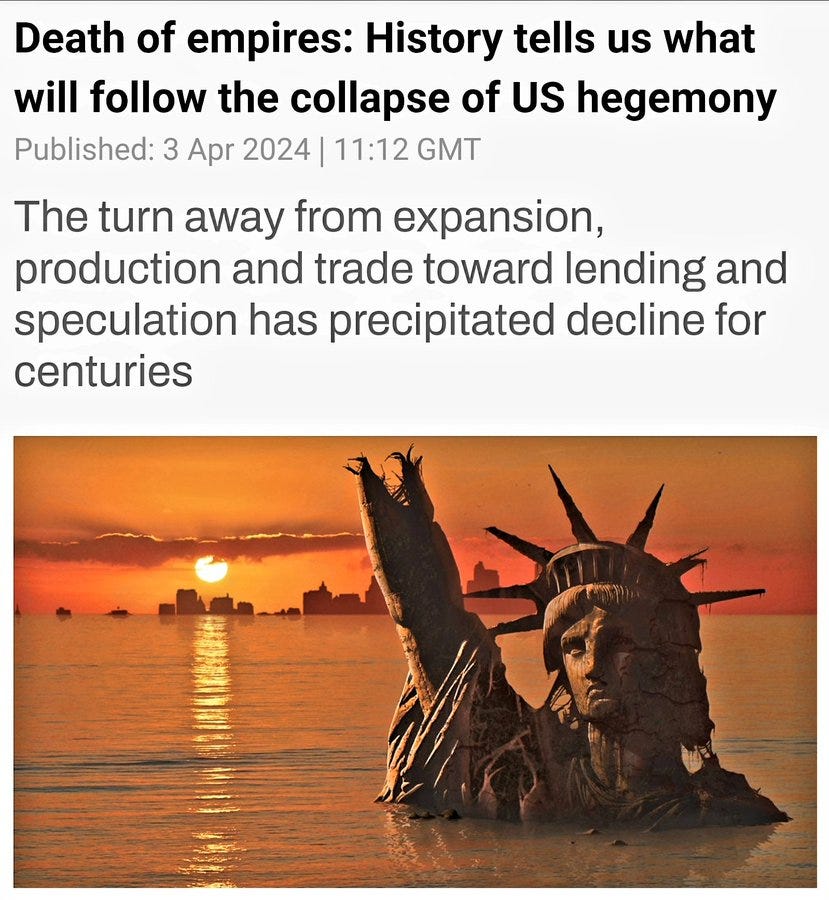
The article gives a brief history of financialization, from the Genoese bankers to modern times, observing the historical cycles that have precipitated America’s current deterioration:
Observers of the current American hegemony will recognize the transformation of the global system to suit American interests. The maintenance of an ideologically charged ‘rules-based’ order – ostensibly for the benefit of everyone – fits neatly into the category of conflation of national and international interests. Meanwhile, the previous hegemon, the British, had their own version that incorporated both free-trade policies and a matching ideology that emphasized the wealth of nations over national sovereignty.
In describing the cycle of financialization and its connection to the death of empires, the article notes about Britain:
For example, the incumbent hegemon at the time, Great Britain, was the country hardest hit by the so-called Long Depression of 1873-1896, a prolonged period of malaise that saw Britain’s industrial growth decelerate and its economic standing diminished. Arrighi identifies this as the ‘signal crisis’ – the point in the cycle where productive vigor is lost and financialization sets in.
And yet, as Arrighi quotes David Landes’ 1969 book ‘The Unbound Prometheus,’ “as if by magic, the wheel turned.” In the last years of the century, business suddenly improved and profits rose. “Confidence returned—not the spotty, evanescent confidence of the brief booms that had punctuated the gloom of the preceding decades, but a general euphoria such as had not prevailed since…the early 1870s….In all of western Europe, these years live on in memory as the good old days—the Edwardian era, la belle époque.” Everything seemed right again.
However, there is nothing magical about the sudden restoration of profits, Arrighi explains. What happened is that “as its industrial supremacy waned, its finance triumphed and its services as shipper, trader, insurance broker and intermediary in the world’s system of payments became more indispensable than ever.”
In short: as an empire dies, loses its industrial and manufacturing capacity, finance takes over, pumping up huge bubbles of phony speculative money that gives the brief appearance of economic prosperity—for a time. This is what’s currently happening in the U.S., as it drowns in its self-created agony of debt, misery, corruption, and global destabilization.
One thing to note—if you’ll allow me this not-so-brief aside—is that the entire Western system is based on the actual institutionalized economic sabotage and subversion of the developing world. Books like the following go into some of it:
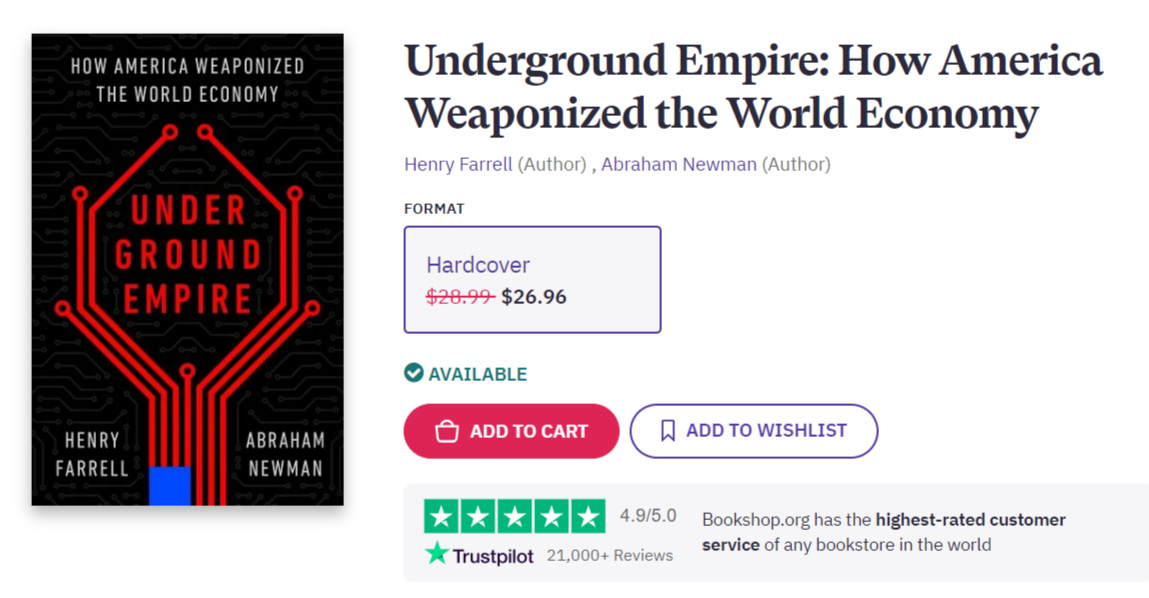
The rise of the underground economy: The book reveals how the United States’ underground economy evolved parallel to its legitimate economy, exploiting loopholes and leveraging secrecy jurisdictions to facilitate illegal activities such as drug trafficking, arms smuggling, and money laundering.
The “dark” side of globalization: Mills challenges the prevailing narrative of globalization as a force for progress, highlighting how it has facilitated the expansion of illicit networks across borders and allowed criminal enterprises to flourish.
The complicity of financial institutions: The author examines the role played by major financial institutions in enabling money laundering and illicit transactions. He underlines the need for stronger regulations and accountability to prevent banks from becoming facilitators of underground activities.
I challenge you to read notes on the National Memorandum 200, if you haven’t heard of it before.
Incidentally, John Michael Greer just penned a new column (thanks to whoever shouted out this blog in the comments!) about the neologism he coined: Lenocracy, which derives from the Latin “leno” for pimp; i.e. a government run by pimps, or pimpocracy.
His definition of pimps in this case is that of middlemen who are the classic rent-seeking leeches—or rentier class—which extract economic rent without adding any value to the economy—all Michael Hudson territory, for those in the know.
Bear with me, I promise this will all tie together into an overall picture of China.
JMG characterizes the ‘pimps’ as basically all the unelected, bureaucratic, red-tape-weaving, blood-sucking monetary vultures killing growth and livelihoods by each taking their nibbles in turn from the carcass of the working class, exacting some small transactional charge at every step of routine business in Western nations, particularly the U.S. This has served to suffocate the average small business or entrepreneurship in general, not counting the big ticket venture capitalists who are mostly offshoots of global financial and investment firms. This is part and parcel to the lethal ‘financialization’ of the country that has spelled doom for its future.
Now, getting back to Thomas Hon Wing Polin’s precis, and how it relates to this. He notes:
It is noteworthy that the CPC leadership recently launched a major drive to build China into a “financial great power,” with a financial system “based on the real economy.” That would be the antithesis to Anglo-American-style economic financialization.
He pulls from the following article:
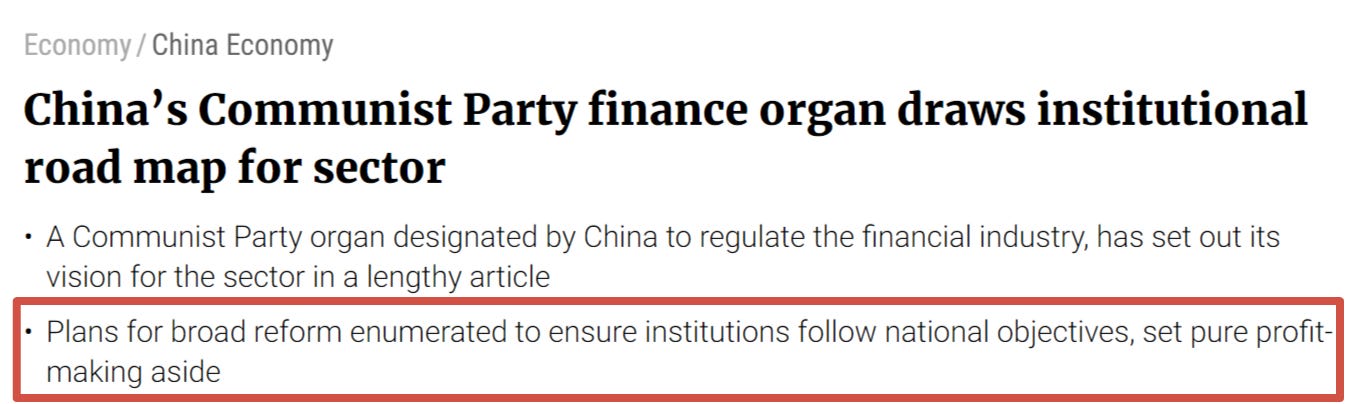
Read that last part: “…set pure profit-making aside.”
Pay attention to this big kicker:
Beijing is powering ahead with the epic project.
“China’s 461-trillion-yuan (US$63.7 trillion) financial industry and its regulatory regime will be heavily prioritised in a broad economic reshuffle engendered by the country’s top leadership, with the sector remoulded to serve national objectives like sustainable growth and advancement in the global tech race.
Are you beginning to get it yet? If not, here’s the crowning finial:
Specifically, it vowed to rein in Wall Street-style practices seen as unsustainable and crisis-prone, and move toward functionality as an overriding value for the financial system rather than profitability.
It also mandated that Chinese financial institutions have “higher efficiency” than their peers in the capitalist world and provide inclusive, accessible services in the pursuit of common prosperity.
“Like it or not, banks and other institutions on the supply side should expect top-down directives and overhauls cued by the CFC,” said Zhu Tian, a professor with the China Europe International Business School (CEIBS).

And there it is. In essence: China is creating a revolution, striking out a new path of finance which steers away from the wild excesses of the West into a bold new direction. Finance to benefit the real economy, the common man, the people. This is what the fig leaf of Rothschild-pushed ‘stakeholder capitalism’ is meant to be, or better yet: pretends to be.
It’s hard not to wax poetic on these developments, because they are truly groundbreaking. China is paving a new path forward for the entire world. The Chinese banking industry is now by far the largest on earth and President Xi has wisely put his foot down with a bold edict: we will not follow the path of destruction chosen by the West, but rather will set our own new path.
This is an iconoclastic, paradigm-breaking revolution which ends six centuries of Old Nobility world finance dominion, traced from the Spanish-Crown-allied Genoese bankers, to the Dutch then English banking system which now continues to enslave the world, and is referred to by a variety of names in the dissident sphere: from Hydra, to Leviathan, to Cthulu, to simply: the Cabal. Print