Select date

Sickening Profits: The Global Food System’s Poisoned Food and Toxic Wealth



by
Colin Todhunter
About the Author
Colin Todhunter is a Research Associate of the Centre for Research on Globalization (CRG). In 2018, he was named a Living Peace and Justice Leader/Model by Engaging Peace Inc. in recognition of his writings.
With reference to the section on India in the author’s 2022 e-book Food, Dispossession and Dependency. Resisting the New World Order, Aruna Rodrigues, lead petitioner in the GMO mustard Public Interest Litigation in the Supreme Court of India, stated:
“Colin Todhunter at his best: this is graphic, a detailed horror tale in the making for India, an exposé on what is planned, via the farm laws, to hand over Indian sovereignty and food security to big business. There will come a time pretty soon — (not something out there but imminent, unfolding even now), when we will pay the Cargills, Ambanis, Bill Gates, Walmarts — in the absence of national buffer food stocks (an agri policy change to cash crops, the end to small-scale farmers, pushed aside by contract farming and GM crops) — we will pay them to send us food and finance borrowing from international markets to do it.”
Table of Contents
Introduction
Chapter I:
BlackRock’s Economic Warfare on Humanity
Chapter II:
Millions Suffer as Junk Food Corporations Rake in Global Profits
Chapter III:
Fast-Food Graveyard: Sickened for Profit
Chapter IV:
Toxic Contagion: Funds, Food and Pharma
Chapter V:
Rachel Carson and Monsanto: The Silence of Spring
Chapter VI:
From Union Carbide to Syngenta: Pouring Poison
Chapter VII:
GMOs Essential to Feed the World? Case Study India
Chapter VIII:
Food Transition: A Greenwashed Corporate Power Grab
Chapter IX:
Challenging the Ecomodernist Dystopia
Chapter X:
The Netherlands: Template for a Brave New World?
Chapter XI:
Resisting Genetically Mutilated Food and Eco-Modernism
Chapter XII:
Post-COVID Food Crisis by Design?
Introduction
This is a follow up to the author’s e-book Food, Dispossession and Dependency — Resisting the New World Order, which was originally published in February 2022 by Global Research and is hosted on the Centre for Research on Globalization’s [CRG] website.
That book set out some key trends affecting food and agriculture, including the prevailing model of industrial, chemical-intensive farming and its deleterious impacts. Alternatives to that model were discussed, specifically agroecology. The book also looked at the farmers’ struggle in India and how the COVID-19 ‘pandemic’ was being used to manage a crisis of capitalism and the restructuring of much of the global economy, including food and agriculture.
This new e-book begins by examining how the modern food system is being shaped by the capitalist imperative for profit, with specific focus on the situation in Ukraine, and discusses the role of the world’s most powerful investment management firm, BlackRock. It then goes on to describe how people (not least children) are being sickened by corporations and a system that thrives on the promotion of ‘junk’ (ultra-processed) food laced with harmful chemicals and the use of toxic agrochemicals.
It’s a highly profitable situation for investment firms like BlackRock, Vanguard, State Street, Fidelity and Capital Group and the food conglomerates they invest in. But BlackRock and others are not just heavily invested in the food industry. They also profit from illnesses and diseases resulting from the food system by having stakes in the pharmaceuticals sector as well. A win-win situation.
The book goes on to describe how lobbying by agri-food corporations and their well-placed, well-funded front groups ensures this situation prevails. They continue to capture policy-making and regulatory space at international and national levels and promote the notion that without their products the world would starve.
Moreover, they are now pushing a fake-green, ecomodernist narrative in an attempt to roll out their new proprietary technologies in order to further entrench their grip on a global food system that produces poor food, illness, environmental degradation, the eradication of smallholder farming, the undermining of rural communities, dependency and dispossession.
The final chapter looks at the broader geopolitical aspects of food and agriculture in a post-COVID world characterised by food inflation, hardship and multi-trillion-dollar global debt.
Modern Food System
The prevailing globalised agrifood model is built on unjust trade policies, the leveraging of sovereign debt to benefit powerful interests, population displacement and land dispossession. It fuels export-oriented commodity monocropping and food insecurity as well as soil and environmental degradation.
This model is responsible for increasing rates of illness, nutrient-deficient diets, a narrowing of the range of food crops, water shortages, chemical runoffs, increasing levels of farmer indebtedness and the eradication of biodiversity.
It relies on a policy paradigm that privileges urbanisation, global markets, long supply chains, external proprietary inputs, highly processed food and market (corporate) dependency at the expense of rural communities, small independent enterprises and smallholder farms, local markets, short supply chains, on-farm resources, diverse agroecological cropping, nutrient dense diets and food sovereignty.
There are huge environmental, social and health issues that stem from how much of our food is currently produced and consumed. A paradigm shift is required.
The second edition of the United Nations Food Systems Summit (UNFSS) took place in July 2023. The UNFSS has claimed that it aims to deliver the latest evidence-based, scientific approaches from around the world, launch a set of fresh commitments through coalitions of action and mobilise new financing and partnerships. These ‘coalitions of action’ revolve around implementing a ‘food transition’ that is more sustainable, efficient and environmentally friendly.
Founded on a partnership between the United Nations (UN) and the World Economic Forum (WEF), the UNFSS is, however, disproportionately influenced by corporate actors, lacks transparency and accountability and diverts energy and financial resources away from the real solutions needed to tackle the multiple hunger, environmental and health crises.
According to an article on The Canary website, key multi-stakeholder initiatives (MSIs) appearing at the 2023 summit included the WEF, the Consultative Group on International Agricultural Research, EAT (EAT Forum, EAT Foundation and EAT-Lancet Commission on Sustainable Healthy Food Systems), the World Business Council on Sustainable Development and the Alliance for a Green Revolution in Africa.
The global corporate agrifood sector, including Coca-Cola, Danone, Kelloggs, Nestlé, PepsiCo, Tyson Foods, Unilever, Bayer and Syngenta, were also out in force along with Dutch Rabobank, the Mastercard Foundation, the Bill and Melinda Gates Foundation and the Rockefeller Foundation.
Through its ‘strategic partnership’ with the UN, the WEF regards MSIs as key to achieving its vision of a ‘great reset’ — in this case, a food transition. The summit comprises a powerful alliance of global corporations, influential foundations and rich countries that are attempting to capture the narrative of ‘food systems transformation’. These interests aim to secure greater corporate concentration and agribusiness leverage over public institutions.
The UN is knowingly giving the very corporations sponsoring the current deleterious food system prime seats at the table. It is precisely these corporations who already shape the state of the global food regime. The solutions cannot be found in the corporate capitalist system that manufactured the problems described.
Challenging Corporate Power
During a press conference in July 2023, representatives from the People’s Autonomous Response to the UNFSS highlighted the urgent, coordinated actions required to address global food-related issues. The response came in the form of a statement from those representing food justice movements, small-scale food producer organisations and indigenous peoples.
The statement denounced the United Nations’ approach. Saúl Vicente from the International Indian Treaty Council said that the summit’s organisers aimed to sell their corporate and industrial project as ‘transformation’.
The movements and organisations opposing the summit called for a rapid shift away from corporate-driven industrial models towards biodiverse, agroecological, community-led food systems that prioritise the public interest over profit making. This entails guaranteeing the rights of peoples to access and control land and productive resources while promoting agroecological production and peasant seeds.
The response to the summit added that, despite the increasing recognition that industrial food systems are failing on so many fronts, agribusiness and food corporations continue to try to maintain their control. They are deploying digitalisation, artificial intelligence and other information and communication technologies to promote a new wave of farmer dependency or displacement, resource grabbing, wealth extraction and labour exploitation and to re-structure food systems towards a greater concentration of power and ever more globalised value chains.
Shalmali Guttal, from Focus on the Global South, said that people from all over the world have presented concrete, effective strategies based on food sovereignty, agroecology, the revitalisation of biodiversity and territorial markets and a solidarity-based economy. The evidence is overwhelming — the solutions devised by small-scale food producers not only feed the world but also advance gender, social, economic justice, youth empowerment, workers’ rights and real resilience to crises.
However, the UN has climbed into bed with the elitist, unaccountable WEF, corporate agrifood and big data giants, which have no time for democratic governance.
A report by FIAN International was released in parallel to the statement from the People’s Autonomous Response. The report — Food Systems Transformation – In which direction? — calls for an urgent overhaul of the global food governance architecture to guarantee decision making that prioritises the public good and the right to food for all.
Sofia Monsalve, secretary general of FIAN International, says:
“The main stumbling block for taking effective action towards more resilient, diversified, localized and agroecological food systems are the economic interests of those who advance and benefit from corporate-driven industrial food systems.”
These interests are promoting multi-stakeholderism: a process that involves corporations and their front groups and armies of lobbyists co-opting public bodies to act on their behalf in the name of ‘feeding the world’ and ‘sustainability’.
A process that places powerful private interests in the driving seat, steering policy makers to facilitate corporate needs while sidelining the strong concerns and solutions being forwarded by many civil society, small-scale food producers’ and workers’ organisations and indigenous peoples as well as prominent academics.
The very corporations that are responsible for the problems of the prevailing food system. They offer more of the same, this time packaged in a biosynthetic, genetically engineered, bug-eating, ecomodernist, fake-green wrapping.
While more than 800 million people go to bed hungry under the current food regime, these corporations and their wealthy investors continue to hunger for ever more profit and control. The economic system ensures they are not driven by food justice or any kind of justice. They are compelled to maximise profit, not least, for instance, by assigning an economic market value to all aspects of nature and social practices, whether knowledge, land, data, water, seeds or systems of resource exchange.
By cleverly (and cynically) ensuring that the needs of global markets (that is, the needs of corporate supply chains and their profit-seeking strategies) have become synonymous with the needs of modern agriculture, these corporations have secured a self-serving hegemonic policy paradigm among decision makers that is deeply embedded.
It is for good reason that the People’s Autonomous Response to the UNFSS calls for a mass mobilisation to challenge the power that major corporate interests wield:
“[This power] must be dismantled so that the common good is privileged before corporate interests. It is time to connect our struggles and fight together for a better world based on mutual respect, social justice, equity, solidarity and harmony with our Mother Earth.”
This may seem like a tall order, especially given the financialization of the food and agriculture sector, which has developed in tandem with the neoliberal agenda and the overall financialization of the global economy. It means that extremely powerful firms like BlackRock — which hold shares in a number of the world’s largest food and agribusiness companies — have a lot riding on further entrenching the existing system.
But there is hope. In 2021, the ETC Group and the International Panel of Experts on Sustainable Food Systems released the report A Long Food Movement: Transforming Food Systems by 2045. It calls for grassroots organisations, international NGOs, farmers’ and fishers’ groups, cooperatives and unions to collaborate more closely to transform financial flows and food systems from the ground up.
The report’s lead author, Pat Mooney, says that civil society can fight back and develop healthy and equitable agroecological production systems, build short (community-based) supply chains and restructure and democratise governance structures.
Chapter I:
BlackRock’s Economic Warfare on Humanity
Why is much modern food of inferior quality? Why is health suffering and smallholder farmers who feed most of the world being forced out of agriculture?
Mainly because of the mindset of the likes of Larry Fink of BlackRock — the world’s biggest asset management firm — and the economic system they profit from and promote.
Image: Larry Fink
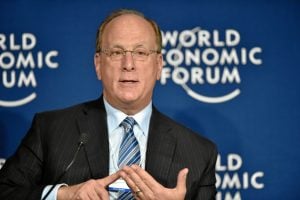
In 2011, Fink said agricultural and water investments would be the best performers over the next 10 years.
“Go long agriculture and water and go to the beach.”
Unsurprisingly then, just three years later, in 2014, the Oakland Institute found that institutional investors, including hedge funds, private equity and pension funds, were capitalising on global farmland as a new and highly desirable asset class.
Funds tend to invest for a 10-15-year period, resulting in good returns for investors but often cause long-term environmental and social devastation. They undermine local and regional food security through buying up land and entrenching an industrial, export-oriented model of agriculture.
In September 2020, Grain.org showed that private equity funds — pools of money that use pension funds, sovereign wealth funds, endowment funds and investments from governments, banks, insurance companies and high net worth individuals — were being injected into the agriculture sector throughout the world.
This money was being used to lease or buy up farms on the cheap and aggregate them into large-scale, US-style grain and soybean concerns. Offshore tax havens and the European Bank for Reconstruction and Development had targeted Ukraine in particular.
Plundering Ukraine
Western agribusiness had been coveting Ukraine’s agriculture sector for quite some time. That country contains one third of all arable land in Europe. A 2015 article by Oriental Review noted that, since the mid-90s, Ukrainian-Americans at the helm of the US-Ukraine Business Council have been instrumental in encouraging the foreign control of Ukrainian agriculture.
In November 2013, the Ukrainian Agrarian Confederation drafted a legal amendment that would benefit global agribusiness producers by allowing the widespread use of genetically modified (GM) seeds.
Even before the conflict in the country, the World Bank incorporated measures relating to the sale of public agricultural land as conditions in a $350 million Development Policy Loan (COVID ‘relief package’) to Ukraine. This included a required ‘prior action’ to “enable the sale of agricultural land and the use of land as collateral.”
Professor Olena Borodina of the National Academy of Sciences of Ukraine says:
“Today, thousands of rural boys and girls, farmers, are fighting and dying in the war. They have lost everything. The processes of free land sale and purchase are increasingly liberalised and advertised. This really threatens the rights of Ukrainians to their land, for which they give their lives.”
Borodina is quoted in the February 2023 report by the Oakland Institute War and Theft: The Takeover of Ukraine’s Agricultural Land, which reveals how oligarchs and financial interests are expanding control over Ukraine’s agricultural land with help and financing from Western financial institutions.
Aid provided to Ukraine in recent years has been tied to a drastic structural adjustment programme requiring the creation of a land market through a law that leads to greater concentration of land in the hands of powerful interests. The programme also includes austerity measures, cuts in social safety nets and the privatisation of key sectors of the economy.
Frédéric Mousseau, co-author of the report, says:
“Despite being at the centre of news cycle and international policy, little attention has gone to the core of the conflict — who controls the agricultural land in the country known as the breadbasket of Europe. [The] Answer to this question is paramount to understanding the major stakes in the war.”
The report shows the total amount of land controlled by oligarchs, corrupt individuals and large agribusinesses is over nine million hectares — exceeding 28 per cent of Ukraine’s arable land (the rest is used by over eight million Ukrainian farmers).
The largest landholders are a mix of Ukrainian oligarchs and foreign interests — mostly European and North American as well as the sovereign fund of Saudi Arabia. A number of large US pension funds, foundations and university endowments are also invested in Ukrainian land through NCH Capital — a US-based private equity fund, which is the fifth largest landholder in the country.
President Zelenskyy put land reform into law in 2020 against the will of the vast majority of the population who feared it would exacerbate corruption and reinforce control by powerful interests in the agricultural sector.
The Oakland Institute notes that, while large landholders are securing massive financing from Western financial institutions, Ukrainian farmers — essential for ensuring domestic food supply — receive virtually no support. With a land market in place, amid high economic stress and war, this difference of treatment will lead to more land consolidation by large agribusinesses.
All but one of the 10 largest landholding firms are registered overseas, mainly in tax havens such as Cyprus or Luxembourg. The report identifies many prominent investors, including Vanguard Group, Kopernik Global Investors, BNP Asset Management Holding, Goldman Sachs-owned NN Investment Partners Holdings and Norges Bank Investment Management, which manages Norway’s sovereign wealth fund.
Most of the agribusiness firms are substantially indebted to Western financial institutions, in particular the European Bank for Reconstruction and Development, the European Investment Bank, and the International Finance Corporation — the private sector arm of the World Bank.
Together, these institutions have been major lenders to Ukrainian agribusinesses, with close to US$1.7 billion lent to just six of Ukraine’s largest landholding firms in recent years. Other key lenders are a mix of mainly European and North American financial institutions, both public and private.
The report notes that this gives creditors financial stakes in the operation of the agribusinesses and confers significant leverage over them. Meanwhile, Ukrainian farmers have had to operate with limited amounts of land and financing, and many are now on the verge of poverty.
According to the Oakland Institute, small-scale farmers in Ukraine demonstrate resilience and enormous potential for leading the expansion of a different production model based on agroecology and producing healthy food. Whereas large agribusinesses are geared towards export markets, it is Ukraine’s small and medium-sized farmers who guarantee the country’s food security.
This is underlined by the State Statistics Service of Ukraine in its report ‘Main agricultural characteristics of households in rural areas in 2011’, which showed that smallholder farmers in Ukraine operate 16 per cent of agricultural land, but provide 55 per cent of agricultural output, including 97 per cent of potatoes, 97 per cent of honey, 88 per cent of vegetables, 83 per cent of fruits and berries and 80 per cent of milk.
The Oakland Institute states:
“Ukraine is now the world’s third-largest debtor to the International Monetary Fund and its crippling debt burden will likely result in additional pressure from its creditors, bondholders and international financial institutions on how post-war reconstruction — estimated to cost US$750 billion — should happen.”
Financial institutions are leveraging Ukraine’s crippling debt to drive further privatisation and liberalisation — backing the country into a corner to make it an offer it can’t refuse.

An airman loads weapons cargo bound for Ukraine onto a C-17 Globemaster III during a security assistance mission at Dover Air Force Base, Delaware, Sept. 14, 2022. (U.S. Air Force photo by Staff Sgt. Marco A. Gomez)
Since the war began, the Ukrainian flag has been raised outside parliament buildings in the West and iconic landmarks have been lit up in its colours. An image bite used to conjure up feelings of solidarity and support for that nation while serving to distract from the harsh machinations of geopolitics and modern-day economic plunder that is unhindered by national borders and has scant regard for the plight of ordinary citizens.
It is interesting to note that Larry Fink and BlackRock are to ‘coordinate’ investment in ‘rebuilding’ Ukraine.
An official statement released in late December 2022 said the agreement with BlackRock would:
“… focus in the near term on coordinating the efforts of all potential investors and participants in the reconstruction of our country, channelling investment into the most relevant and impactful sectors of the Ukrainian economy.”
According to the Code Pink organisation, BlackRock has $5.7 billion invested in Boeing, $2 billion in General Dynamics; $4.6 billion in Lockheed Martin; $2.6 billion in Northrop Grumman; and $6 billion in Raytheon. It profits from both destruction and reconstruction.
Since the start of the conflict in Ukraine in February 2022, billions of dollars’ worth of military hardware have been sent to Ukraine by the EU. By late February 2023, it had forwarded €3.6 billion worth of military assistance to the Zelensky regime via the European Peace Fund. However, even at that time, the total cost for EU countries could have been closer to €6.9 billion.
In late June 2023, the European Union (EU) pledged a further €3.5 billion in military aid.
Great news for European and UK armaments companies like BAE Systems, Saab and Rheinmetall, which are raking in huge profits from the destruction of Ukraine (see the CNN Business report Europe’s arms spending on Ukraine boosts defense companies).
US arms manufacturers like Raytheon and Lockheed Martin are also acquiring multi-billion-dollar contracts (as outlined in the online articles Raytheon wins $1.2 billion surface-to-air missile order for Ukraine and Pentagon readies new $2 billion Ukraine air defense package including missiles).
Meanwhile, away from the boardrooms, business conferences and high-level strategizing, hundreds of thousands of ordinary young Ukrainians have died.
Irish Members of the European Parliament Mick Wallace and Clare Daly have been staunch critics of the EU stance on Ukraine (see Clare Daly talking in the EU parliament about Ukraine burning through a generation of men on YouTube).
Wallace addressed the EU Parliament in June 2023, describing the heist currently taking place in that country by Western corporations.
Wallace said:
“The damage to Ukraine is devastating. Towns and cities that endured for hundreds of years don’t exist anymore. We must recognise that these towns, cities and surrounding lands were long being stolen by local oligarchs colluding with global financial capital. This theft quickened with the onset of the war in 2014.
“The pro-Western government opened the doors wide for massive structural adjustment and privatisation programmes spearheaded by the European Bank for Reconstruction and Development, the International Monetary Fund (IMF) and the World Bank. Zelensky used the current war to concentrate power and accelerate the corporate fire sale. He banned opposition parties that were resisting deeply unpopular reforms to the laws restricting the sale of land to foreign investors.
“Over three million hectares of agricultural land are now owned by companies based in Western tax havens. Ukraine’s mineral deposits alone are worth over $12 trillion. Western companies are licking their lips.
“What are the working-class people of Ukraine dying for?”
Hard-edged Rock
BlackRock is a publicly owned investment manager that primarily provides its services to institutional, intermediary and individual investors. The firm exists to put its assets to work to make money for its clients. And it must ensure the financial system functions to secure this goal. And this is exactly what it does.
Back in 2010, the farmlandgrab.org website reported that BlackRock’s global agriculture fund would target (invest in) companies involved with agriculture-related chemical products, equipment and infrastructure, as well as soft commodities and food, biofuels, forestry, agricultural sciences and arable land.
According to research by Global Witness, it has since indirectly profited from human rights and environmental abuses through investing in banks notorious for financing harmful palm oil firms (see the article The true price of palm oil, 2021).
Blackrock’s Global Consumer Staples exchange rated fund (ETF), which was launched in 2006 and, according to the article The rise of financial investment and common ownership in global agrifood firms (Review of International Political Economy, 2019), has:
“US$560 million in assets under management, holds shares in a number of the world’s largest food companies, with agrifood stocks making up around 75 per cent of the fund. Nestlé is the funds’ largest holding, and other agrifood firms that make up the fund include Coca-Cola, PepsiCo, Walmart, Anheuser Busch InBev, Mondelez, Danone, and Kraft Heinz.”
The article also states that BlackRock’s iShares Core S&P 500 Index ETF has $150 billion in assets under management. Most of the top publicly traded food and agriculture firms are part of the S&P 500 index and BlackRock holds significant shares in those firms.
The author of the article, Professor Jennifer Clapp, also notes BlackRock’s COW Global Agriculture ETF has $231 million in assets and focuses on firms that provide inputs (seeds, chemicals and fertilizers) and farm equipment and agricultural trading companies. Among its top holdings are Deere & Co, Bunge, ADM and Tyson. This is based on BlackRock’s own data from 2018.
Jennifer Clapp states:
“Collectively, the asset management giants — BlackRock, Vanguard, State Street, Fidelity, and Capital Group — own significant proportions of the firms that dominate at various points along agrifood supply chains. When considered together, these five asset management firms own around 10–30 per cent of the shares of the top firms within the agrifood sector.”
BlackRock et al are heavily invested in the success of the prevailing globalised system of food and agriculture.
They profit from an inherently predatory system that — focusing on the agrifood sector alone — has been responsible for, among other things, the displacement of indigenous systems of production, the impoverishment of many farmers worldwide, the destruction of rural communities and cultures, poor-quality food and illness, less diverse diets, ecological destruction and the proletarianization of independent producers.
Due to their size, according to journalist Ernst Wolff, BlackRock and its counterpart Vanguard exert control over governments and important institutions like the European Central Bank (ECB) and the US Federal Reserve. BlackRock and Vanguard have more financial assets than the ECB and the Fed combined.
BlackRock currently has $10 trillion in assets under its management and, to underline the influence of the firm, Fink himself is a billionaire who sits on the board of the WEF and the powerful and highly influential Council for Foreign Relations, often referred to as the shadow government of the US — the real power behind the throne.
Researcher William Engdahl says that since 1988 the company has put itself in a position to de facto control the Federal Reserve, most Wall Street mega-banks, including Goldman Sachs, the Davos WEF great reset and now the Biden administration.
Engdahl describes how former top people at BlackRock are now in key government positions, running economic policy for the Biden administration, and that the firm is steering the ‘great reset’ and the global ‘green’ agenda.
Fink recently eulogised about the future of food and ‘coded’ seeds that would produce their own fertiliser. He says this is “amazing technology”. This technology is years away and whether it can deliver on what he says is another thing.
More likely, it will be a great investment opportunity that is par for the course as far as genetically modified organisms (GMOs) in agriculture are concerned: a failure to deliver on its inflated false promises. And even if it does eventually deliver, a whole host of ‘hidden costs’ (health, social, ecological etc.) will probably emerge.
And that’s not idle speculation. We need look no further than previous ‘interventions’ in food/farming under the guise of Green Revolution technologies, which did little if anything to boost overall food production (in India at least, according to Professor Glenn Stone in his paper New Histories of the Green Revolution) but brought with it tremendous ecological, environmental and social costs and adverse impacts on human health, highlighted by many researchers and writers, not least in Bhaskar Save’s open letter to Indian officials and the work of Vandana Shiva.
However, the Green Revolution entrenched seed and agrichemical giants in global agriculture and ensured farmers became dependent on their proprietary inputs and global supply chains. After all, value capture was a key aim of the project.
But why should Fink care about these ‘hidden costs’, not least the health impacts?
Well, actually, he probably does — with his eye on investments in ‘healthcare’ and Big Pharma. BlackRock’s investments support and profit from industrial agriculture as well as the hidden costs.
Poor health is good for business (for example, see on the BlackRock website BlackRock on healthcare investment opportunities amid Covid-19). Scroll through BlackRock’s website and it soon becomes clear that it sees the healthcare sector as a strong long-term bet.
And for good reason. For instance, increased consumption of ultra-processed foods (UPFs) was associated with more than 10 per cent of all-cause premature, preventable deaths in Brazil in 2019 according to a peer-reviewed study in the American Journal of Preventive Medicine.
The findings are significant not only for Brazil but more so for high income countries such as the US, Canada, the UK and Australia, where UPFs account for more than half of total calorific intake. Brazilians consume far less of these products than countries with high incomes. This means the estimated impact would be even higher in richer nations.
Due to corporate influence over trade deals, governments and the World Trade Organization (WTO), transnational food retail and food processing companies continue to colonise markets around the world and push UPFs.
In Mexico, global agrifood companies have taken over food distribution channels, replacing local foods with cheap processed items. In Europe, more than half the population of the European Union is overweight or obese, with the poor especially reliant on high-calorie, poor nutrient quality food items.
Larry Fink is good at what he does — securing returns for the assets his company holds. He needs to keep expanding into or creating new markets to ensure the accumulation of capital to offset the tendency for the general rate of profit to fall. He needs to accumulate capital (wealth) to be able to reinvest it and make further profits.
When capital struggles to make sufficient profit, productive wealth (capital) over accumulates, devalues and the system goes into crisis. To avoid crisis, capitalism requires constant growth, expanding markets and sufficient demand.
And that means laying the political and legislative groundwork to facilitate this. In India, for example, the now-repealed three farm laws of 2020 would have provided huge investment opportunities for the likes of BlackRock. These three laws — imperialism in all but name — represented a capitulation to the needs of foreign agribusiness and asset managers who require access to India’s farmland.
The laws would have sounded a neoliberal death knell for India’s food sovereignty, jeopardised its food security and destroyed tens of millions of livelihoods. But what matters to global agricapital and investment firms is facilitating profit and maximising returns on investment.
This has been a key driving force behind the modern food system that sees around a billion people experiencing malnutrition in a world of food abundance. That is not by accident but by design — inherent to a system that privileges corporate profit ahead of human need.
The modern agritech/agribusiness sector uses notions of it and its products being essential to ‘feed the world’ by employing ‘amazing technology’ in an attempt to seek legitimacy. But the reality is an inherently unjust globalised food system, farmers forced out of farming or trapped on proprietary product treadmills working for corporate supply chains and the public fed GMOs, more ultra-processed products and lab-engineered food.
A system that facilitates ‘going long and going to the beach’ serves elite interests well. For vast swathes of humanity, however, economic warfare is waged on them every day courtesy of a hard-edged (black) rock.
Chapter II:
Millions Suffer as Junk Food Corporations Rake in Global Profits
As mentioned in the previous chapter, increased consumption of ultra-processed foods (UPFs) was associated with more than 10 per cent of all-cause premature, preventable deaths in Brazil in 2019. That is the finding of a peer-reviewed study in the American Journal of Preventive Medicine.
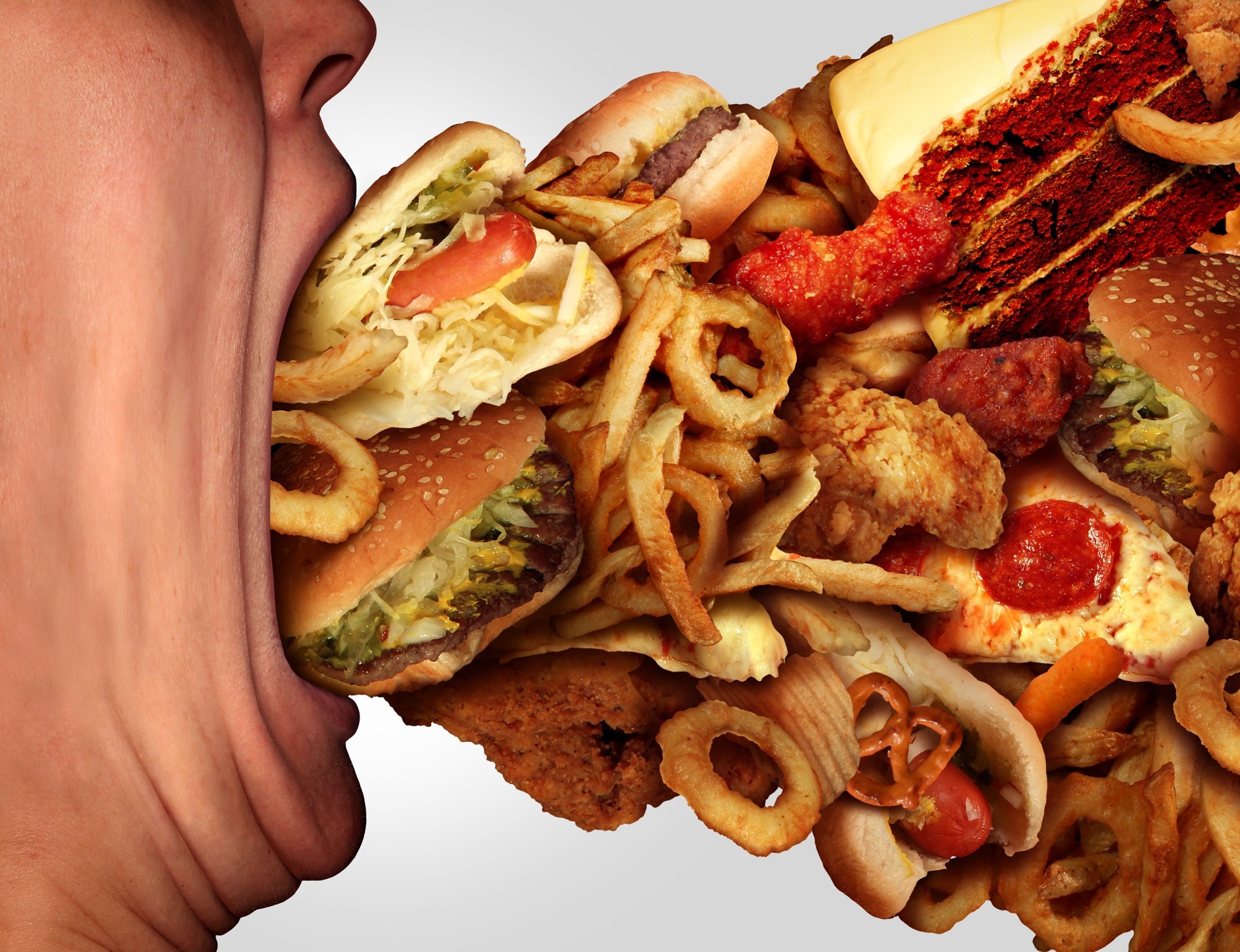
UPFs are ready-to-eat-or-heat industrial formulations made with ingredients extracted from foods or synthesised in laboratories. These have gradually been replacing traditional foods and meals made from fresh and minimally processed ingredients in many countries.
The study found that approximately 57,000 deaths in one year could be attributed to the consumption of UPFs — 10.5 per cent of all premature deaths and 21.8 [per cent of all deaths from preventable noncommunicable diseases in adults aged 30 to 69.
The study’s lead investigator Eduardo AF Nilson states:
“To our knowledge, no study to date has estimated the potential impact of UPFs on premature deaths.”
Across all age groups and sex strata, consumption of UPFs ranged from 13 per cent to 21 per cent of total food intake in Brazil during the period studied.
UPFs have steadily replaced the consumption of traditional whole foods, such as rice and beans, in Brazil.
Reducing consumption of UPFs by 10 to 50 per cent could potentially prevent approximately 5,900 to 29,300 premature deaths in Brazil each year. Based on this, hundreds of thousands of premature deaths could be prevented globally annually. And many millions more could be prevented from acquiring long-term, debilitating conditions.
Nilson adds:
“Consumption of UPFs is associated with many disease outcomes, such as obesity, cardiovascular disease, diabetes, some cancers and other diseases, and it represents a significant cause of preventable and premature deaths among Brazilian adults.”
Examples of UPFs are prepackaged soups, sauces, frozen pizza, ready-to-eat meals, hot dogs, sausages, sodas, ice cream, and store-bought cookies, cakes, candies and doughnuts.
And yet, due to trade deals, government support and WTO influence, transnational food retail and food processing companies continue to colonise markets around the world and push UPFs.
In Mexico, for instance, these companies have taken over food distribution channels, replacing local foods with cheap processed items, often with the direct support of the government. Free trade and investment agreements have been critical to this process and the consequences for public health have been catastrophic.
Mexico’s National Institute for Public Health released the results of a national survey of food security and nutrition in 2012. Between 1988 and 2012, the proportion of overweight women between the ages of 20 and 49 increased from 25 to 35 per cent and the number of obese women in this age group increased from 9 to 37 per cent. Some 29 per cent of Mexican children between the ages of 5 and 11 were found to be overweight, as were 35 per cent of the youngsters between 11 and 19, while one in 10 school age children experienced anaemia.
The North America Free Trade Agreement (NAFTA) led to the direct investment in food processing and a change in Mexico’s retail structure (towards supermarkets and convenience stores) as well as the emergence of global agribusiness and transnational food companies in the country.
NAFTA eliminated rules preventing foreign investors from owning more than 49 per cent of a company. It also prohibited minimum amounts of domestic content in production and increased rights for foreign investors to retain profits and returns from initial investments.
By 1999, US companies had invested 5.3 billion dollars in Mexico’s food processing industry, a 25-fold increase in just 12 years.
US food corporations also began to colonise the dominant food distribution networks of small-scale vendors, known as tiendas (corner shops). This helped spread nutritionally poor food as they allowed these corporations to sell and promote their foods to poorer populations in small towns and communities. By 2012, retail chains had displaced tiendas as Mexico’s main source of food sales.
A Spoonful of Deceit
Turning to Europe, more than half the population of the European Union (EU) is overweight or obese. Without effective action, this number will grow substantially by 2026.
That warning was issued in 2016 and was based on the report A Spoonful of Sugar: How the Food Lobby Fights Sugar Regulation in the EU by the research and campaign group Corporate Europe Observatory (CEO).
CEO noted that obesity rates were rising fastest among lowest socio-economic groups. That is because energy-dense foods of poor nutritional value are cheaper than more nutritious foods, such as vegetables and fruit, and relatively poor families with children purchase food primarily to satisfy their hunger.
The report argued that more people than ever before are eating processed foods as a large part of their diet. And the easiest way to make industrial, processed food cheap, long-lasting and enhance the taste is to add extra sugar as well as salt and fat to products.
In the United Kingdom, the cost of obesity was estimated at £27 billion per year in 2016, and approximately 7 per cent of national health spending in EU member states as a whole is due to obesity in adults.
The food industry has vigorously mobilised to stop vital public health legislation in this area by pushing free trade agreements and deregulation drives, exercising undue influence over regulatory bodies, capturing scientific expertise, championing weak voluntary schemes and outmanoeuvring consumer groups by spending billions on aggressive lobbying.
The leverage which food industry giants have over EU decision-making has helped the sugar lobby to see off many of the threats to its profit margins.
CEO argued that key trade associations, companies and lobby groups related to sugary food and drinks together spend an estimated €21.3 million (2016) annually to lobby the EU.
While industry-funded studies influence European Food Standards Authority decisions, Coca Cola, Nestlé and other food giants engage in corporate propaganda by sponsoring sporting events and major exercise programmes to divert attention from the impacts of their products and give the false impression that exercise and lifestyle choices are the major factors in preventing poor health.
Katharine Ainger, freelance journalist and co-author of CEO’s report, said:
“Sound scientific advice is being sidelined by the billions of euros backing the sugar lobby. In its dishonesty and its disregard for people’s health, the food and drink industry rivals the tactics we’ve seen from the tobacco lobby for decades.”
ILSI Industry Front Group
One of the best-known industry front groups with global influence is what a September 2019 report in the New York Times (NYT) called a “shadowy industry group” — the International Life Sciences Institute (ILSI).
The institute was founded in 1978 by Alex Malaspina, a Coca-Cola scientific and regulatory affairs leader. It started with an endowment of $22 million with the support of Coca Cola.

Since then, ILSI has been quietly infiltrating government health and nutrition bodies around the globe and has more than 17 branches that influence food safety and nutrition science in various regions.
Little more than a front group for its 400 corporate members that provide its $17 million budget, ILSI’s members include Coca-Cola, DuPont, PepsiCo, General Mills and Danone.
The NYT says ILSI has received more than $2 million from chemical companies, among them Monsanto. In 2016, a UN committee issued a ruling that glyphosate, the key ingredient in Monsanto’s weedkiller Roundup, was “probably not carcinogenic,” contradicting an earlier report by the WHO’s cancer agency. The committee was led by two ILSI officials.
From India to China, whether it has involved warning labels on unhealthy packaged food or shaping anti-obesity education campaigns that stress physical activity and divert attention from the food system itself, prominent figures with close ties to the corridors of power have been co-opted to influence policy in order to boost the interests of agri-food corporations.
As far back as 2003, it was reported by The Guardian newspaper that ILSI had spread its influence across the national and global food policy arena. The report talked about undue influence exerted on specific WHO/FAO food policies dealing with dietary guidelines, pesticide use, additives, trans-fatty acids and sugar.
&