Select date

Blame Liberal Pluralism for the Impending Ethnocide of Europeans, by Ricardo Duchesne


Introduction
What’s happening in the West is so patently absurd, the willful suppression for decades of increasing black-on-white violence, the flying of the rainbow flag everywhere, the demonization and falsification of European history, the insistence that black failures are a product of systemic white racism, the powerlessness of governments to stop endless waves of migrants, the total prohibition of any form of white identity — all combined with the slow erosion of the principle of open scientific and journalistic inquiry to promote or cover up these lies. The situation is so wildly unreasonable and morally inappropriate that reasonable people cannot but believe it is the product of some malevolent force acting from the outside, rather than a product of the West itself, a hidden agenda concocted in secret corridors, cultural Marxists “marching through the institutions,” a “Kalergi plan” enacted by a mysterious Austrian-Japanese politician, the product of nihilistic and self-destructive “spiteful mutants” or “psychopathic narcissists” with a zeal for “social justice”, or a grand strategy conducted by a minuscule group of Jews in secret since ancient times without Europeans even noticing it.
The argument I will make is that the ultimate reason for the current ethnocidal path of the West is to be found in its unique ideology of liberal pluralism and its principle that all humans are alike in their inalienable freedom to decide for themselves their values and lifestyles. The very ideology that brought the West so much success in the modern era, liberalism, is the major, long-term reason for the current decomposition of the West. This perspective does not preclude the role of short-term factors in accelerating, intensifying, or spreading this ethnocidal path. The zealotry of Jews in the pursuit of cultural pluralism and demonization of white identity is definitely a proximate factor in the radicalization of liberalism in the post-WWII era. The weakening of persisting sentiments of ethnic affiliation and nationalism in continental Europe by Anglo Atlanticists in pursuit of a unipolar liberal world to advance “the progressive values of an open society” across the world should not be underestimated. The very success of liberal individualism in creating relatively affluent lifestyles, with lots of entertainment and enticing pleasures, has undoubtedly produced a complacent psychological disposition among middle-class whites, weakening even further the natural ingroup instincts that liberal values dilute. As we were warned long ago by the aristocratic ancient Romans: comfort breeds weakness and effeminacy.
My emphasis, however, will be on liberal pluralism, which is based on the principle of equality of rights, as the ultimate cause, or the “real reason” for the current ethnocidal path of Europeans. It may seem that I am reviving James Burham’s argument that “liberalism is the ideology of Western suicide” articulated some 60 years ago. Burham’s concern, however, was the West’s global retreat from its colonial empires and lack of confidence in the face of Communist expansion. He viewed this retreat as a product of the naive liberal view that humans are potentially a perfectible species capable of relying on their rational capacities to create a world of nations coexisting in a state of mutual economic prosperity and equality. Westerners were attacking their own history for its shortcomings instead of exhibiting confidence about their unparalleled achievements under the illusion that the problems of the world were mere products of backward customs and irrational prejudices that could be eliminated with a proper rationalist education.
My way of emphasizing liberalism will be very different. While there is an intellectual current within liberalism, as we shall see below, giving special prominence to the actualization of human perfectionism through the development of the faculty of reason, the cardinal principle of modern liberalism is that every human should have equal liberty as a moral agent capable of deciding what to believe and what way of life to pursue. In other words, the central principle of this ideology is not the advocacy of any doctrine, be it rationalism, empiricism, or hedonism; it is, rather, the advocacy of a political setting within which every person is equally free to make decisions about the “good life” based on their conscience as long as they don’t seek to undermine the political setting within which this pluralism is possible.
Blaming cultural Marxism, or the Left generally, is a preferable option among dissidents. This is so because the dissident right, lacking an ideology of its own, an alternative doctrine with fully developed concepts and moral values, is fundamentally dependent on liberalism, wishing to return to an earlier version of this ideology. Marxism, fascism, and liberalism are “world-outlooks”, that is, systematic accounts of the nature of the world, with their own economic doctrines, anthropologies, accounts of history, epistemologies, ethical theories, aesthetics, offering meaning and purpose to their followers. The contemporary dissident outlook is an inconsistent mixture of views, borrowings from fascism along with populist feelings rooted in natural sentiments and instincts without a theoretical framework, feeding off liberalism itself, an earlier “classical” version, sustained by race realism. Race realism is not an ideological world view but a scientific theory. Dissidents know that fascism is no longer able to garner mass support after its defeat by liberalism in WWII. What dissidents want, including white nationalists, is a liberalism that accepts race differences and understands ingroup ethnic behaviors. They point to the acceptance of slavery by the “classical liberal” founding fathers and to the persistence just a few decades ago of white-only immigration policies in all Western settler states. We will see below that this betrays a misunderstanding of the inherent moral ideals of liberalism.
Traditionalists have been the only ones (I am thinking of De Benoist, Kerry Bolton, Alexander Dugin) to carry a frontal attack on liberalism as such, holding its inherent individualism responsible for undermining every collective (racial and sexual) identity in the West. But traditionalists have not been able to grapple consistently with the ways in which the traditionalism of the West has always coexisted with some degree of individualism, monogamous families freed from polygamous kinship networks, equal civic status and participation in politics for free adult males, what is now known as a “civic-republican” form of liberalism, in complete contrast to the non-western world. They have been unwilling to admit, moreover, that traditional non-western societies became relatively stagnant intellectually after their Axial Age (800-200 BC) cultivation of Confucianism, Hinduism, Judaism, and Zoroastrianism; and that the celebrated aristocracy it identifies with “traditionalism” in the West had been transformed by the 1700s into mere courtiers of the absolutist states, or a weak decentralized class parasitically collecting rents from a backward peasantry, devoid of its former heroic ethos of sacrifice, outcompeted by an entrepreneurial bourgeoise marching through history with its modern liberal ideals. Traditionalists also tend to view liberalism as an economic doctrine of capitalist individualism without adequately appreciating its ideal of the equal right of human beings to decide for themselves their own values, without being told by a state what to think, what religion to practice, or what choices to make in life.
Until last year I accepted the claim that cultural Marxists had successfully carried out a “long march through the institutions” against an otherwise sensible liberal culture prevailing before World War II in the West, when individual rights were understood in a libertarian and ethno-nationalistic way. Liberalism, before this march, I thought, guaranteed powerful liberties, freedom from arbitrary arrest and seizure of property, open scientific inquiry on all subjects including freedom to express views about racial differences, sustained by monogamous traditional family values. This was indeed a liberalism in which freedom of association was understood to include the right to refuse to associate with members of certain ethnic groups, the right of leaders to decide which immigrants were best suited to Western culture, even the right to discriminate in employment practices. But this nationalistic liberalism, I believed, was gradually infiltrated by leftist ideologues, in the post WWII decades, leading to a very different illiberal landscape characterized by the imposition from above of politically correct beliefs, multicultural relativism, gender pronouns, and group-identity politics for “racialized” minorities.
ORDER IT NOW
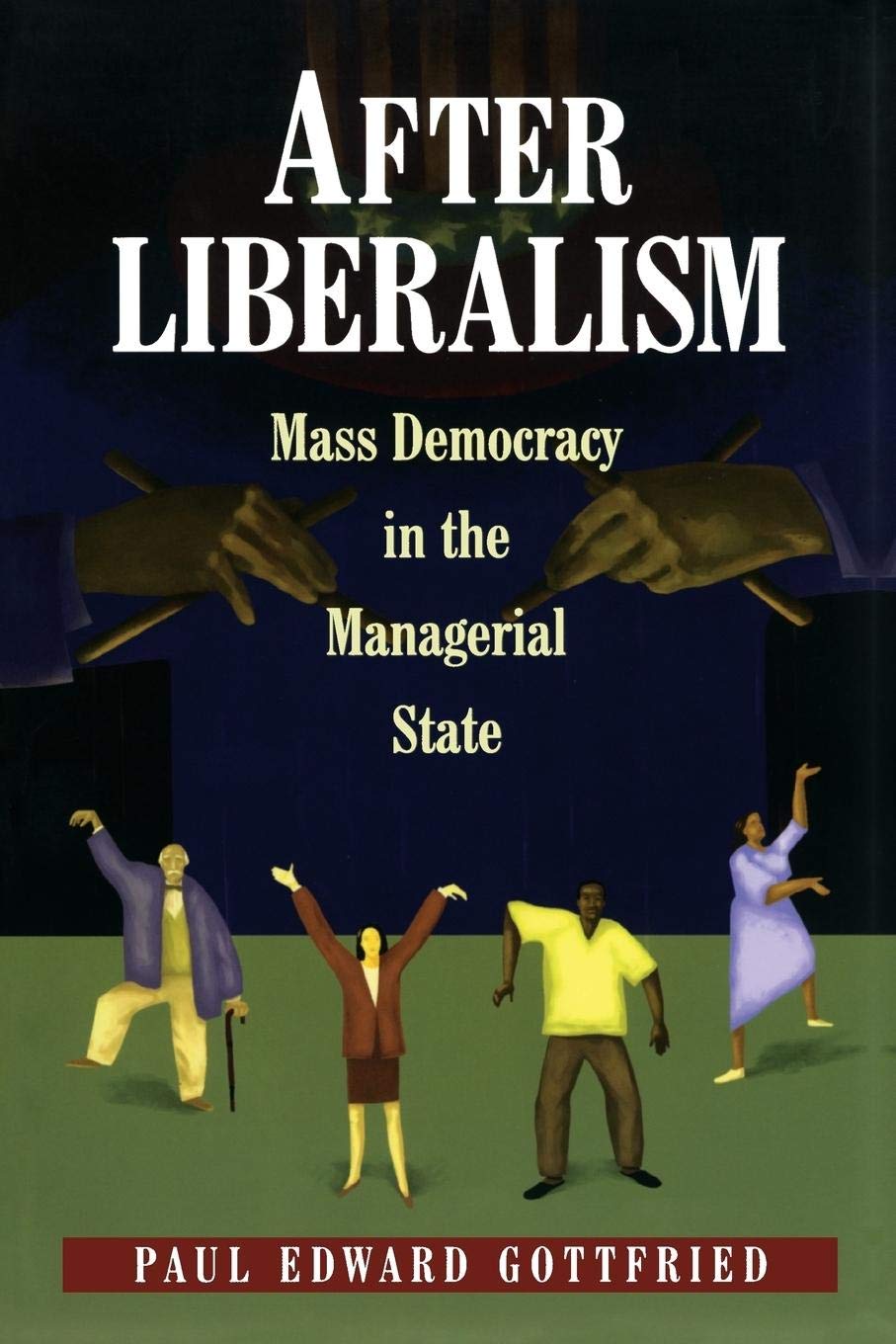
The idea that cultural Marxists are in charge, originally articulated by dissidents, is now also widespread among mainstream conservatives in their opposition to “critical race theory”. It is also common among those who identify the heavily Jewish Frankfurt School as one of the intellectual agents behind cultural Marxism. Paul Gottfried was one of the popularizers of the term cultural Marxism, observing that the ideas of the Frankfurt School “encouraged a war without quarter against bourgeois institutions and national identities”. Gottfried, however, blamed cultural Marxists in general, or the post-WWII New Left, not just the Frankfurt School, for the defeat of liberalism. In his book After Liberalism: Mass Democracy in the Managerial State, he carefully explained that the Left did not just topple the old state but almost imperceptibly over the twentieth century managed to create a whole new form of governance, a “managerial” or “therapeutic” state with a capacity to engage in the engineering of souls via multiple educational and social programs imposed from above by centralized authorities, along with regulations and speech codes dedicated to the modification of behaviour, with trained bureaucrats exacting major penalties against employees deemed to be in violation of anti-racist, anti-sexist and anti-gay codes. He insisted recently that liberalism reached its “heyday in the 19C” and “has been growing ever weaker since”, away from its “biblical morality, a strong nuclear family, and constitutional government”.
Rawls Theory of Political Liberalism
ORDER IT NOW
As I see it now, cultural Marxism — devaluation of traditional family, promotion of racial integration, criticism of European ethnocentrism, promotion of gender fluidity — is rooted in the fundamental principles of liberalism. The conception of liberalism I will be putting forth in this article closely follows John Rawls’s theory of political pluralism. Rawls is recognized as the most substantial and influential political philosopher of the twentieth century. A national survey of political theorists conducted in 2008, based on 1,086 responses from university professors in the United States, voted Rawls first on the list of “Scholars Who Have Had the Greatest Impact on Political Theory in the Past 20 Years”. When he died in 2002, over 3,000 articles specifically about Rawls had been published; and his main book, A Theory of Justice, had been cited about 60,000 times, ranked 8th among the most cited books in the social sciences and philosophy. He has been regularly cited as an authority in American court opinions, more than 60 times, according to an article published in 2005. Yet, in the abundant writings of dissidents, Rawls rarely ever gets a mention, never mind a study. The focus is invariably on Frankfurt intellectuals, postmodernists, globalists, feminists, critical race theorists, antifa lunatics, or politicians of the moment.
Strictly speaking, Rawls “theory” is not about how society ought to be organized, but a systematic treatise on the best way to think about the nature of contemporary pluralist Western democracies. It is a treatise developed in response to the “new moral sensitivities” of Westerners after WWII, after the deadly ideological and ethnic conflicts between fascism, communism, and liberalism, the student protests of the 1960s, the civil rights movement, widespread talk about human rights, women’s demands for full equal rights, disillusionment with capitalist consumerism, the spread of Marxism in university campuses, and demands by minorities for cultural diversity. The theory aims to show that actually existing political pluralism, and the principles of fairness and equal opportunity that already guide Western jurisprudence, if properly understood and acted upon, provide the best moral framework for Westerners to coexist in state of relative concord despite their religious, racial, cultural, and political differences.
The underlying moral premise of Rawls’s liberal pluralism is drawn directly out of the Western intellectual tradition. It says that each individual has an innate inviolability, a dignity, by virtue of being rationally capable of deciding his own beliefs and self-governing his own life. Given the moral equality of humans as agents capable of autonomy, they should never, in the words of John Locke, be “subjected to the Political Power of another without his own Consent”. The public-political sphere should be characterized by value-pluralism, with everyone enjoying the following “basic liberties”: liberty of conscience, freedom of belief on all subjects, freedom of association, or liberty to associate with persons one chooses, equal right to participate in politics, equality under the law, and fair equality of opportunity. When Rawls writes that in our current times these liberties are “fixed” and “correctly settled once and for all”, he means that they are accepted in the West as indisputably true in the mainstream world of politics. He also means, as we will explain soon, that doctrines that directly threaten political pluralism and its moral premise of equality of rights will be rightfully suppressed or kept on the margins without much influence.
The essence of liberalism is not, and has never really been, about the unconstrained use of property and absolute freedom of economic contract. Even in John Locke’s “classical liberalism,” that is, his theory of natural rights, there is a moral affirmation that all men are born free and equal with certain inalienable liberties, and that governments have a duty to respect these rights, at the base of which lies liberty of conscience. We will see later, in fact, that the majority of so-called “classical liberals” in the nineteenth century did not think that this ideology was fundamentally about self-interested competition, or laissez-faire economics. Classical liberalism, despite its revolutionary novel character, grew out of the aristocratic liberal ethos of Indo-Europeans and the civic liberal republicanism of ancient Greece and Rome, which persisted through the medieval era, though in symbiosis with the Christian idea that every human life is of equal value. Republican civic notions of the public good and the importance of government championing civic virtues, selflessness, and benevolence, continued to be held by modern classical liberals through both the “Glorious Revolution” of 1688 and the American Revolution of 1776. By the time we reach J.S. Mill, and the “new liberalism” of the late 1800s, we have a fusion of ancient ideals of civic virtue, dedication and self-sacrifice, with socialist liberal ideas about the indispensable role of the state in creating fairer opportunities, such as public schools and sanitation, for the substantive expression of equal liberties among the poorer members of society.
ORDER IT NOW
I am inclined to think that Rawls’s emphasis on liberty of conscience and value pluralism best captures the essential features of liberalism in our times. For all the apparent enforcement upon citizens of common politically correct beliefs and behaviors, the essential aim of liberalism remains the liberation of individuals from all collective constraints, including the removal of unfair conditions for freedom, such as lack of economic opportunities, classism, racism, or sexism, which are believed to stand in the way of individuals from exercising their free will, even if this requires regulating speech and behaviour. Liberalism to this day explicitly rejects a collective conception of the good. While in his first book, A Theory of Justice (1971), Rawls did ask what conception of liberalism is universally true and most capable of promoting perfectionism or human excellences in art, science, and culture, his later work, Political Liberalism (1993), rejects as unreasonable the imposition of any common ideals of the good life upon citizens. Rawls insightfully argues that at the heart of liberalism lies respect for the decisions of individuals about their own conception of the good life and the pursuit of happiness. He observes that in modern societies, under conditions of freedom, individuals will always endorse incompatible “comprehensive doctrines,” religious, philosophical, or moral world views, about what they sincerely think is the best way to find a purpose in life. Opposing value-pluralism would constitute a violation against the equal dignity of humans as beings who are innately capable of making their own decisions.
In a liberal society, there can be no shared doctrine or way of life other than a shared conception of the “inalienable” nature of the basic liberties. The question then is: what would be the best way for fair and just cooperation in a pluralist society where individuals choose incompatible doctrines? What follows is a simplified outline of his reply to this question. The way to create a stable liberal society, according to Rawls, is for the government to show citizens holding different views that they can live together in terms of cooperation that are publicly viewed as fair to everyone. Western nations have shown themselves to be fair, Rawls believes, insofar as the political domain within which people express their views has been characterized as “freestanding” wherein the government abstains from imposing the truthfulness of any doctrine, but instead justifies itself to citizens through the equal rights it grants to everyone to express their views as long as no one tries to infringe upon the equal rights of others. It is Rawls’s claim that citizens will endorse political liberalism for themselves as compatible with whatever view they hold to the degree that the state respects their liberties as human beings capable of holding their own doctrines in a state of mutual respect, reciprocity and civility. Thus, even though citizens hold fundamentally different metaphysical and religious views, their views will overlap and partly intersect in their shared political conception about the pluralistic character of the public domain.
Rawls makes a crucial distinction between “reasonable” and “unreasonable” doctrines. Doctrines are reasonable insofar as they are committed to fairness in the political domain, even if such doctrines hold illiberal religious views or Platonic metaphysical views about what constitutes “human perfectibility”. Doctrines are unreasonable if they seek to impose collective or illiberal values upon the political domain, or express views that challenge the autonomy and equal liberties of ethnic minorities, women, or LGBT members to take equal part in the cultural and political life of the community. Individuals are free to hold doctrines that affirm traditional values about family life, adhere to the “five pillars of Islam”, follow a strict Hassidic lifestyle of never changing anything about one’s traditional clothing, marriage norms, and food to keep oneself “spiritually clean” in separation from outsiders. Individuals are also free to create their own private spaces, clubs, engage in group sex or the swapping of sexual partners, join motorcycle gangs, play video games all day, become a mystic, or a hedonist — so long as they do not infringe on the rights of others, or advocate illiberal political views that aim to undermine the pluralist liberal domain. The doctrines that question political pluralism and the basic liberties of all individuals regardless of sex, race, and religious beliefs, are “unreasonable” and should not be allowed in the public sphere except as marginalized and nonthreatening ideas.
Rawls also makes a distinction between his political pluralism and “comprehensive doctrines”, such as the Kantian-Mill view that an educated elite should decide for citizens how they should “self-actualize” their “true natures” as “rational human beings”, or the civic republican view (in its current version as articulated by Charles Taylor, for example), with its claim that humans can only express their freedom and highest faculties as active public citizens, rather than as private individuals dominated by their base instincts. One of the main purposes of Rawls’s book Political Liberalism is to argue that defending liberal principles of justice, the right of each person to equal liberties, does not require a comprehensive “foundational” strategy, as he still believed in A Theory of Justice. A liberal order that is just or fair to every citizen does not mandate any collective conception, be it Hegelian, cultural Marxist, or Buddhist; rather, as Rawls coherently explains, “political liberalism” offers a “freestanding political conception” according to which a well-ordered liberal society is one that guarantees reciprocity and tolerance between citizens holding different world views. It is for citizens to decide individually, as part of their political conscience and dignity as humans, what they wish to think and do with their lives.
Religious parents can teach their children the traditional view that a woman’s place is in the home attending to her children, rather than pursuing a career; however, if parents teach their children illiberal political views that deny the equal civic status of women or any other group, aimed at encouraging their children to advocate and act on these views in the public sphere, then the government would have legitimate grounds to take actions against such ways of raising children. Traditional doctrines, such as Catholicism and the Mormon religion, which do not allow women to be priests, and advocate many illiberal views, will be counted as reasonable to the extent that the adherents of these religions tolerate the right of others to hold different views in the public domain without seeking to undermine women’s equal civic rights. This does not mean that a liberal government is completely neutral. Liberal governments can promote those values that “make a constitutional regime possible”, namely, the virtues of tolerance and reasonableness, the values of equal political and civil liberty, fairmindedness, mutual respect and reciprocity between citizens.
The common argument among dissidents that our current liberal societies are violating freedom of association and rights of economic contract, with the enactment of laws prohibiting private discrimination in hiring and educational decisions, fails to understand that discrimination in employment violates the moral ideal behind the principle of fair equality of opportunity in a society where individuals are deemed to have the same moral worth and political status. Laissez-faire liberalism, or libertarianism, never a majority view in the West, was decisively defeated by the end of the nineteenth century, or at least never adopted as a program by liberal governments since. Advocating for the elimination of minimum wage laws, health and safety laws, product safety provisions, or racial discrimination, would be deemed as a most unreasonable doctrine that violates the basic liberties of individuals and the conditions for equal freedom.
We will see below that politically correct mandates, multiculturalism, and feminism, have been relatively consistent with the principles of political liberalism insofar as these viewpoints have aimed at ensuring the equal liberties of individuals and fair equality of opportunity among “marginalised” members of society, the deconstruction of unreasonable comprehensive views, patriarchal biases, “xenophobic” or “ethnocentric” attitudes, which devalue the equal dignity of females, homosexuals, racial minorities, and immigrants. There is no need to appeal to another cultural Marxist ideology to understand the intellectual and moral sources of our current wokeness. We can understand what is happening in the West today far better by understanding the complex nature of liberalism, how this ideology is unlike any other ideology in its “freestanding” value pluralism, and how political pluralism contains within itself powerful normative resources to exclude viewpoints deemed to be “unreasonable”.
Whites Psychologically Wired for Liberal Progressivism
I am in agreement with Alexander Dugin’s thesis that the twentieth century witnessed only three major ideologies: liberalism, fascism, and communism. These ideologies grew in the West, with modern liberalism emerging first in the 1600s, and subsequently defeating the other two younger contesting ideologies in WWII and the Cold War respectively. Alain de Benoist is right: “liberalism is the dominant ideology of our time”. A flaw in De Benoist and Dugin, however, is that they identify liberalism with a narrow version of classical liberalism, a laissez-faire liberalism they associate, without fine distinctions, with the names of Locke, David Hume, and Adam Smith, and, in more recent times, with the names Friedrich von Hayek, Ludwig von Mises, and Milton Friedman, with their emphasis on economic rights of property, freedom of contract, and the freedom of consumers and producers. This flaw is compounded by their heavy reliance on Marx’s critique of liberalism, which barely addresses the moral ideals of liberalism. They reduce liberalism, in the words of De Benoist, to a worldview that sees “man as a being essentially driven by the desire to maximise his personal interest and private profit.” Nevertheless, I will defend the Marxian argument that liberalism emerged in close association with capitalism, and that capitalism has an internal dynamic that motivates the relentless accumulation of capital involving the investment of profits with the goal of increasing the competitiveness of firms — and that this dynamic has played a major role, along with liberalism, in the dissolution of Western traditions and national identities coupled with the promotion of open borders and mass immigration.
De Benoist and Dugin ignore two major components in the Western liberal tradition. Firstly, they leave out the powerful influence of the “high liberal tradition” espoused by John Rawls that I just elaborated about, which goes back to the contract tradition of Locke, his moral ideals, and that draws on Immanuel Kant and J.S Mill’s liberal philosophy, with its ideal of free self-governing persons who develop their human rational capacities and pursue ways of life that give expression to their autonomous nature. Although Rawls’s political liberalism objects to the Kant-Mill view that the government should promote human perfectionism, he accepts the emphasis these authors put on the moral ideal of persons as self-governing agents. His theory takes it as established by the liberal tradition, and as a presupposed view of actually existing Western states, that humans are sufficiently reasonable and rational to work out their differences in a consensual manner, treating each other as free and equal in the public sphere.
The second major component ignored by De Benoist and Dugin, including dissidents at large, is the long historical evolution of liberalism from ancient times to the present, before capitalism was born. Liberalism is deeply seated in the psychological constitution of whites. It is also deeply connected to the unparalleled creativity of Europeans. This is the dilemma I am trying to explain: why did the ideology that brought the West its supreme greatness is now responsible for its ethnocidal path? Liberalism is almost epigenetically rooted in the historically evolved psychology of Europeans. Kevin MacDonald is an exception in the dissident right in connecting the weak ethnocentrism of whites today back to the way evolutionary pressures in the northern climes of Europe in prehistoric times selected for weaker kinship networks, leading to the predominance of nuclear families, exogamous and monogamous marriage, and trust with anonymous strangers based on an individual’s reputation.
ORDER IT NOW
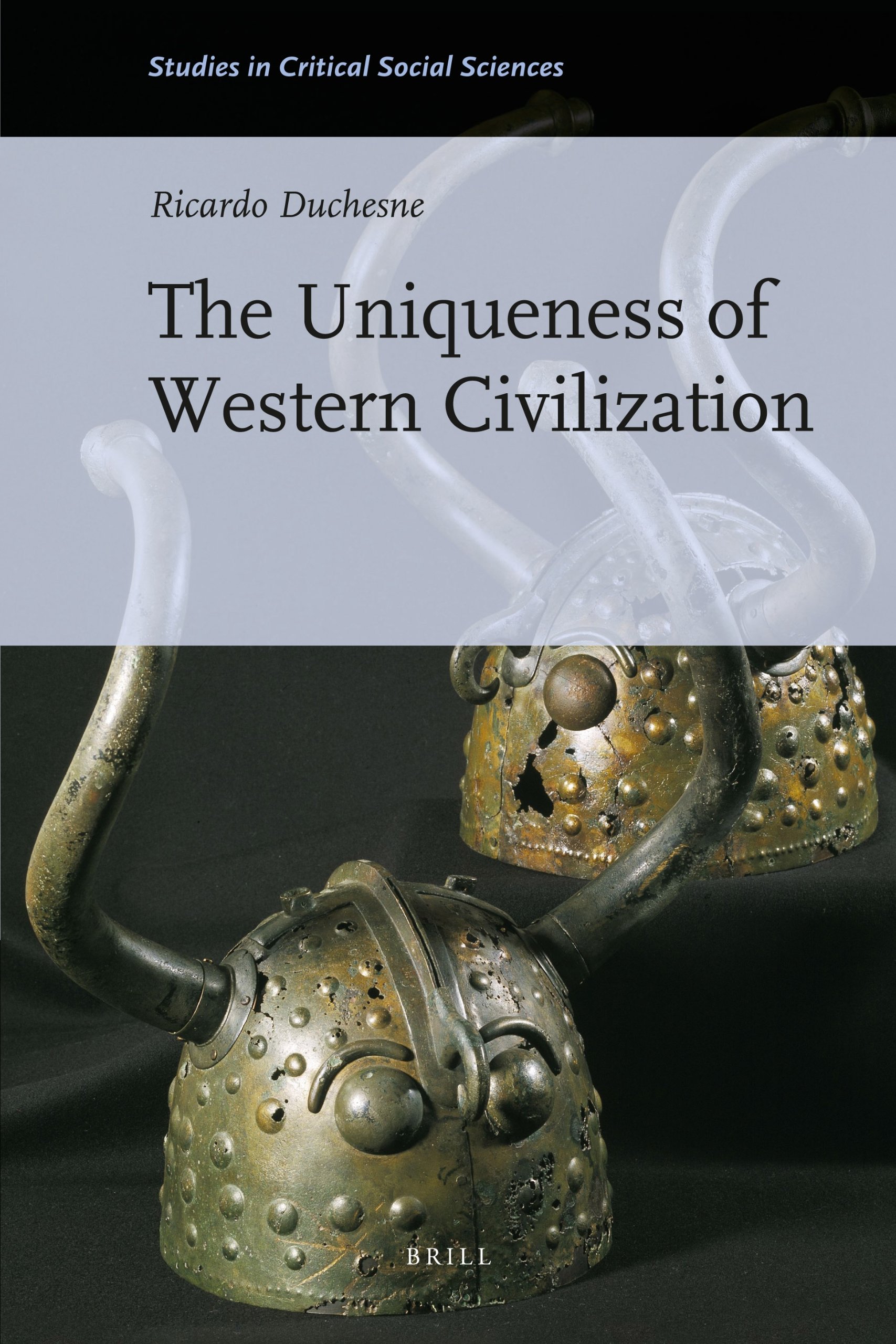
In Uniqueness of Western Civilization (2011), I traced the primordial roots of liberalism to the aristocratic masculine culture of horse-riding, highly mobile Indo-Europeans, with their uniquely contractual band of warrior brothers, consisting of dignified free men of honor unwilling to submit to despotic rulers, in which the leader was seen as “first among equals”. I called this an aristocratic form of liberalism. With the emergence of civilization in ancient Greece, I argued that this aristocratic, but still clannish ethos, was expanded into a civic republican ethos “befitting any free born person” belonging in a city-state. Although the ancient world retained its belief in the natural inequality of men and the superiority of the aristocracy, it did recognize the freedom of independent farmers, including them as equal citizens of the city-state and allowing them to take an active civic role in their states. The essential idea of this civic/republican form of freedom, articulated from Aristotle through to Cicero, was that man’s essential nature was most fully realized through his participation in a public civic community wherein politics was conceived as the locus of the good life. The aim of an education in the “liberal arts” cultivated by the Romans was to teach humanitas, what is proper for a noble man, magnanimity, disinterestedness, and a spirit of sacrifice for the well being of the community.
During the Middle Ages, this aristocratic-civic liberalism was substantially influenced by the Christian idea that “every human being had been made equally by God” and that there is a purposive pattern in history pointing towards the unity of mankind. As Paul preached to the Athenian philosophers: “From one man God made every nation of the human race, that they should inhabit the whole earth.”. This universalist view came along with a new sensitivity to human suffering, which motivated Christians to struggle against evil in this world. Christianity also promoted a new sexual morality against cousin and polygynous marriage, sexual activity outside marriage, sex with minors, divorce, infanticide and abortion, in favor of monogamy, freedom to choose one’s husband and wife, and affectionate family relations. While Greek and Roman law recognized monogamy for its superiority in sustaining the civic unity of society over clannish polygamous groups headed by bellicose aristocrats, the Germanic tribal invasions did reinforce polygamous ties notwithstanding the selective pressures for monogamous families in the northern climes of Europe.
ORDER IT NOW
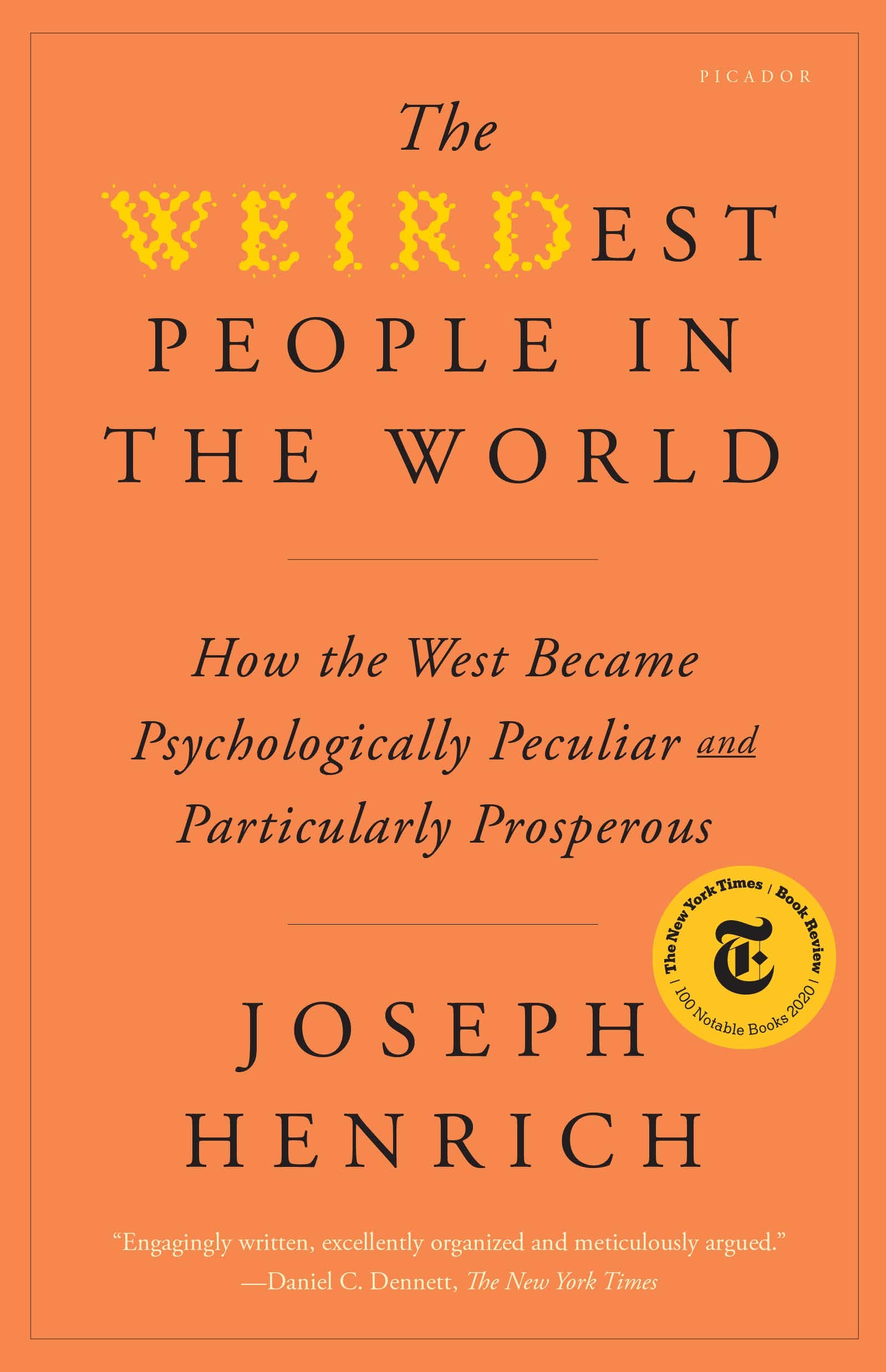
It has now been well established, or so I believe, by Joseph Henrich in his book, The Weirdest People of the World: How the West Became Psychologically Peculiar and Particularly Prosperous (2020), that liberal individualism gathered momentum across social life after the Catholic Church set about prohibiting in systematic fashion polygamy and consanguineous marriages, sanctioning only monogamy based on voluntary choice. By the 12th century, the nuclear family was predominant in Europe. These changes freed Europeans from collective kinship ties and norms, leading them to form new voluntary or civic associations, such as urban communes, guilds, diocese of bishops, monasteries, and universities, to cooperate socially, solve conflicts, and secure a livelihood with individuals from wider circles of life. This reconstitution, which came along with the rise of new systems of law based on contractual liberal principles, altered the psychology of Europeans in an individualist direction, socializing them to extend their trust to anonymous strangers, to think in a less ethnocentric or in-group way, and to judge objects and humans in terms of universal principles and rules applicable on the basis of rationally-based criteria.
Meanwhile, the rest of the world continued to be one of intense kinship relationships, as it had been since early Homo-sapiens days, characterized by a corresponding psychology that was clannish, conformist, and highly context-sensitive, without the ability to detach objects and persons from particular settings, and thus without the ability to generate abstract concepts and think analytically. Rawls’s theory of justice as fairness presupposes indeed a world in which individuals have been “psychologically rewired” with a new set of (liberal) dispositions for reduced ingroup favoritism, for greater fairness and cooperation with anonymous strangers, for analytical over contextual thinking, for impartial moral principles and objectivity, for love of choice and personal fulfillment. It presupposes a Western reality in which individuals are predisposed, in Rawls words, for “deliberative rationality,” with an analytical capacity to “draw inferences, weigh evidence, and balance competing considerations,” with “the virtues of fair social cooperation” with anonymous strangers holding different doctrines. As much as Rawls may assume that these traits are part of human nature, or easily taught to non-Westerners, his theory of liberal pluralism tacitly assumes a world that is already liberal in its psychology. This psychological profile, and the liberal pluralism it generated, is at the root of political correctness and white dispossession.
Aristocratic, Civic/Republican, and Classical Liberalism
ORDER IT NOW
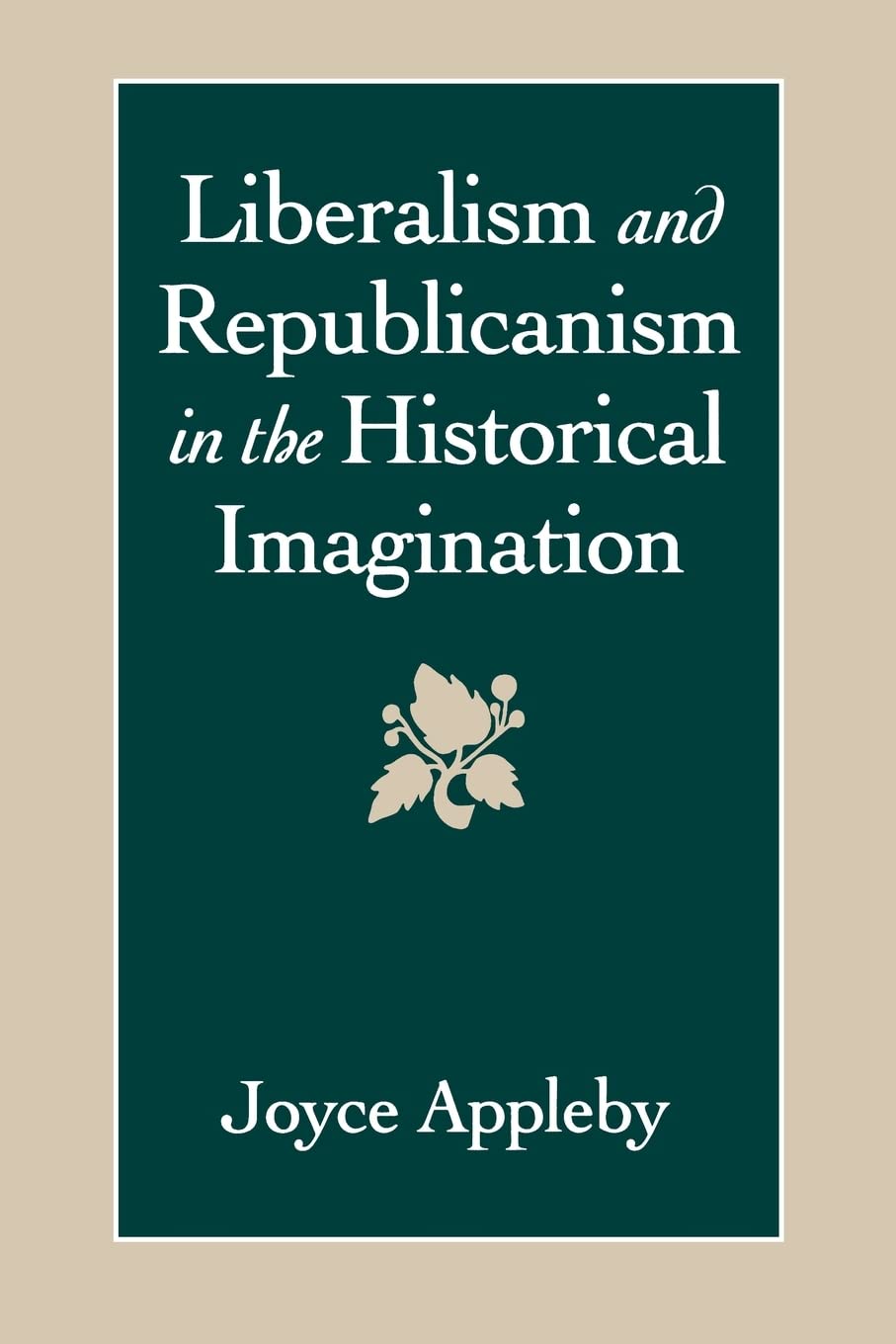
Although it is correct to talk about a “commercial revolution in the Middle Ages” and the rise of a variety of innovative business techniques, such as bills of exchange, double-entry bookkeeping, coupled with the emergence of social structures based on freedom of contract rather than relationships derived from social status, the republican conception of liberalism with its emphasis on civic public duties continued to be championed among intellectuals during the Renaissance right through the Glorious Revolution of 1688, and the Founding of the United States in 1776. As the meticulous research of J.G.A Pocock, Bernard Bailyn, and Gordon S. Wood has shown, republican liberalism and its ideal of the primacy of the public good over individual self-interest, including its mistrust of capitalism as a corrupting influence, and its preference for the stable yeomen capable of being industrious without sacrificing the ideals of civic humanism, exercised a powerful influence on the political and intellectual leaders off the English and American revolutions. It is hard to deny, however, Joyce Appleby’s contention in Liberalism and Republicanism in the Historical Imagination (1992) that this old civic liberalism, which saw history in cyclical terms and equated change with degeneracy, was increasingly co-existing with a new conception of liberty, today known as “classical liberalism”, which reflected the emerging reality of market individualism. A new generation of thinkers, some associated with the origins of economics as a discipline, including Thomas Mun (1571-1641), Edward Misselden (1608–1654), John Locke (1632-1704), David Hume (1711-1776), and Adam Smith (1723-1790), looked with wonderment at how individuals pursuing their self-interests, rather than civic virtues, were bringing about a general increase in the well being of society by increasing the volume of trade, manufacture and new technologies during the 1600s and 1700s. Adam Smith would develop a full theory explaining how the hidden hand of the market, a competitive setting in which everyone is obligated to be efficient in supplying the goods preferred by consumers, works to channel the pursuit of private gain into the general welfare of society.
Classical liberalism, in its inception, was partially (not singularly) conceived as an economic doctrine of free markets and private ownership of the means of production, emerging hand in hand with the rise of capitalism, in which self-adjusting markets came to be seen as the motor of human improvement, not civic-humanist values. From the perspective of the behavior of self-maximizing individuals in the market, we can thus agree with De Benoist. Capitalism on its own, as Marx would go on to explain in the mid-1800s, treats human relationships as commodity exchanges and abstracts individuals from all social connections other than those created through contractual arrangements for the pursuit of gain. Capitalism does not recognize the autonomous status of peoples, cultures, or nations pre-established on the basis of kinship norms, traditions or heritage. It is in the nature of capitalism, left to function on its own, without a strong political state dictating other values, or a strong background culture of civic commitment, to break traditional values and national identities, promote globalization, and instil individualistic values that are commensurate with its law of accumulation. As Marx famously observed in The Communist Manifesto: “Constant revolutionising of production, uninterrupted disturbance of all social conditions, everlasting uncertainty and agitation distinguishes the bourgeois epoch from all earlier ones. All fixed, fast-frozen relations, with their train of ancient and venerable prejudices and opinions, are swept away, all new-formed ones become antiquated before they can ossify. All that is solid melts into air, all that is holy is profaned.”
ORDER IT NOW
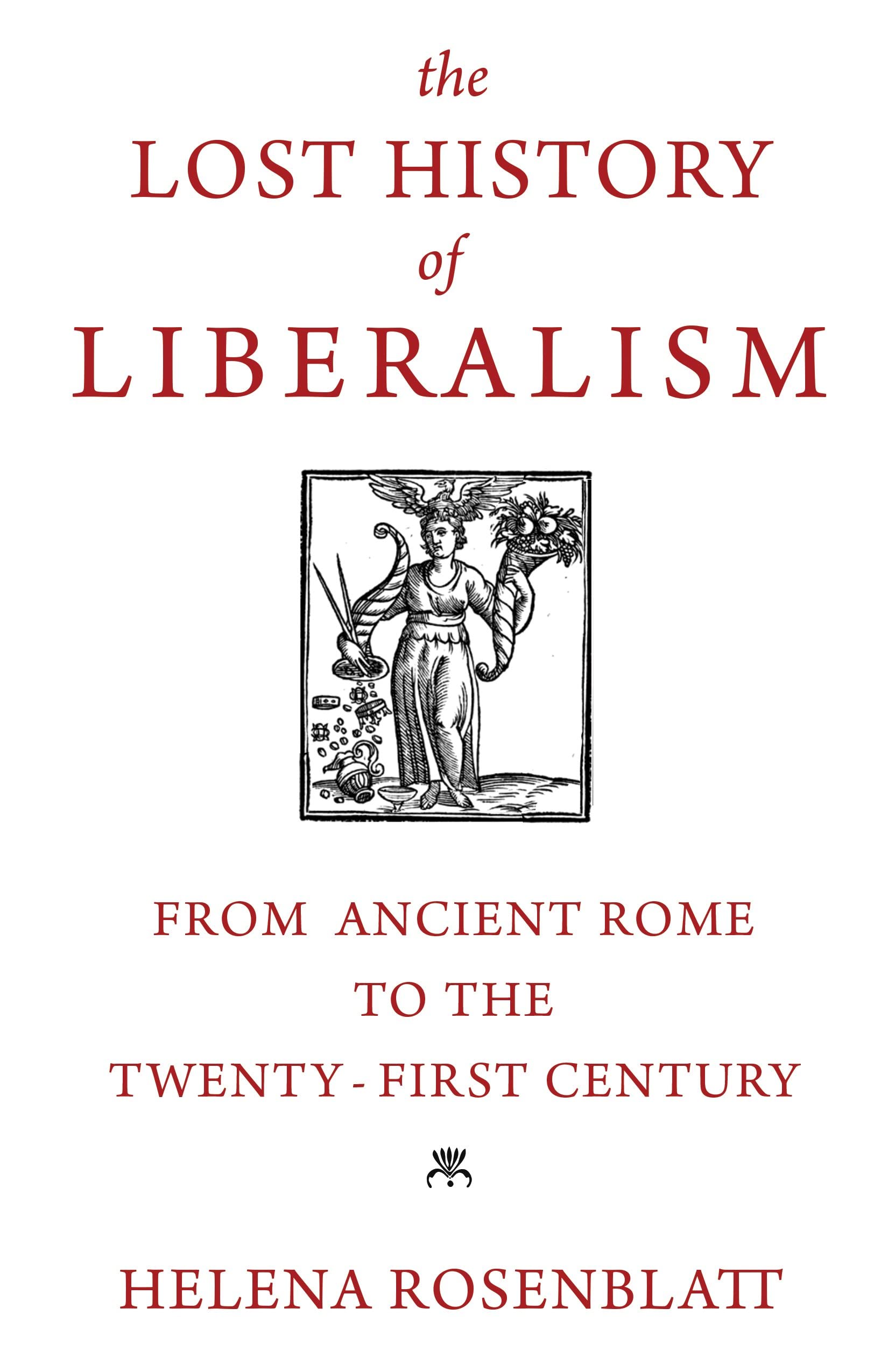
The classical liberal idea that all individuals are born with the same “natural rights” for life, liberty and the pursuit of happiness irrespective of cultural background is thus a perfect fit for capitalism. There is more, however, to classical liberalism than a theory of free market individualism. Helena Rosenblatt’s book, The Lost History of Liberalism: From Ancient Rome to the Twenty-First Century (2018) persuasively shows that the identification of liberalism with market individualism per se was an ideological construct of post-WWII Americans in response to the rise of totalitarian communism and the expanding Keynesian state across the West. Many of the names commonly identified with classical atomistic individualism, including Adam Smith, framed their market individualism within the old civic (and Christian) values of selfless patriotism, the common good, and the importance of promoting civic virtue among citizens. This should not surprise us. The world of John Locke and Adam Smith, and of the founders of the US, was still very agrarian, with the vast proportion of people living in an unchanging landscape dominated by the alternation of the seasons, going to church, creating large families in customary ways, rarely moving out of their place of birth. Capitalism, if we may quote a few more words from Marx, had not yet “put an end…to all idyllic relations…pitilessly torn asunder the motley” communal ties that bound men to each other leaving “no other nexus between man and man than naked self-interest”.
A flaw in Rosenblatt’s thesis, on the other hand, is that she tends to assume that every idea and policy in the nineteenth century in favor of encouraging the common good was a continuation of Roman civic republicanism. I side with Appleby in emphasizing the co-existence of this old civic liberalism with an emerging classical liberalism that reflected the reality of growing commerce and manufactures. But we should also look beyond Appleby, whose study ends with the late 1700s, to new ideas of the “common good” espoused by democrats and socialists during the 1800s and 1900s, which many “new liberals” in the late 1800s would come to see as a fulfillment of the ideals of classical liberalism itself. The essential argument of these new liberals was that the mere legal recognition by the state of the natural rights of individuals was insufficient for citizens lacking economic and cultural means to express their basic liberties. They also pointed to the prevalence of many forms of discriminatory behaviors and prejudices against certain groups of citizens on the basis of social class, sex, and religious beliefs.
It would be wrong to see this new liberalism as a negation of the supposed “laissez-faire” nature of classical liberalism. Classical liberalism on its own, as we stated above, is more than a mixture of laissez-faire and civic republicanism. The central figure in classical liberalism is John Locke, and the central idea in Locke is not laissez-faire, but the idea that all men, by virtue of their capacity to reason, are born with an “equal right to natural freedom”, and that among the fundamental rights to freedom are “life, liberty, and property”, and that the authority of governments springs from the consent of individuals born with these rights, and that, therefore, governments have an obligation to respect the liberties of individuals, and citizens a right to rebellion if these rights are violated. Locke is also the source of the cardinal principle of liberty of conscience, which is at the root of the liberal pluralism that Rawls accentuates, which says that men, by virtue of their natural rights, have a right to decide for themselves what doctrines they wish to follow. The classical liberalism of Locke was indeed a reaction against the violent, authoritarian impulses of Christendom witnessed during the religious wars of the 1600s, when governments sought to enforce religious uniformity as a way of terminating religions divisions believed to be the cause of civil war. Locke argued, to the contrary, that it was government meddling in religion that caused civil war. “It is not the diversity of opinions, which cannot be avoided; but the refusal of toleration to those that are of different opinions . . . that has produced all the bustles and wars that have been in the Christian world, upon account of religion.”
The Long March of Liberals Through the Institutions
A) Glorious Revolution 1688
Classical liberalism, then, is a complex ideology that emerged in connection with the rise of capitalism, while remaining attached for some time to civic republican values, and articulating ideals that went beyond private economic rights and civic republicanism, that is, the ideals articulated by Locke and the ideals of liberal socialists and democrats. Liberalism can’t be defined in terms of how it was understood and actualized at one point in history. It can only be understood in terms of its centuries-long march through the institutions. The common thread of this march has been the removal by liberals of every obstacle, prejudice, tradition, property qualification, economic conditions, including discrimination against women and minorities — preventing individuals from exercising their equal right to freedom without constraints. This march would eventually lead to the emergence of political correctness and the right of liberal institutions to exclude, or limit the influence of “illiberal discourses” that “threaten” open pluralist societies. What follows is a quick journey through the legislative history of liberalism from the time of Locke to the present to convey the “liberating” logic of this ideology. I will focus on Britain, the nation most closely identified with the origins of classical liberalism, but also on the United States, the heartland of racial integration, and on Canada, the heartland of multicultural immigrant liberalism.
We can start with the liberalism of the Glorious Revolution of 1688, which saw a parliament representative of nobles and prosperous members of the bourgeoisie recognized as the supreme power, with the authority of the monarch limited to executive functions. This parliament came along with a Bill of Rights that established the principles of frequent parliaments, free elections and freedom of speech within Parliament without fear of being questioned in any court or place out of Parliament, as well as the principle of no right of taxation without Parliament’s agreement, and just treatment of people by courts. The Toleration Act (1688) started a trajectory that eventually terminated the authoritarian Christian unity of the Middle Ages by extending toleration to nonconformists who did not belong to the established Anglican Church who had pledged loyalty to the British monarch. This act did not apply to Catholics, Jews, nontrinitarians and atheists. Nevertheless, it was revolutionary in its own right, constituting the beginnings of liberty of conscience, a new conception of freedom unknown in ancient Greece, in civic-republican Rome, and in the Middle Ages. In the language of Rawls, or with the benefit of his theory of pluralism, we can say that it launched a new conception of the public sphere as a “freestanding” domain freed from any authoritarian creed wherein individuals who are “deeply divided by cultural, religious, and moral beliefs” may coexist in a state of tolerance and reciprocity. Freedom of the press was formally enacted in 1695.
Paleoconservatives like to point to Edmund Burke’s interpretation of this revolution as one that sought “to preserve our ancient indisputable laws and liberties […] derived to us from our forefathers and to be transmitted to our posterity; as an estate specially belonging to the people of this kingdom without any reference whatever to any other general or prior right”. The Bill of Rights, they tell us, recognized the rights of the British, not the rights of man. This is true; the language of liberty used by liberalism during this revolution, from “time immemorial”, was not based on Enlightenment ideals of equality and liberty taken in the abstract, as universal rights belon