Select date

Hitler, Churchill, the Holocaust, and the War in Ukraine, by Ron Unz and Mike Whitney


 In the West, we’re taught that Hitler is the embodiment of all evil, but it’s more complicated than that, isn’t it? The more I read about Hitler, the more convinced I am that his views about the Versailles Treaty were fairly commonplace among Germans living at the time. It seems to me that if Hitler hadn’t emerged as the leader who promised to restore Germany (to its original borders), someone else would have taken his place. The real problem was the injustice of the treaty itself which exacted reparations that could not be repaid along with the partitioning of the German state. It was the onerous settlement of Versailles that ensured there would be Second World War not Hitler.
Am I wrong about this? And would you agree that our over-simplified “cartoonish” portrayal of Hitler prevents people from understanding the events that led to WW2?
Ron Unz—You’re correct on all those points, but the true history is even worse than that.
Germany had been very successful during the early years of the First World War, repeatedly defeating the Russians while occupying portions of northern France, but nevertheless its leaders then sought to end the horrible mutual slaughter in 1916 by proposing a peace without winners or losers. However, most of the Allied leadership harshly rejected any peace negotiations and were instead determined to continue the war until Germany was defeated and permanently crippled. I discussed that important forgotten history in a long article last year.
A couple of years later, after America had entered the war, Germany agreed to an armistice—an end to the fighting—on the basis of President Woodrow Wilson’s Fourteen Points, which seemed to offer a fair peace without a victory for either side. But this turned out to be a bait-and-switch operation, since once Germany had withdrawn its army from French territory and given up its powerful naval forces, the Allies then imposed a brutal starvation blockade upon the weakened country, inflicting many hundreds of thousands of civilian deaths until the new German government finally accepted very harsh peace terms. These included the dismemberment and occupation of portions of their country, permanent military weakness, and acceptance of the entire guilt of the war, as well as paying gigantic future financial reparations to the victorious Allies.
The outrageous terms imposed at Versailles deeply rankled all Germans, and the memory of the starvation imposed upon Germany during the war and even afterward was one of the reasons Hitler believed it was so important to somehow gain access to additional agricultural territory.
As for the German leader himself, several years ago I pointed out that his contemporaneous assessment by many leading figures was very different than one might imagine based upon his demonic portrayal in the historical propaganda-narrative later created after war broke out.
By resurrecting a prosperous Germany while nearly all other countries remained mired in the worldwide Great Depression, Hitler drew glowing accolades from individuals all across the ideological spectrum. After an extended 1936 visit, David Lloyd George, Britain’s former wartime prime minister, fulsomely praised the chancellor as “the George Washington of Germany,” a national hero of the greatest stature. Over the years, I’ve seen plausible claims here and there that during the 1930s Hitler was widely acknowledged as the world’s most popular and successful national leader, and the fact that he was selected as Time Magazine’s Man of the Year for 1938 tends to support this belief.
I discovered a particular example of such missing perspectives earlier this year when I decided to read The Prize, Daniel Yergin’s magisterial and Pulitzer Prize-winning 1991 history of the world oil industry, and came across a few surprising paragraphs buried deep within the 900 pages of dense text. Yergin explained that during the mid-1930s the imperious chairman of Royal Dutch Shell, who had spent decades at the absolute summit of the British business world, became greatly enamored of Hitler and his Nazi government. He believed that an Anglo-German alliance was the best means of maintaining European peace and protecting the continent from the Soviet menace, and even retired to Germany in accordance with his new sympathies.
Since the actual history of this era has been so thoroughly replaced by extreme propaganda, academic specialists who closely investigate particular topics sometimes encounter puzzling anomalies. For example, a bit of very casual Googling brought to my attention an interesting article by a leading biographer of famed Jewish modernist writer Gertrude Stein, who seemed totally mystified why her feminist icon seemed to have been a major admirer of Hitler and an enthusiastic supporter of the pro-German Vichy government of France. The author also notes that Stein was hardly alone in her sentiments, which were generally shared by so many of the leading writers and philosophers of that period.
There is also the very interesting but far less well documented case of Lawrence of Arabia, one of the greatest British military heroes to come out of the First World War and who may have been moving in a rather similar direction just before his 1935 death in a possibly suspicious motorcycle accident. An alleged account of his evolving political views seems extremely detailed and perhaps worth investigating, with the original having been scrubbed from the Internet but still available at Archive.org.
A couple of years ago, the 1945 diary of a 28-year-old John F. Kennedy travelling in post-war Europe was sold at auction, and the contents revealed his rather favorable fascination with Hitler. The youthful JFK predicted that “Hitler will emerge from the hatred that surrounds him now as one of the most significant figures who ever lived” and felt that “He had in him the stuff of which legends are made.” These sentiments are particularly notable for having been expressed just after the end of a brutal war against Germany and despite the tremendous volume of hostile propaganda that had accompanied it.
The political enthusiasms of literary intellectuals, young writers, or even elderly businessmen are hardly the most reliable sources by which to evaluate a particular regime. But earlier this year, I pointed to a fairly comprehensive appraisal of the origins and policies of National Socialist Germany by one of Britain’s most prominent historians:
Not long ago, I came across a very interesting book written by Sir Arthur Bryant, an influential historian whose Wikipedia page describes him as the personal favorite of Winston Churchill and two other British prime ministers. He had worked on Unfinished Victory during the late 1930s, then somewhat modified it for publication in early 1940, a few months after the outbreak of World War II had considerably altered the political landscape. But not long afterward, the war became much more bitter and there was a harsh crackdown on discordant voices in British society, so Bryant became alarmed over what he had written and attempted to remove all existing copies from circulation. Therefore the only ones available for sale on Amazon are exorbitantly priced, but fortunately the work is also freely available at Archive.org.
Writing before the “official version” of historical events had been rigidly determined, Bryant describes Germany’s very difficult domestic situation between the two world wars, its problematic relationship with its tiny Jewish minority, and the circumstances behind the rise of Hitler, providing a very different perspective on these important events than what we usually read in our standard textbooks.
Among other surprising facts, he notes that although Jews were just 1% of the total population, even five years after Hitler had come to power and implemented various anti-Semitic policies, they still apparently owned “something like a third of the real property” in that country, with the great bulk of these vast holdings having been acquired from desperate, starving Germans in the terrible years of the early 1920s. Thus, much of Germany’s 99% German population had recently been dispossessed of the assets they had built up over generations…
Bryant also candidly notes the enormous Jewish presence in the leadership of the Communist movements that had temporarily seized power after World War I, both in major portions of Germany and in nearby Hungary. This was an ominous parallel to the overwhelmingly Jewish Bolsheviks who had gained control of Russia and then butchered or expelled that country’s traditional Russian and German ruling elites, and therefore a major source of Nazi fears.
Unlike so many of the other historians previously discussed, after the political climate changed Bryant assiduously worked to expunge his suddenly unfashionable views from the written record, and as a consequence went on to enjoy a long and successful career, topped by the accolades of a grateful British establishment. But I suspect that his long-suppressed 1940 volume, presenting a reasonably favorable view of Hitler and Nazi Germany, is probably more accurate and realistic than the many thousands of propaganda-drenched works by others that soon followed. I have now incorporated it into my HTML Books system, so those so interested can read it and decide for themselves.

Help me understand Munich. We’ve all been taught that Britain’s Neville Chamberlain caved in to Hitler’s demands on the annexation of Czechoslovakia’s Sudetenland which, in turn, fueled Hitler’s lust for global conquest. But was that really what happened? And was “appeasement” really such a bad idea or should the European leaders have accepted that Versailles was a disaster from the get-go and agreed to Hitler’s demands to restore Germany’s original borders?
Ron Unz—The First World War had led to the collapse of the multi-ethnic Austro-Hungarian, Czarist, and Ottoman empires, each of which had been politically dominated by one ethnic group at the expense of all the others. President Woodrow Wilson’s Fourteen Points and the Versailles Peace Conference had elevated the principle that nationalities should be given freedom and ruled by their own leaders, and this had served as the logical basis for most of the successor states thus created.
However, there was a blatant double standard in the political application of this policy, with the creation of the new country of Czechoslovakia being one of the most obvious examples. Like the much larger Austro-Hungarian Empire, Czechoslovakia was stitched together from several entirely different nationalities, with roughly half the population being the ruling Czechs and the other half being Germans, Slovaks, and Ukrainians, who had little political power and deeply resented the domination of the Czechs, who completely controlled the government and its administration.
Czechoslovakia had been established as an important strategic ally for France to use against Germany, geographically serving as an ideal staging area for bombing attacks, almost amounting to an unsinkable aircraft carrier directly jutting into the heart of its German neighbor. Since the country was intentionally designed to threaten Germany, the overwhelmingly German Sudetenland region had been included so as to strengthen its geographical border defenses. The Germans were actually the second largest nationality within Czechoslovakia, so the very name amounted to dishonest propaganda, and something like Czecho-Germania might have been a little more accurate.
One of Hitler’s main goals was to free the suppressed German populations of Central Europe and reunite them with their German homeland and this included the more than 3 million Sudeten Germans. The Czech government was also quite friendly with Stalin’s Soviet Union, and therefore seemed a particularly menacing potential military threat, a possible future base for Soviet attacks against Germany.
Hitler gradually rebuilt Germany’s strength and by March 1938 managed to reunite his country with the Germans of Austria, accomplished with the overwhelmingly enthusiastic support of the latter. He then demanded that the Sudeten Germans be freed by the Czechs and allowed to unify with Germany as well, being willing to potentially risk a wider European war with the British, French, and Soviets on that issue. To avoid this, the leaders of Germany, Britain, France, and Italy together negotiated an agreement at Munich, allowing the Sudeten Germans to secede and join Germany. This peace agreement was wildly popular across nearly all of Europe.
However, once the Germans had been allowed to secede from Czechoslovakia, the Slovaks soon also did the same, establishing their own independent state of Slovakia (just as happened once again in 1993), and the entire country fell apart. At that point, Poland also grabbed a piece of disputed territory and the Hungarians threatened to do the same, so according to most accounts that I’ve read, the desperate Czech president turned to Hitler for support, and what was left of the country became a German protectorate.
Although anti-German propaganda soon portrayed the loss of Czech independence as a flagrant violation of the Munich Agreement, proof that Hitler couldn’t be trusted to keep his promises, the situation was really not so clear-cut since Czechoslovakia had already fallen apart and no longer existed. Furthermore, the Czechs had only been fully independent for twenty years after having previously spent nearly 700 years under German suzerainty, so in many respects, this merely restored the the traditional geopolitical arrangements in that part of Europe, doing so far more peacefully than when the Soviets invaded and occupied the Baltic States the following year.
ORDER IT NOW
Ironically enough, the Munich agreement signed by Chamberlain was reportedly so tremendously popular in Britain that if he’d called elections soon afterward, he probably would have won an overwhelming majority in Parliament, strongly consolidating his political hold over the British government for the next few years.
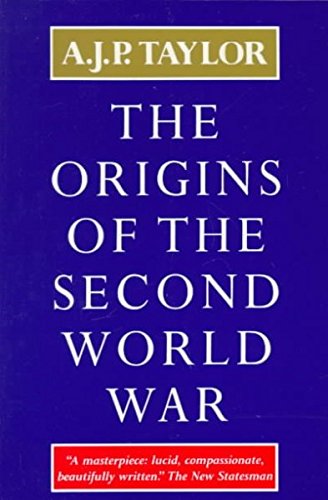
For those interested in a much more detailed discussion of this important history, I’d recommend the 1961 classic The Origins of the Second World War by renowned Oxford historian A.J.P. Taylor as well as David Irving’s outstanding 1991 volume Hitler’s War, available in HTML format on this website:
ORDER IT NOW
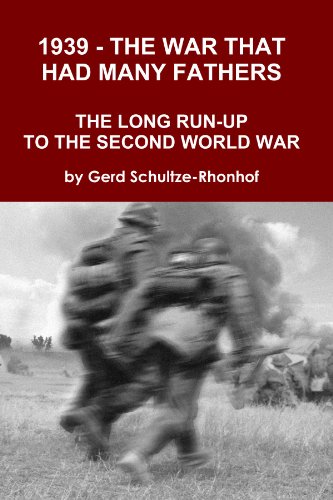
Another excellent book covering this complex history is 1939: The War Had Many Fathers, published in 2011 by Gerd Schultze-Rhonof, a fully mainstream German professional military man, who rose to the rank of major-general in the German army before retiring. I’d also recommend David L. Hoggan’s extremely detailed narrative history in The Forced War, whose English version was originally published in 1989 and was long unavailable.
- The Forced War
When Peaceful Revisionism Failed
David L. Hoggan • 1989 • 320,000 Words
I should mention that both Schultze-Rhonof and Hoggan view these events somewhat differently than I have presented, with the former sharply condemning Hitler’s move into Czechia as a serious violation of the Munich Agreement and the latter arguing that the British government under Lord Halifax’s influence had always intended to orchestrate a war against Germany and was merely using the Munich Agreement as ruse to gain additional time for full rearmament before attacking.

ORDER IT NOW
I can’t make any sense of Churchill’s behavior prior to the war. Why was he so eager to declare war on Germany over a German territorial dispute with Poland many hundreds of miles away from his own country? Why did he think that should involve England? Besides, Churchill clearly had no way to transport British troops to Poland to defend the country nor would the battered British army have fared well against the better-trained and equipped Wehrmacht. In your book, Understanding World War II, you suggest that Churchill had benefactors who may have been pulling his strings and persuading him to do things that were clearly not in his country’s best interests. Is that what was going on, was Churchill just following a script that was written by others?
Ron Unz—Actually, Churchill only became a member of the British government on the day that war was declared against Germany, but he had indeed been strongly pressing from the outside for an anti-German policy by Chamberlain’s government, so the issue remains.
When I first encountered David Irving’s important historical work a few years ago, my biggest surprise was not the new information he provided about Hitler but the astonishing facts he revealed about Churchill. As I explained in my 2019 article on World War II:
I recently decided to tackle one of Irving’s much longer works, the first volume of Churchill’s War, a classic text that runs some 300,000 words and covers the story of the legendary British prime minister to the eve of Barbarossa, and I found it just as outstanding as I had expected.
As one small indicator of Irving’s candor and knowledge, he repeatedly if briefly refers to the 1940 Allied plans to suddenly attack the USSR and destroy its Baku oilfields, an utterly disastrous proposal that surely would have lost the war if actually carried out. By contrast, the exceptionally embarrassing facts of Operation Pike have been totally excluded from virtually all later Western accounts of the conflict, leaving one to wonder which of our numerous professional historians are merely ignorant and which are guilty of lying by omission.
Until recently, my familiarity with Churchill had been rather cursory, and Irving’s revelations were absolutely eye-opening. Perhaps the most striking single discovery was the remarkable venality and corruption of the man, with Churchill being a huge spendthrift who lived lavishly and often far beyond his financial means, employing an army of dozens of personal servants at his large country estate despite frequently lacking any regular and assured sources of income to maintain them. This predicament naturally put him at the mercy of those individuals willing to support his sumptuous lifestyle in exchange for determining his political activities. And somewhat similar pecuniary means were used to secure the backing of a network of other political figures from across all the British parties, who became Churchill’s close political allies.
To put things in plain language, during the years leading up to the Second World War, both Churchill and numerous other fellow British MPs were regularly receiving sizable financial stipends—cash bribes—from Jewish and Czech sources in exchange for promoting a policy of extreme hostility toward the German government and actually advocating war. The sums involved were quite considerable, with the Czech government alone probably making payments that amounted to tens of millions of dollars in present-day money to British elected officials, publishers, and journalists working to overturn the official peace policy of their existing government. A particularly notable instance occurred in early 1938 when Churchill suddenly lost all his accumulated wealth in a foolish gamble on the American stock-market, and was soon forced to put his beloved country estate up for sale to avoid personal bankruptcy, only to quickly be bailed out by a foreign Jewish millionaire intent upon promoting a war against Germany. Indeed, the early stages of Churchill’s involvement in this sordid behavior are recounted in an Irving chapter aptly entitled “The Hired Help.”
Ironically enough, German Intelligence learned of this massive bribery of British parliamentarians, and passed the information along to Prime Minister Neville Chamberlain, who was horrified to discover the corrupt motives of his fierce political opponents, but apparently remained too much of a gentlemen to have them arrested and prosecuted. I’m no expert in the British laws of that era, but for elected officials to do the bidding of foreigners on matters of war and peace in exchange for huge secret payments seems almost a textbook example of treason to me, and I think that Churchill’s timely execution would surely have saved tens of millions of lives.
My impression is that individuals of low personal character are those most likely to sell out the interests of their own country in exchange for large sums of foreign money, and as such usually constitute the natural targets of nefarious plotters and foreign spies. Churchill certainly seems to fall into this category, with rumors of massive personal corruption swirling around him from early in his political career. Later, he supplemented his income by engaging in widespread art-forgery, a fact that Roosevelt eventually discovered and probably used as a point of personal leverage against him. Also quite serious was Churchill’s constant state of drunkenness, with his inebriation being so widespread as to constitute clinical alcoholism. Indeed, Irving notes that in his private conversations FDR routinely referred to Churchill as “a drunken bum.”
During the late 1930s, Churchill and his clique of similarly bought-and-paid-for political allies had endlessly attacked and denounced Chamberlain’s government for its peace policy, and he regularly made the wildest sort of unsubstantiated accusations, claiming the Germans were undertaking a huge military build-up aimed against Britain. Such roiling charges were often widely echoed by a media heavily influenced by Jewish interests and did much to poison the state of German-British relations. Eventually, these accumulated pressures forced Chamberlain into the extremely unwise act of providing an unconditional guarantee of military backing to Poland’s irresponsible dictatorship. As a result, the Poles then rather arrogantly refused any border negotiations with Germany, thereby lighting the fuse which eventually led to the German invasion six months later and the subsequent British declaration of war. The British media had widely promoted Churchill as the leading pro-war political figure, and once Chamberlain was forced to create a wartime government of national unity, his leading critic was brought into it and given the naval affairs portfolio.
Following his lightening six-week defeat of Poland, Hitler unsuccessfully sought to make peace with the Allies, and the war went into abeyance. Then in early 1940, Churchill persuaded his government to try strategically outflanking the Germans by preparing a large sea-borne invasion of neutral Norway; but Hitler discovered the plan and preempted the attack, with Churchill’s severe operational mistakes leading to a surprising defeat for the vastly superior British forces. During World War I, Churchill’s Gallipoli disaster had forced his resignation from the British Cabinet, but this time the friendly media helped ensure that all the blame for the somewhat similar debacle at Narvik was foisted upon Chamberlain, so it was the latter who was forced to resign, with Churchill then replacing him as prime minister. British naval officers were appalled that the primary architect of their humiliation had become its leading political beneficiary, but reality is what the media reports, and the British public never discovered this great irony.
This incident was merely the first of the long series of Churchill’s major military failures and outright betrayals that are persuasively recounted by Irving, nearly all of which were subsequently airbrushed out of our hagiographic histories of the conflict. We should recognize that wartime leaders who spend much of their time in a state of drunken stupor are far less likely to make optimal decisions, especially if they are extremely prone to military micro-management as was the case with Churchill.
In the spring of 1940, the Germans launched their sudden armored thrust into France via Belgium, and as the attack began to succeed, Churchill ordered the commanding British general to immediately flee with his forces to the coast and to do so without informing his French or Belgium counterparts of the huge gap he was thereby opening in the Allied front-lines, thus ensuring the encirclement and destruction of their armies. Following France’s resulting defeat and occupation, the British prime minister then ordered a sudden, surprise attack on the disarmed French fleet, completely destroying it and killing some 2,000 of his erstwhile allies; the immediate cause was his mistranslation of a single French word, but this “Pearl Harbor-type” incident continued to rankle French leaders for decades.
Hitler had always wanted friendly relations with Britain and certainly had sought to avoid the war that had been forced upon him. With France now defeated and British forces driven from the Continent, he therefore offered very magnanimous peace terms and a new German alliance to Britain. The British government had been pressured into entering the war for no logical reason and against its own national interests, so Chamberlain and half the Cabinet naturally supported commencing peace negotiations, and the German proposal probably would have received overwhelming approval both from the British public and political elites if they had ever been informed of its terms.
But despite some occasional wavering, Churchill remained absolutely adamant that the war must continue, and Irving plausibly argues that his motive was an intensely personal one. Across his long career, Churchill had had a remarkable record of repeated failure, and for him to have finally achieved his lifelong ambition of becoming prime minister only to lose a major war just weeks after reaching Number 10 Downing Street would have ensured that his permanent place in history was an extremely humiliating one. On the other hand, if he managed to continue the war, perhaps the situation might somehow later improve, especially if the Americans could be persuaded to eventually enter the conflict on the British side.
Since ending the war with Germany was in his nation’s interest but not his own, Churchill undertook ruthless means to prevent peace sentiments from growing so strong that they overwhelmed his opposition. Along with most other major countries, Britain and Germany had signed international conventions prohibiting the aerial bombardment of civilian urban targets, and although the British leader had very much hoped the Germans would attack his cities, Hitler scrupulously followed these provisions. In desperation, Churchill therefore ordered a series of large-scale bombing raids against the German capital of Berlin, doing considerable damage, and after numerous severe warnings, Hitler finally began to retaliate with similar attacks against British cities. The population saw the heavy destruction inflicted by these German bombing raids and was never informed of the British attacks that had preceded and provoked them, so public sentiment greatly hardened against making peace with the seemingly diabolical German adversary.
In his memoirs published a half-century later, Prof. Revilo P. Oliver, who had held a senior wartime role in American Military Intelligence, described this sequence of events in very bitter terms:
Great Britain, in violation of all the ethics of civilized warfare that had theretofore been respected by our race, and in treacherous violation of solemnly assumed diplomatic covenants about “open cities”, had secretly carried out intensive bombing of such open cities in Germany for the express purpose of killing enough unarmed and defenceless men and women to force the German government reluctantly to retaliate and bomb British cities and thus kill enough helpless British men, women, and children to generate among Englishmen enthusiasm for the insane war to which their government had committed them.
It is impossible to imagine a governmental act more vile and more depraved than contriving death and suffering for its own people — for the very citizens whom it was exhorting to “loyalty” — and I suspect that an act of such infamous and savage treason would have nauseated even Genghis Khan or Hulagu or Tamerlane, Oriental barbarians universally reprobated for their insane blood-lust. History, so far as I recall, does not record that they ever butchered their own women and children to facilitate lying propaganda….In 1944 members of British Military Intelligence took it for granted that after the war Marshal Sir Arthur Harris would be hanged or shot for high treason against the British people…


Churchill walks through the ruins of Coventry Cathedral in 1941
Churchill’s ruthless violation of the laws of war regarding urban aerial bombardment directly led to the destruction of many of Europe’s finest and most ancient cities. But perhaps influenced by his chronic drunkenness, he later sought to carry out even more horrifying war crimes and was only prevented from doing so by the dogged opposition of all his military and political subordinates.
Along with the laws prohibiting the bombing of cities, all nations had similarly agreed to ban the first use of poison gas, while stockpiling quantities for necessary retaliation. Since Germany was the world-leader in chemistry, the Nazis had produced the most lethal forms of new nerve gases, such as Tabun and Sarin, whose use might have easily resulted in major military victories on both the Eastern and Western fronts, but Hitler had scrupulously obeyed the international protocols that his nation had signed. However, late in the war during 1944 the relentless Allied bombardment of German cities led to the devastating retaliatory attacks of the V-1 flying bombs against London, and an outraged Churchill became adamant that German cities should be attacked with poison gas in counter-retaliation. If Churchill had gotten his way, many millions of British might soon have perished from German nerve gas counter-strikes. Around the same time, Churchill was also blocked in his proposal to bombard Germany with hundreds of thousands of deadly anthrax bombs, an operation that might have rendered much of Central and Western Europe uninhabitable for generations.
I found Irving’s revelations on all these matters absolutely astonishing, and was deeply grateful that Deborah Lipstadt and her army of diligent researchers had carefully investigated and seemingly confirmed the accuracy of virtually every single item.
The two existing volumes of Irving’s Churchill masterwork total well over 700,000 words, and reading them would obviously consume weeks of dedicated effort. Fortunately, Irving is also a riveting speaker and several of his extended lectures on the topic are available for viewing on BitChute after having been recently purged from YouTube:
ORDER IT NOW
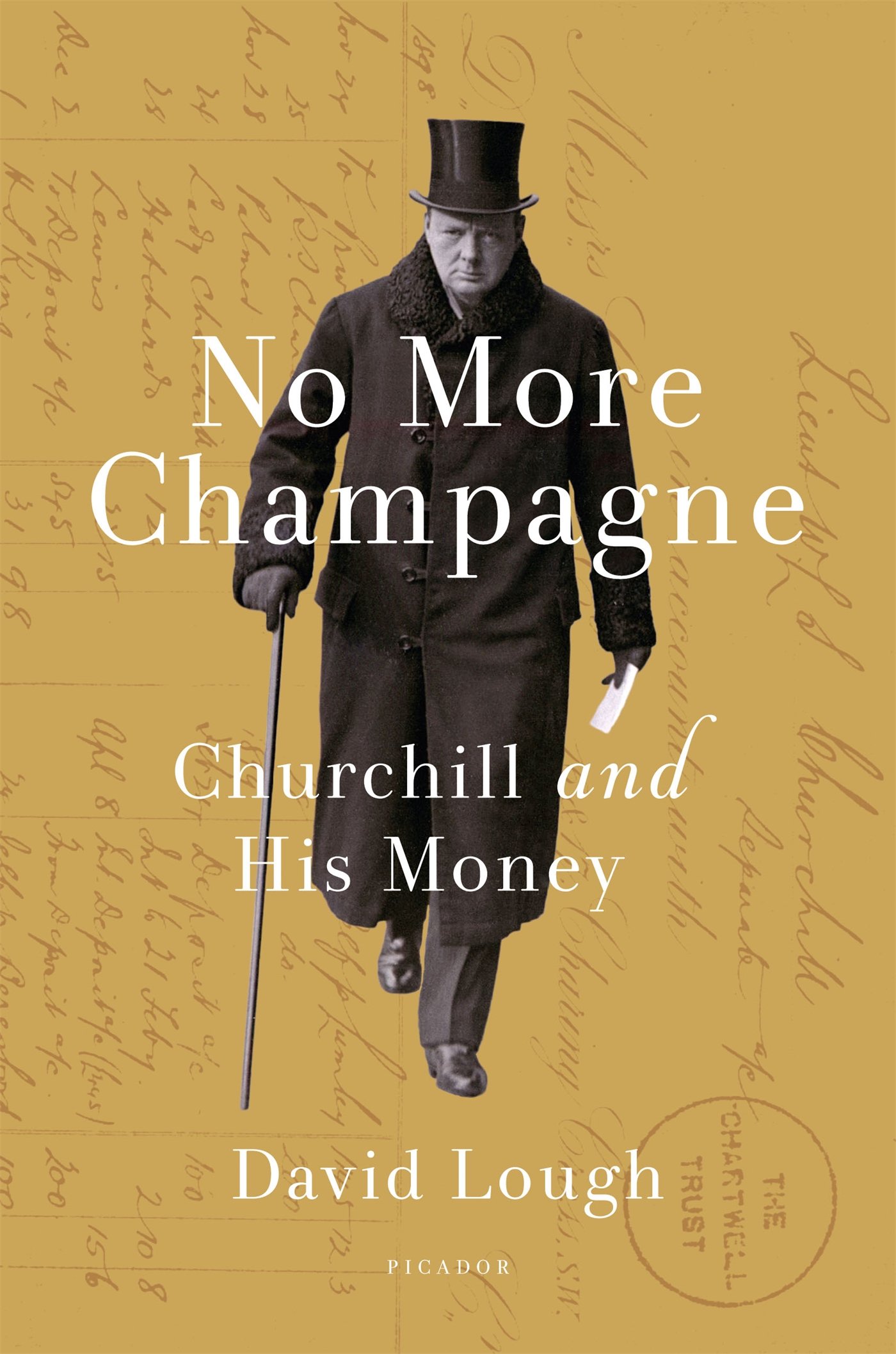
Irving’s 1987 Churchill book had laid bare his subject’s extremely lavish lifestyle as well as his lack of any solid income, together with the dramatic political consequences of that dangerous combination. This shocking historical picture was fully confirmed in 2015 by a noted financial expert whose book focused entirely on Churchill’s tangled finances, and did so with full cooperative access to his subject’s family archives. The story told by David Lough in No More Champagne is actually far more extreme than what had been described by Irving almost three decades earlier, with the author even suggesting that Churchill’s financial risk-taking was almost unprecedented for anyone in public or private life.
For example, at the very beginning of his book, Lough explains that Churchill became Prime Minister on May 10, 1940, the same day that German forces began their invasion of the Low Countries and France. But aside from those huge military and political challenges, Britain’s new wartime leader also faced an entirely different crisis as well, being unable to cover his personal bills, debt interest, or tax payments, all of which were due at the end of the month, thereby forcing him to desperately obtain a huge secret payment from the same Austrian Jewish businessman who had previously rescued him financially. Stories like this may reveal the hidden side of larger geopolitical developments, which sometimes only come to light many decades later.
The unacknowledged influence of secret payments to our own national leaders may be similar. George Washington law professor Jonathan Turley, a very prominent mainstream legal expert, recently published a column in The Hill expressing his total outrage that the American media was completely ignoring the massive corruption scandal involving Biden family members, who had received at least $10 million in secret financial payments from overseas interests. And just a few days ago, we learned that those payments to the Bidens had been made by a Ukrainian billionaire, perhaps helping to explain our current military confrontation with Russia over that country. Over the last year, Joseph Biden has sometimes been praised as another Winston Churchill, and that characterization may indeed be correct but not in the way intended.
Why was FDR so eager to drag the United States into a war that posed no threat to US national security? It seems to me, that FDR’s decision may have been shaped—not by principle—but by the expectation that if the industrial centers of Europe were left in ruins, the US would unavoidably emerge as the lone global superpower. That, of course, turned out to be exactly what happened. But keep in mind, the “tipping-point” Battle of Stalingrad ended in February 1943, whereas, D-Day took place in June, 1944. What that means, is that the United States did not enter the conflict for a whole 16 months after it was certain that Germany would lose the war. In other words, the US invasion was basically a mop-up operation aimed at ensuring US hegemony over western Europe while preventing the Soviet Union from spreading communism across the continent. (Perhaps, you disagree with my analysis??)
What can you tell us about FDR and his motivation to enter the war? Was it entirely his decision or were there other factors involved?
Ron Unz—It’s possible that FDR envisioned that a European war would lead to the destruction of industrialized Europe as an competitor and the establishment of American global hegemony. But I think his motivation for American involvement in a war was actually much simpler than that.
America had been hit especially hard by the Great Depression and although FDR had reached the White House based upon his promise to end it, after five years in office, his policies had largely failed.
The American economy had also been weak in 1914, but once the First World War broke out, the huge needs of the Allied countries boosted our industrial production to new heights, resulting in American prosperity. Similarly, many mainstream history books admit that it was only the outbreak of World War II in 1939 that finally pulled the American economy out of the Great Depression, but they never consider the possibility that FDR might have deliberately provoked the war for that purpose. However, as I wrote in 2018, there seems strong contemporaneous evidence to that effect:
During the 1930s, John T. Flynn was one of America’s most influential progressive journalists, and although he had begun as a strong supporter of Roosevelt and his New Deal, he gradually became a sharp critic, concluding that FDR’s various governmental schemes had failed to revive the American economy. Then in 1937 a new economic collapse spiked unemployment back to the same levels as when the president had first entered office, confirming Flynn in his harsh verdict. And as I wrote last year:
Indeed, Flynn alleges that by late 1937, FDR had turned towards an aggressive foreign policy aimed at involving the country in a major foreign war, primarily because he believed that this was the only route out of his desperate economic and political box, a stratagem not unknown among national leaders throughout history. In his January 5, 1938 New Republic column, he alerted his disbelieving readers to the looming prospect of a large naval military build-up and warfare on the horizon after a top Roosevelt adviser had privately boasted to him that a large bout of “military Keynesianism” and a major war would cure the country’s seemingly insurmountable economic problems. At that time, war with Japan, possibly over Latin American interests, seemed the intended goal, but developing events in Europe soon persuaded FDR that fomenting a general war against Germany was the best course of action. Memoirs and other historical documents obtained by later researchers seem to generally support Flynn’s accusations by indicating that Roosevelt ordered his diplomats to exert enormous pressure upon both the British and Polish governments to avoid any negotiated settlement with Germany, thereby leading to the outbreak of World War II in 1939.
The last point is an important one since the confidential opinions of those closest to important historical events should be accorded considerable evidentiary weight. In a recent article John Wear mustered the numerous contemporaneous assessments that implicated FDR as a pivotal figure in orchestrating the world war by his constant pressure upon the British political leadership, a policy that he privately even admitted could mean his impeachment if revealed. Among other testimony, we have the statements of the Polish and British ambassadors to Washington and the American ambassador to London, who also passed along the concurring opinion of Prime Minister Chamberlain himself. Indeed, the German capture and publication of secret Polish diplomatic documents in 1939 had already revealed much of this information, and William Henry Chamberlin confirmed their authenticity in his 1950 book. But since the mainstream media never reported any of this information, these facts remain little known even today.

Franklin Roosevelt and Winston Churchill at the Casablanca Conference, January 1943
So according to Flynn’s January 1938 account, FDR and his advisors had originally viewed a possible war with Japan as the key to America’s economic revival, but they subsequently shifted their focus to a European war against Germany instead, and I think a turning point may have been the widespread Kristallnacht riots against German Jews in November 1938, following the assassination of a German diplomat by a Jewish activist. These attacks outraged the very influential Jewish communities of America and Europe, completely undoing any positive consequences of the Munich Agreement a couple of months earlier and focused intense international hostility against Hitler’s Germany, which had previously worked out reasonably amicable relations with its small Jewish population while establishing an important economic partnership with the rising Zionist movement.
Ironically enough, according to Irving’s very detailed reconstruction, Hitler had nothing to do with the anti-Jewish riots and urgently sought to suppress them once they began. Instead, the attacks seem to have been orchestrated by Joseph Goebbels, his powerful Propaganda Minister, who had recently fallen from favor because of his high-profile love affair with a Czech actress, leading to the bitter complaints of his wife, a close friend of Hitler. Goebbels apparently hoped he could use the anti-Jewish riots to restore his influence in the Nazi hierarchy, but they instead had disastrous consequences, thus raising the remarkable possibility that the political fallout from an extra-marital affair may have played a crucial role in the outbreak of World War II.
Recently, I’ve watched a number of David Irving videos on Rumble all of which are extremely persuasive. I really have a hard time understanding why powerful Jewish groups characterize Irving as an antisemite. What’s that all about? It seems to me that he’s just providing evidence from “primary source” material that he’s acquired from personal interviews or historical archives. In other words, he’s just doing what you would expect any credible historian to do, presenting the facts without ‘fear or favor’. Can you help me understand why these Jewish groups are so hostile to Irving?
Ron Unz—Irving’s research methodology has always relied heavily upon the use of documentary material and as he spent years working on his landmark Hitler biography, he gradually realized that there seemed to be no such evidence that the German dictator had approved or even been aware of any Jewish extermination project, strongly suggesting that he had had nothing to do with it. Jewish activist groups had come to regard Hitler as a demonic figure, so they bitterly resented those unorthodox conclusions from such a world-famous historian, and as I explained in 2018, their attacks enormously escalated after he later agreed to testify as an expert witness in a Canadian trial:
Fred Leuchter was widely regarded as one of America’s leading expert specialists on the technology of executions, and a long article in The Atlantic treated him as such. During the 1980s, Ernst Zundel, a prominent Canadian Holocaust Denier, was facing trial for his disbelief in the Auschwitz gas chambers, and one of his expert witnesses was an American prison warden with some experience in such