Select date

Barbara Malthusian Hubbard: From Limits to Growth to UN Agenda 2030


For decades, New Age guru Barbara Marx Hubbard preached a futurist gospel of “conscious evolution” guided by “love and light.” Yet, at the same time, in stark contrast, Hubbard also touted Malthusian population control. If Hubbard called for the human population to be culled, then how could she have genuinely floated her dreams of conscious evolution sincerely upon the “self-actualization” mantras of the Human Potential Movement or the “co-creation” ethos of her New Age homilies?
While Hubbard’s advocacy for population control contradicts the benevolent rhetoric of her New Age spiritualism, her Malthusianism cohesively aligns with her championing of transhumanism. As I historicized in a previous article entitled Barbara Marx Hubbard: Godmother of Transhumanism and Synthetic Spirituality, transhumanism was conceptualized by Julian Huxley as the second phase of eugenics, which would artificially enhance Darwinian evolution by merging human biology with machines. In fact, according to Darwin’s autobiography, his theory of evolution by natural selection, which inspired his cousin Francis Galton to develop the pseudo-science of eugenics, was conceived as the biological consequence of growing populations competing for limited resources in a Malthusian ecology:
“I [Darwin] happened to read for amusement ‘Malthus on Population,’ and being well prepared to appreciate the struggle for existence which everywhere goes on from long continued observation of the habits of animals and plants, it at once struck me that under these circumstances favourable variations would tend to be preserved, and unfavourable ones to be destroyed. The result of this would be the formation of new species. Here then I had at last got a theory by which to work.”
In brief, Malthusianism is the bedrock of Darwinism, which is the foundation of eugenics, which is the cornerstone of transhumanism. Put another way, transhumanism encompasses both the Malthusian-sustainable control of population quantity and the Darwinian-eugenic control of population quality by means of technocracy.
In my first installment in this series, I documented how Hubbard, bankrolled by Rockefeller “philanthropy,” teamed up with Abraham Maslow’s Eupsychian Network, including the Esalen Institute, to push trans-eugenic evolution through partnerships with the HeartMath Institute, which propagates transhumanist neurofeedback wearables that are programmed to induce synthetic spiritual bliss. In this current installment, I will explain how Hubbard’s vision for “conscious” transhuman evolution is inseparable from her Malthusian outlook on human population growth and sustainable ecology. More specifically, I will expose how:
- Hubbard championed Malthusian population control policies advanced by the environmentalist forecasts of the Club of Rome’s Limits to Growth and the sustainable development initiatives of United Nations (UN) Agenda 2030.
- Hubbard collaborated with World Economic Forum (WEF) globalist, Maurice Strong, who spearheaded UN Agenda 21’s sustainable development program, and Club of Rome member Mikhail Gorbachev, who co-created the Earth Charter “sustainable development” initiative in partnership with Strong.
In future installments of this series, I will reveal how Hubbard’s Malthusian environmentalism was shaped by her spiritual muse, Pierre Teilhard de Chardin; her kindred “psychological mutant,” Jonas Salk [2]; and her longtime financial benefactor, Laurance Rockefeller. I will also unveil how Hubbard’s affiliations with the World Future Society, the Human Potential Movement, and the Foundation for Conscious Evolution were connected to networks of alleged pedophiles and sexual abuse cults.
Hubbard and the “Riders of the Pale Horse”
The following quote, which has been widely circulated as a purported excerpt from Hubbard’s 1993 Book of Co-Creation, declares that “one-fourth” of humanity will need to be culled in order to usher in a utopian New World Order:
“[o]ut of the full spectrum of the human personality, one-fourth is elected to transcend and one-fourth are destructive, defective seeds. In the past they were permitted to die a natural death. Now, as we approach the quantum shift from the creature-human to the co-creative human―the human who is an inheritor of god-like powers―the destructive one-fourth must be eliminated from the social body. Fortunately, you are not responsible for this act. We are. We are in charge of God’s selection process for planet Earth. He selects―we destroy. We are the riders of the pale horse, Death.”
To be sure, this passage cannot be found within the pages of Hubbard’s Book of Co-Creation. However, The Mail Archive, which records “archived postings” and “active mailing lists,”logs an email exchange in which Hubbard reportedly acknowledged that this passage was excerpted “from a manuscript which has not been published.” According to The Mail Archive, on “Thursday, November 04, 1999,” Hubbard replied to an email from a Dave Hartley, who had shared the misattributed passage with his email list:
Dear Dave: whoever you are, this quote is taken completely out of context from a manuscript which has not been published. The passage you refered [sic] to referred to the thought that we do not need to go through the Armageddon scenario that was predicted in the book of Revelation. The whole purpose of the Book of Cocreation [sic] is to say that the human species has the freedom to avoid the massive destruction predicted. The meaning of that particular passage, which I never published, because I do not believe it at all, came from the possiblity [sic] that if there is to be any further massive destruction on this earth, it will not be perpetrated by humans, but by some other force.
I personally do not believe this, have not published this, will never published it. My whole life is dedicated to bringing greater peace and gentleness to the human race.
This quote has been used by a small minority of people seeking to damage the reputations of many people and I ask you to release it, tear it up. IT is not viable. I totally refute it, and ask you to be kind enough to do the same.
With appreciation for your concern, Barbara Marx Hubbard
According to this email, Hubbard took ownership of the infamous passage while simultaneously disavowing it. Although she “totally refute[d]” the quote, emphasizing how she “never published” it, she did not deny ever writing it; rather, she admitted that she had written it in “a manuscript which has not been published.” Indeed, she even tried to rescue “the meaning of that particular passage” by suggesting that the passage emphasizes how the Malthusian “destruction” of the human population would “not be perpetrated by humans, but by some other force,” and only if humankind abdicates its “freedom to avoid the massive destruction predicted.” Obviously, this is contradicted by Hubbard’s use of the personal pronoun “we” in the active-voice construction of the final sentences, which proclaim, “[w]e are in charge of God’s selection process for planet Earth. He selects―we destroy. We are the riders of the pale horse, Death.”
Notice here that she also did not outrightly reject the premise that some form of Malthusian depopulation, whether voluntarily or by means of “some other force,” would be a necessary precondition for the conscious evolution of the human species. In fact, this theoretical dilemma, which posits that humans must rein in population growth or else suffer “massive destruction” from “other forces” of ecological catastrophe, is the crux of Malthusian theory. In the 1803 edition of An Essay on the Principle of Population, economist Thomas Malthus enumerated that “(1) Population is necessarily limited by the means of subsistence. (2) Population invariably increases where the means of subsistence increase, unless prevented by some very powerful and obvious checks.” Based on these “Principles of Population,” Malthus called for “preventive checks” on overpopulation in order to avert “massive destruction” from “other forces” of ecological catastrophe, including “famine,” “plague,” and “pestilence.”
To be sure, this email exchange between Hubbard and Hartley cannot be verified. Under the “Original Message” header, the email addresses are “protected”: “From: [EMAIL PROTECTED] [mailto: [EMAIL PROTECTED]] . . . To: [EMAIL PROTECTED].” Furthermore, at the very top of the email thread is a heading that reads “Caveat Lector,” which basically translates as “reader beware,” indicating that the information contained therein may not be accurate.
If this email is not fabricated, and Hubbard did in fact write the passage, then her genocidal vision of Malthusian-eugenic population reduction, even if only drafted in an unpublished manuscript, cannot be reconciled or spirit-washed with any amount of benevolent rhetoric she touted. That she would draft such a genocidal proposition at all, even if she disavowed it later, reveals a window into the darker undercurrents behind her dreams of conscious evolution, especially since she never outrightly denounced the need for depopulation.
It is worth noting that, in The Revelation: Our Crisis Is a Birth (The Book of Co-Creation), which is the book that is supposed to contain the infamous quote in question, there is a passage that reads as if it could be a revised version of the notorious “pale horse” quote:
“at a time of Quantum Transformation, the momentum of past activities forces those activities to overshoot the mark. ‘Be fruitful and multiply’ goes too far and becomes overpopulation. ‘Preserve human life’ goes too far and results in undesirable prolongation of creature/human existence. ‘Give food and shelter to the people’ becomes the overindustrialization, pollution, inflation, and resource depletion by the developed world. . . .
‘Be fruitful and multiply’ now becomes ‘Consciously conceive children who will be given the opportunity of optimum development.’
‘Preserve all life’ now becomes ‘Avail yourself of the opportunity for chosen death, and chosen extended life.’ Thanatology and gerontology enter the scene. Death can be chosen by those who have finished their work on Earth. The purpose of advanced medical technologies is not to maintain creature/human bodies in a semivegetative state. It is to be used by those minds that are motivated to do new work on Earth and especially in the new environments of outer space, to extend life, change bodies, and eventually build new bodies accustomed to the new conditions of universal life, whatever they may be. . . .
‘Give food and shelter to the people’ now becomes ‘Activate the creative revolution–building new worlds on Earth, new worlds in space,’ an environment of resources capable of meeting the needs of all members of that body. The population overgrowth on Earth must cease. Only those who choose to live on, shall. The others will voluntarily go to their rest. This is the new condition toward which the magnificent achievements of the past have taken you” [1].
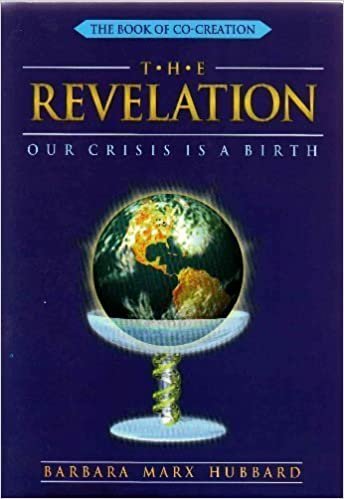
Notice that this passage from the Book of Co-Creation refers to a “Quantum Transformation” while the unpublished passage refers to a “quantum shift.” Notice also that both passages call for human population to be culled; the unpublished passage proclaims that “one-fourth [of humankind] must be eliminated from the social body” while the Book of Co-Creation declares that “[t]he population overgrowth on Earth must cease. Only those who choose to live on, shall.” The only real difference between these passages is that the unpublished excerpt glorifies how Hubbard and her evolutionary “riders of the pale horse” will selectively cull the population while the Book of Co-Creation prophesies that the “unfit” will voluntarily cull themselves from the human population. Although the rhetoric in the Book of Co-Creation is less menacing than the rhetoric in the unpublished excerpt, the former nonetheless asserts the Malthusian prognosis that human population must be culled in order for the human species to consciously evolve into the New Age.
To be fair, it is possible that the unpublished passage is actually a counterfeit. But even if it is a fabrication, there are multiple other excerpts from Hubbard’s writings, as you will see, in which she promotes Malthusian means of population control.
Malthusian Limits to Growth: Hubbard and the Club of Rome
Hubbard’s Malthusian overpopulation theories were partly inspired by the Club of Rome’s Limits to Growth: A Report for the Club of Rome’s Project on the Predicament of Mankind. In fact, in Hubbard’s Book of Co-Creation, there are multiple passages which warn of Malthusian “limits to growth” that could lead to ecological catastrophes [1]. She also met personally with Club of Rome Co-Founder, Aurelio Peccei [2], who prompted the World Economic Forum to adopt the Malthusian tenets of the Limits to Growth at the World Economic Forum’s Third Annual Meeting in 1973.
Established in 1968, the Club of Rome is a globalist non-governmental organization (NGO) that convenes meetings between heads of states, members of royal families, business leaders, international financiers, academic scholars, laboratory scientists, and administrators of global governance institutions, such as the UN, the World Bank, the International Monetary Fund (IMF), and the Organization for Economic Cooperation and Development (OECD). Modeled after the “Round Table” structure of the Bilderberg Group, the Royal Institute for International Affairs (RIIA), and the Council on Foreign Relations (CFR), the Club of Rome facilitates meetings where delegates plan the global economy through public-private stewardship of the world’s natural and human resources in accordance with the Malthusian ecology of sustainable development. Club of Rome member André Hoffmann is also a trustee of another Round Table NGO, the WEF, which is advancing the Great Reset to usher in public-private stakeholder sustainability for the technocratic Fourth Industrial Revolution.
In 1972, the Club of Rome’s Limits to Growth published the results of computer-simulated forecasts calculated by a team of scientists recruited from Massachusetts Institute of Technology (MIT). The Club of Rome’s MIT team was led by Dennis Meadows, who is a member of the WEF. Another central architect of the Club of Rome’s Project on the Predicament of Mankind was MIT Professor Jay W. Forrester, who was commissioned by the Club of Rome to apply his System Dynamics theory to design computer models that would graph population growth, resource consumption, and environmental pollution forecasts, all of which provided the basis for the Malthusian thesis of Limits to Growth. While working at MIT, Forrester programmed the World One computer, which modeled a prediction of the Malthusian collapse of civilization in 2040. According to Big Think “2020 is the first milestone envisioned by World One. . . . ‘At around 2020, the condition of the planet becomes highly critical.'” In several publications and speeches, Hubbard concurred with the World One computer forecasts as she predicted that 2020 would be the “shift” point for a “new norm.”
At the same time, Hubbard’s Book of Co-Creation explicitly invokes the Club of Rome’s Malthusian “limits to growth” rhetoric. In a chapter titled “The Journey,” she writes, “[o]ne more doubling of the world population will destroy our life-support system. Our Mother will not support us if we continue to grow in numbers! We must stop. . . . The so-called ‘population crisis’ is a crisis of our planetary birth. The limits to growth on Earth shift us from procreation to co-creation” [1]. Note here how Hubbard asserted that human population has reached a Malthusian “limits to growth” which will render “Mother Earth” incapable of sustaining life unless we collectively curtail “procreation.”
The Club of Rome’s Limits to Growth is not only Malthusian in principle, but a survey of its bibliography reveals that it is also backed by extensive citations from an array of Malthusian-eugenicists and affiliated institutions that have been dedicated to population control. These include:
- Jospeh J. Spengler: a eugenicist who contributed to the League of Nations World Population Conference, which was orchestrated under the leadership of Malthusian–eugenicist Margaret Sanger.
- Frank Notestein: an American Eugenics Society (AES) member, who was the founding director of the Population Division of the UN Department of Economic and Social Affairs (UN DESA); an “Organizer” of the Second UN World Population Conference; anda president of both the Population Association of America and the Population Council.
- Alexander Morris Carr-Saunders: a secretary of the Research Committee of the British Eugenics Education Society and a protégé of eugenicist Karl Pearson, who was himself a protégé of the founding father of eugenics, Francis Galton.
- The Population Reference Bureau: an international NGO that advances Malthusian population control programs through partnerships with the UN Fund for Population Activities (UNFPA); the Bill and Melinda Gates Foundation; the Population Council; and the Population Association of America, which was founded by AES President Henry Pratt Fairchild and AES Co-Founder Frederick Osborn, who was also a president of the Population Council.
- Ecoscience: Population, Resources, Environment: a book written by Paul Ehrlich (author of the Population Bomb) and John P. Holdren (US President Barack Obama’s White House Science Czar), both of whom postulated Malthusian population control policies, including the spiking of drinking water with sterilants and the imposition of a government-issued “long-term sterilizing capsule that could be implanted under the skin. . .and might be removable, with official permission.”
In 2016, Jørgen Randers, who was another captain of the MIT team that produced Limits to Growth, co-authored another Malthusian “Report of the Club of Rome.” Titled Reinventing Prosperity: Managing Economic Growth to Reduce Unemployment, Inequality, and Climate Change, this “Report,” which reasserts the Malthusian forecasts of Limits to Growth, declared that “the poor world should seek to improve the lot of its population by using whatever means necessary,” including “follow[ing] the example of China and seek[ing] to limit their populations, not with a one-child policy necessarily but through improved education and health, more easily available contraception―and ideally, by paying a bonus to those families who have had fewer than two children” [3].
Not only were the Malthusian-eugenics of Limits to Growth adopted rhetorically by Barbara Marx Hubbard, but she also met personally with the co-founder of the Club of Rome. In her 1989 autobiography, The Hunger of Eve, Hubbard relayed how she “had met Aurelio Peccei, head of the club [of Rome], in Bucharest in 1972 at a World Futurist Congress” [2]. Hubbard disagreed with Peccei’s outlook on the extent to which civilizational growth must be curtailed to avoid ecological catastrophe. However, she nonetheless concurred with Peccei that environmental resource consumption must be curbed to at least some degree in order to avoid the ecological catastrophes forecasted in Limits to Growth.
In fact, Hubbard promoted the Committee for the Future’s “Choiceful Future,” which “accepted the Limits to Growth position of the necessity for conservation of nonrenewable resources, for decentralization, diversity, self-sufficiency, use of appropriate technology, and respect for nature, the environment and all people as members of our own body” [2]. To put it another way, Hubbard assimilated Peccei’s push for the rationing of limited “nonrenewable resources” while she also synthesized his environmental “conservation” with her own call for sustainable economic development through innovative “use[s] of appropriate technology.”
Similarly, Hubbard also affirmed that “[t]here was much that was positive and right about” the Limits to Growth thesis even though she was critical of the Limits to Growth “advocates” who resolved that ecological catastrophes could only be averted by means of ultra-Malthusian checks on the global population-growth/resource-consumption ratio. She stated that:
“the Club of Rome’s Limits to Growth . . . considered earth [sic] a finite system with fixed resources and counselled us to adapt to the current limitations, or even to ‘return’ to a simpler stage of life as proposed by the deep ecologists. There was much that was positive and right about this perspective: restoration of the environment, decentralization, self-sufficiency, re-location of industry, energy efficiency, non-money economies, the barter system, cooperatives and the rebuilding of community. However, many of its advocates denied even the possibility of a concurrent and complementary, and equally natural, development of a new environment beyond our biosphere.” [2]
Again, Hubbard assimilated the Club of Rome’s policies concerning the “restoration of the environment” through resource conservation while she also synthesized the Club of Rome’s policies with her own call for sustainable development through outer-space technologies that can enable the “development of a new environment beyond our biosphere,” thereby increasing the global population-growth/resource-consumption ratio.
In The Book of Co-Creation, in a chapter titled “Revelation,” Hubbard expounds on the ways in which “resource shortage” and “overpopulation” can be transcended with “‘postnatal’ technologies . . . such as astronautics, genetics, longevity, cybernetics, robotics and nanotechnology” that can be utilized to capitalize on “the universal environment beyond the biosphere”:
“[t]he meta-crises of limits began: resource shortage, overpopulation, alienation, confusion, malaise about the future, disconnection with the past. Experts with an Earthbound perspective advocated a return to the simpler past, an adaptation to limits, a program of maximum conservation, and no growth. At the same time, some futurists wrote of a paradigm shift from self-centeredness to whole-centeredness. And some evolutionaries proclaimed the extended gospel of ‘postnatal’ technologies, to be developed within the womb of Earth for use after birth in the universal environment beyond the biosphere, such as astronautics, genetics, longevity, cybernetics, robotics and nanotechnology.” [1]
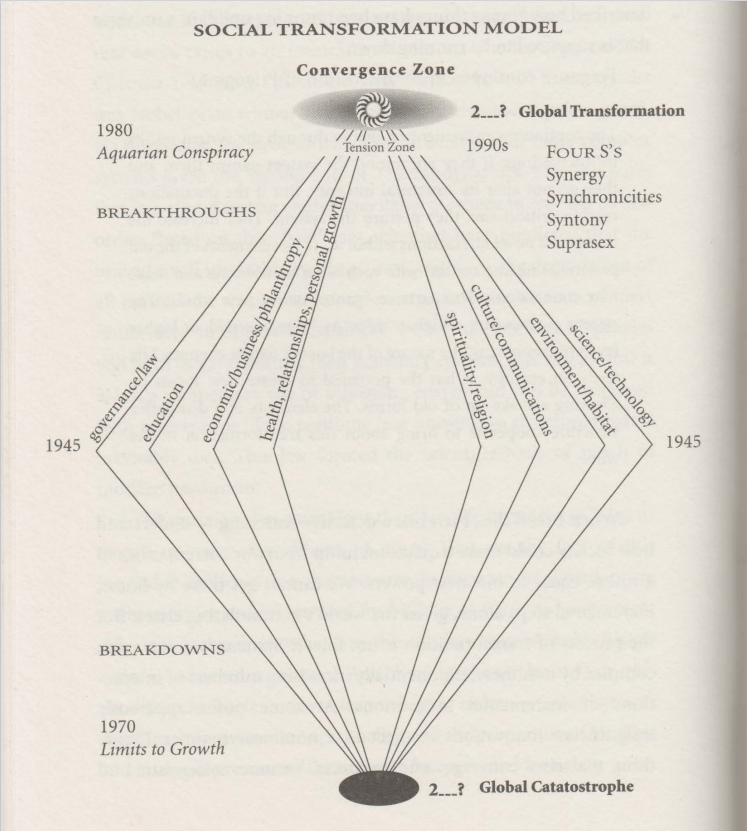
In sum, Hubbard affirmed the Malthusian premises of the Club of Rome’s Limits to Growth, and she believed that human population growth should be regulated accordingly. At the same time, she believed that Malthusian population control should be complemented with transhumanist technological innovations which would enable humans to efficiently steward interplanetary resources at sustainable rates of consumption.
Malthusian “Sustainability”: Hubbard, Strong, Gorbachev
On top of adopting the Malthusian tenets of the Club of Rome’s Limits to Growth, Hubbard collaborated with Maurice Strong, who was instrumental in setting up the UN Environmental Program (UNEP), coining the term “sustainable development,” and launching UN Agenda 21, which has since been revamped as Agenda 2030. Hubbard also collaborated with a cohort of New Age Soviets during the political rise of the first and only President of the Soviet Union, Mikhail Gorbachev [2], who was a Club of Rome member who partnered with Strong to set up the Earth Charter global sustainability project in conjunction with the launch of Agenda 21. Altogether, Hubbard’s Malthusian outlook on “limits to growth” and “sustainable development” was evidently shaped by her connections to Strong and Gorbachev, who played pivotal roles in ushering in the UN’s Sustainable Development Goals (SDGs), which are now pillars of the WEF’s Great Reset for the Fourth Industrial Revolution.
Strong served alongside Hubbard on the World Future Society’s (WFS) Global Advisory Council. Under the directorship of Hubbard and Strong, the WFS’s flagship publication, The Futurist, printed at least one issue that advocates for “sustainable lifestyles,” including “sustainable consumption habits,” for a “sustainable economy” in a “sustainable future.” In this 2014 issue of The Futurist, an article titled “Demographics, Consumption, and Climate Change” reports that “[m]odels for climate-change scenarios need to dig beneath population-growth projections to understand their potential impact on the environment. While it’s true that more people consuming more resources will have more impact, it’s where the population growth is happening that matters.” Of course, Strong was one of the founding fathers of Neo-Malthusian sustainable development.
In 1972, the same year that the Club of Rome published its Malthusian treatise in Limits to Growth, Strong led the UN Conference on the Human Environment (UNCHE), which resulted in the formation of the UNEP where he became its first executive director. Then, in 1987, Strong, who was also a member of the WEF Foundation Board, became a member of the UN World Commission on Environment and Development (WCED) where the term “sustainable development” was coined in the “Report of the WCED,” which contains 298 references to “population.” Five years later, the Club of Rome officially adopted the term “sustainable development” in its publication of Beyond the Limits: Confronting Global Collapse, Envisioning a Sustainable Future, which is the sequel to Limits to Growth. That same year, in 1992, Strong led the UN Earth Summit Conference in Rio de Janeiro, Brazil, resulting in the kickoff of UN Agenda 21, which established “sustainability” as one of the 8 Millennium Development Goals (MDGs) that are now revamped as the 17 Agenda 2030 SDGs. It is important to note here that SDG 5.6, which “[e]nsure[s] universal access to sexual and reproductive health and reproductive rights,” is explicitly guided by the Neo-Malthusian “family planning” tenets of the Program of Action of the UN’s 1994 International Conference on Population and Development.
In Hubbard’s 2001 Emergence: The Shift from Ego to Essence, she echoed the Malthusian overpopulation catastrophism and sustainable environmentalism touted in both the Club of Rome’s Limits to Growth treatises and the UN’s environment and population conferences: “[y]ou hit a definitive limit to growth in your current mode” in which “[t]here are no adult Universal humans who have been through the transition from a high-technology, over-populating, polluting world at the edge of destroying its own life-support systems to a new world that is sustainable, compassionate, and life-enhancing” [4]. Later in the same chapter, Hubbard writes, “[w]herever they have the choice, women are shifting from massive procreation to co-creation. We have reached a limit to population growth on Earth. One more doubling of the population will take us over ten billion. We will have fewer children―whether by choice or catastrophe is the only question” [4]. In other words, for Hubbard, sustainable development encompasses not only the elimination of environmental pollution, but also the Malthusian limitation of human population growth.
Based on this sustainable-Malthusian equation, human population itself can be equivocated to a form of pollution that must be expunged from the planet, which is essentially what the Club of Rome proclaimed in The First Global Revolution. Published one year before the UN set up Agenda 21, this “Report by the Council of the Club of Rome,” which calls for global “sustainable development,” contains a section titled “The Common Enemy of Humanity Is Man,” declaring that:
“[i]n searching for a new enemy to unite us, we came up with the idea that pollution, the threat of global warming, water shortages, famine and the like would fit the bill. In their totality and in their interactions these phenomena do constitute a common threat which demands the solidarity of all peoples. But in designating them as the enemy, we fall into the trap about which we have already warned, namely mistaking symptoms for causes. All these dangers are caused by human intervention and it is only through changed attitudes and behaviour that they can be overcome. The real enemy, then, is humanity itself.”
Stated differently, since humans are the cause of pollution, “humanity itself” can be equivocated to the greatest environmental pollutant which is the “real enemy” of the planet; in turn, environmental pollution must be prevented by eradicating human pollutants from the population.
Shortly after the launch of Agenda 21 at the UN Earth Summit, Strong partnered with Club of Rome member Gorbachev to launch Earth Charter, which combined Gorbachev’s Green Cross International with Strong’s Earth Council to form a global sustainable development initiative that would buoy UN Agenda 21 projects. It should be noted that Strong and Gorbachev were introduced to each other by Club of Rome and Bilderberg Group member, Queen Beatrix of the Netherlands, who is the daughter of Bilderberg Founder, Prince Bernhard of the Netherlands. A former Nazi stormtrooper, Prince Bernhard was the “honorary sponsor” of the Third Annual WEF Meeting where Peccei presented the Club of Rome’s Malthusian Limits to Growth to the WEF, which is now bolstering the UN’s SDGs through its Great Reset projects, including “Environmental, Social, and Governance” (ESG) scoring schemes designed to penalize companies that fail to comply with SDG benchmarks. In brief, the Gorbachev-Strong sustainability alliance was orchestrated to operate a crucial pivot point in the global governance nexus of the UN, the Club of Rome, the Bilderberg Group, and the WEF; and Hubbard had ties to this nexus through Gorbachev, Strong, the UN, and the Club of Rome.
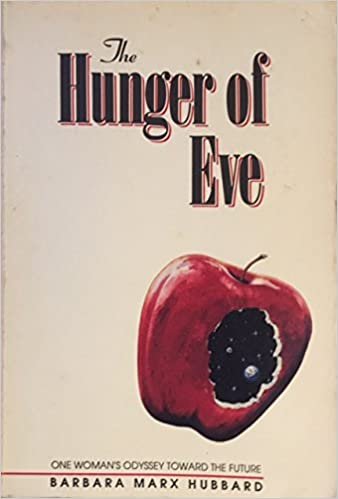
Hubbard’s ties to Gorbachev stem from her collaborations with Soviet New Agers during the 1980s. According to her autobiography, The Hunger of Eve, in 1985, the Director of the Center for Soviet-American Dialogue, Rama Vernon, who was a yoga instructor, swayed Hubbard to travel to the Soviet Union. While visiting the Union of Socialist Soviet Republics (USSR), Hubbard met with a leader in the Soviet “citizen diplomacy movement,” Joseph Goldin, who enthusiastically discussed prospects of Soviet-American “co-creation” aimed at achieving the utopian futurist visions of her mentor, R. Buckminster Fuller [2], who is cited in the Club of Rome’s Limits to Growth. Hubbard was even “given buttons that said ‘Co-creator’ in English and Russian, with a diagram of the evolutionary spiral” [2].
A couple years later, in 1987, Hubbard met at the:
“Cosmos Hotel . . . with Gennadi Alferenko, who was the founder of the Foundation for Social Inventions in the Soviet Union, and Rustem Khairov, who was working with Yevgeny Velikhov, the special science advisor to Gorbachev. We were planning the next major symposium, to be held in March, 1987, in Moscow entitled ‘A New Way of Thinking in the Nuclear Age — Social Innovations for the Third Millennium.” [2]
The next year, Hubbard “was amazed and delighted when on December 7, 1988 Gorbachev addressed the General Assembly of the United Nations, calling for ‘the kind of cooperation that could more accurately be termed co-creation and co-development'” [2]. Notice here that, according to Hubbard, both she and Gorbachev invoked the “co-creation” rhetoric of “conscious evolution.”
Hubbard went on to praise Gorbachev as a preeminent global leader who could “be our co-creative partner in restoring the environment . . . and expanding outer space peacefully”:
“I thought of Gorbachev as a political Sputnik. When Khrushchev put up Sputnik, he surprised us, and we responded with Apollo. If we recognized that the Soviet Union need not be our enemy, but could be our co-creative partner in restoring the environment, freeing people’s creativity and expanding outer space peacefully, what would happen over here? . . . It could usher in the greatest age of cooperation and co-creation on a global scale that has ever been seen on earth [sic]. I felt that this is what we are preparing for now.” [2]
Emphasizing the globalist,