Select date

Understanding Money and the Dollar System, by Michael Hudson


Radhika
Hello and welcome to this third Geopolitical Economy Hour. I’m Radhika Desai.
Michael
And I’m Michael Hudson.
Radhika
As many of you know, in this collaboration with Ben Norton’s Geopolitical Economy Report, Michael and I will present every fortnight a discussion of the major trends and developments that are so radically shaping our world. This includes issues that involve not just politics and economics, but, as Michael and I and Ben like to put it, political economy and geopolitical economy.
Thanks also to all our viewers for your interest and engagement. We would like to say that we do read all the comments with great interest, so please keep them coming, including your suggestions for future shows.
So, as we advertised last time, today we are going to deal with de-dollarization, and this for us is a really big theme, and we are going to take our time dealing with it. We will probably do at least two shows, maybe even a bit more. But in any case, since it’s such a big thing, let’s just get started.
Michael, what does de-dollarization actually refer to? What are people talking about when they say de-dollarization is occurring? Can we make an inventory of the main things people are referring to?
Michael
Well, President Putin and President Xi have both been talking about de-dollarization. So that has put it right in the center of the discussion. Basically, it’s a response to the fact that the United States has weaponized the dollar. It’s become a political tool in today’s Cold War.
For one thing, the dollar is no longer a safe haven. The United States had Britain confiscate Venezuela’s gold supply in England, and the United States and Europe have confiscated all of Russia’s foreign exchange holdings in dollars and euros. So that has made countries realize: if the United States is going to say that it is the world banker, and the world banker is going to just take our money, we’ve got to find another banker. And that means finding another currency.
Radhika
This is certainly one of the ways in which the sanctions have boomeranged. And then there are also other indicators. For example, the level of dollars, the share of dollars in the reserves of central banks around the world, is going down. It had been some 70%, now it’s 60%. It’s still quite high, but it is going down.
And there are also a couple of other things going on. Michael mentioned all these discussions that the Chinese and the Russians and other people are having. There’s also a huge spread of bilateral agreements between countries, particularly over the last year, with sanctions on Russia and so on. They have been proliferating. So India and Iran, Russia and Iran, China and Iran, et cetera — various countries are agreeing to accept each other’s currencies in their mutual trade.
And then there is also the new payment systems they are creating. So when the United States said that they were going to kick Russia out of the SWIFT international payments information system, everybody sort of got the message. In fact, as Michael said just now, the fact of the matter is that the weaponization of the dollar system didn’t start in 2022 with the conflict over Ukraine. It’s been going on for a while.
Michael mentioned the confiscation of Venezuela’s reserves and now of course, Russia’s reserves. But remember also there was that huge and scandalous episode of the vulture funds in Argentina, in which basically the American legal system, completely contrary to the rules of the international game, ruled in favor of vulture funds and against Argentina, which also showed you the casino the United States is running — it is totally loaded in favor of the house, even more than normally.
But there are also a couple of other things that we should probably mention. One is of course the availability of alternative sources of finance, particularly from China, but also the emergence of other institutions like the New Development Bank (NDB) which was created by the BRICS and so on.
Finally, there is also this whole issue of central bank digital currencies which increasingly being named as being quite important as a way of displacing the dollar from its centrality hitherto in the world monetary system.
Is there anything I’ve forgotten, Michael?
Michael
Quite a bit actually. The point that we’re going to be making throughout this whole discussion is that the dollar really isn’t an international currency, it’s a national currency. And being that, it reflects American self-interest.
One of the problems is that right now countries find they have to support the dollar. When they get a dollar inflow, they’re worried about their currency going up against the dollar.
The Global South countries are worrying about the fact that, since raw materials — oil and gas and food and other minerals — are denominated in dollars, now that the United States is raising its interest rates — in order to prevent wages from rising and causing a slowdown — that makes these materials more expensive in the local currencies of South America, Africa and Asia.
Countries want to say, “How can we make these prices of the raw materials — for instance, oil that we’re importing from Russia — how can we make it stable and not going up just because the dollar is raising its interest rates and making it more expensive to pay for oil?”
That’s why they’re doing just what you described: making agreements among themselves to transact their oil sales and other sales in domestic currency. That the Saudi Arabia agreements with Russia, with China — in order to price in their own currency — India is joining the crowd.
People are realizing: We’ve got to have something that is more objective and not subject to national manipulation.
Radhika
And whims. Exactly. In fact we will be discussing all of these things in even greater detail towards the end of this set of de-dollarization shows.
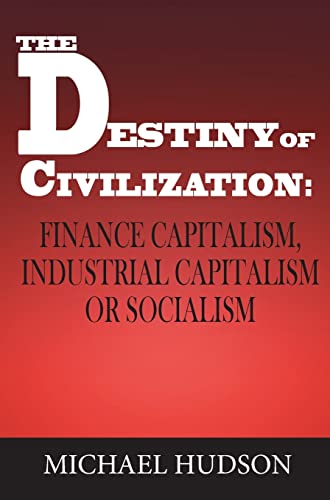
ORDER IT NOW
Michael, we should also tell people why both you and I have been writing about this for eons. You certainly have a long head-start on me. Why don’t you tell people a little bit about your own work, particularly Super Imperialism, very briefly, before we go on to our show. And then I’ll say something about my work.
Michael
Well, Super Imperialism is different from the old form of colonialism. Colonialism was all based on military occupation, essentially by force and by blocked currency areas. But Super Imperialism is how the United States has gotten a free ride from the rest of the world — how the United States has dominated other economies, not by the old colonialist form, not by having a military force in many countries, but in monetary forms.
So the new form of imperialism is essentially monetary and financial in character. It works via the American control of the International Monetary Fund and the World Bank, which oblige other countries to focus their economies on helping the United States balance of payments, financing the US. military spending abroad, financing American takeovers, and being willing to balance their foreign exchange by privatizing and selling off their public infrastructure to American and foreign investors.
The new form of imperialism is financial much more than military. And even the military force of American policy has become financialized.
Radhika
Yes. So Super Imperialism is really one of the foundational texts to really try to understand why the dollar system is tottering right now. Because if you’ve always been saying that the dollar system is perfectly fine, then it’s difficult to understand it’s unraveling.
So what Michael did in Super Imperialism was important for me. I elaborate on this argument in my Geopolitical Economy, which was published in 2013. In this book, I basically show — one of the best ways of introducing this book is like this: You may have heard people say that the dollar was once hegemonic and it is no longer so. You may have heard other people say that the dollar has always been hegemonic and will always remain so. But you’ve never heard people say that the dollar never really managed stable hegemony. And that is the argument of Geopolitical Economy.
So Geopolitical Economy exposes the clay feet on which the United States giant actually stands. It exposes the contradictions of the dollar system. Since then, Michael and I have also elaborated both on his own views, which have developed over the decades. Michael has done a lot of other work on this matter.
My own work has continued to develop, particularly vis-a-vis trying to understand how the sterling system, to which the dollar system has always been compared, actually worked. We put together in a very short form the summary of our work in a paper entitled “Beyond the Dollar Creditocracy: A Geopolitical Economy.” This is a short version of our argument. Those of you who are interested, please take a look. We will be sharing the links to all these things in the notes to this show.
This is why we really have a lot to say about dollarization, which is the flavor of the month. We’d like to share our understanding in this show and the next of what the dollar system really was. What were its contradictions exactly? What are the ways in which these contradictions are now maturing? How is the dollar system unraveling today?
This is also interesting because the dollar system has always been very unstable and shaky, so it has always had its doomsayers. But the fact is that until recently, the dollar system has somehow managed to keep on top of things.
There has always been this way of dismissing those who talked about the problems of the dollar system, saying that the dollar’s doomsayers are a dime a dozen and they are never proved right. But now, all the problems to which they are pointing are maturing. So it really helps to have been a critic of the system. And what’s happening now, very interestingly, is that there are people in high places who are talking about de-dollarization. Let me just give you a couple of prominent examples.
One of them is Zoltan Pozsar. Zoltan Pozsar is the Global Head of Short Term Interest Rate Strategy at Credit Suisse, and he has also formerly worked for the US Federal Reserve, as well as the US Treasury Department. Earlier last year, around March 2022, he wrote a fairly controversial piece that made the news called We Are Witnessing the Birth of a New Monetary Order.
He wrote this a week after the United States seized the Russian reserves, as we were discussing just now. And what is the reason that he gave for why there will be a birth of a new monetary order? From the start, Pozsar has pointed to one critical thing — which we will come back to towards the end of the show when we return to discussing the crisis of the dollar more fully — he focused on commodity prices. He said that commodities are becoming more attractive than the money that is produced by the US financial system.
More recently, very interestingly, in an article last month in the Financial Times (“Great power conflict puts the dollar’s exorbitant privilege under threat“) he also added the emergence and the increasing proliferation of central bank digital currencies, particularly in countries that are outside the imperial core of the world system. He named that as another major factor. So that’s Zoltan Pozsar.
Now, a second important and prominent person who is pointing to the demise of the dollar is Nouriel Roubini. Some of you will remember that Nouriel Roubini was called Dr. Doom because, in the run up to the 2008 financial crisis, when the bubble was still inflating, Roubini was predicting its bursting. And actually you can probably still find videos on YouTube where people are laughing at him when he predicts the inevitable crash, which in fact happened in 2008.
Roubini is fingering geopolitics for de-dollarization. In a quite recent article entitled “A bipolar currency regime will replace the dollar’s exorbitant privilege,” he mentions that the emergence of central bank digital currencies outside the imperial core are importantly contributing to de-dollarization.

ORDER IT NOW
As Michael has mentioned, in the context of boomeranging sanctions, we also hear it widely reported that President Putin wants to develop an alternative currency system and has appointed one of his advisors who is really big on Eurasian integration, Dr. Sergei Glazyev, as the lead organizer of this system. These are some of the indicators that something quite important is going on.
However, Michael and I also feel that we need to have a more systematic discussion of this, because the fact of the matter is that the story of de-dollarization — that is to say, the dollar system itself — has been such an ideological and deeply flawed discourse, one of whose purpose was precisely to always talk up the dollar, which was always on shaky foundation. So there was always a big industry of people talking up the dollar.
Those who are trying to criticize also end up being like scholars who are the blind scholars who are looking at the elephant — the one who’s holding the tail thinks it’s long and skinny, and the one who’s holding the leg thinks it’s big and thick and so on. So there’s different parts of the story we want to put together. We look at the history and the fundamental instability of the system. Both Michael and I have done that.
We will, in fact, begin by understanding why it’s unstable, why a national currency cannot be a world currency. And we are also going to look at the sterling system. So the fact is that the discussion of the dollar’s career as the world money has been dominated by US scholars who have been professional boosters.
One of the key examples of this is Charles Kindleberger. This is the guy who proposed what’s commonly — or what’s in the literature called — Hegemonic Stability Theory (HST). He basically said that, in the interwar period, there was a big crisis. The Great Depression occurred because the United Kingdom was no longer able, and the United States was not yet willing, to provide leadership to the world system and providing the world with a currency, with its national currency as the world’s currency, was one of the elements of this leadership.
So this discourse has tended to naturalize the dollar’s role partly by naturalizing sterling’s role. And we are going to show that none of this is natural.
In fact, we’d like to structure our discussion in terms of a very clear set of questions. We have ten of them, and we think that we are going to be able to get through the first five in this show and the next five in the next show. So we will be beginning by discussing:
1. What is money? Why does it appear to take national forms? Can there be world money?
2. What is the relation of money and debt? Michael in particular has done a lot of work on this and we want to talk about this.
3. Is money a commodity? We want to talk about whether money is a commodity. I’ve shown, for example, that Polanyi said money is not a commodity and Marx would have agreed with him.
4. What is the ‘theory’ of how the dollar has served as the world’s money?
5. Was the dollar system like the sterling system? What was the sterling system? Since that theory relates to the sterling system, and always refers back to the sterling system, we need to show how the sterling system actually worked, or rather did not work, and what were its instabilities.
In the next show, we want to talk about:
6. How did that sterling system end?
7. What really happened between the World Wars? Michael gave you a flavor of that just now.
8. How did the dollar system really work, both in the Bretton Woods system between 1945 and 1971, and after the dollar’s gold link was broken in 1971? What were the real dynamics?
9. Then we want to ask: Was there really a ‘Bretton Woods II’ system after 1971?
10. As to the crisis today: What are its main dimensions? We want to come to the big crisis as it is unfolding today and ask, What are the major elements of it? What does it have to do with the rise of China, the rise of other economies, central bank, digital currencies, commodities, etc.?
That is our agenda.
Michael, I’ve spoken for a long time and you probably have a few things to add, so please.
Michael
Well, the common denominator of what we’re saying is: We focus on the political instabilities and what used to be called internal contradictions. Radhika is right when she says that the people like Triffin and Kindleberger have treated the dollar’s supremacy as if it’s natural. And if it’s natural, it’s inevitable. And really, there’s nothing you can do to change all of this.
But if you look at the international monetary system as political, then you realize it’s all about change. That’s what politics is all about. And if you’re writing for the kind of audience that Mr. Roubini and the others wrote for, you can’t really come out and talk about what Radhika and I are saying. We’re talking about ‘that which must not be said’ in the major media — about the causes of the instability being exploitative.
People talk about: Wouldn’t it be nice to have commodities as a basis of world trade? Well, nobody’s going to have central bank reserves held in the form of grain or oil. They will hold it in gold because for the last 4,000 years, that’s something that everybody can agree upon is an objective physical thing beyond the ability of individual countries to affect.
But the whole idea is that if we’re talking about money and money is political, you want something that is political — that countries can influence. The question is: How are you going to influence money, and in whose interest?
That’s why we’re explaining this historically in the sequence that Radhika has described, so that you can see — if you understand that historically — what the fight has been all about for the last 100 years,
Radhika
That’s really great, Michael.
Let’s deal with the first question, which is: What is money? Why does it appear to take national forms? Can there be world money?
Michael
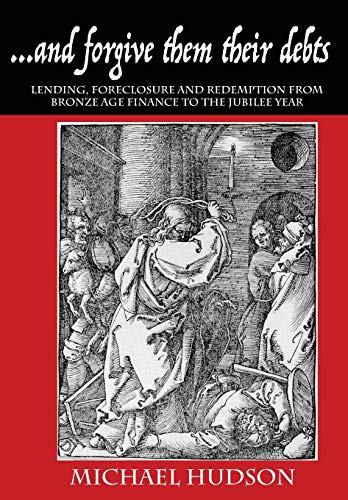
ORDER IT NOW
Well, all money is debt. The dollar bills in your pocket are technically on the liability side of the US Treasury. And if the US Treasury would get out of debt, it would have to redeem all the money, presumably for gold or something else. And there wouldn’t be any money, but there wouldn’t be any debt.
So basically, if money is debt, who is going to be the beneficiary of the debt? Who is this debt going to be owed to? Well, most money — the government owes debt to the economy, if we’re talking about physical money — the physical currency, the greenbacks. Well, most greenbacks are $100 bills stuffed in the mattresses of drug dealers and arms dealers and people all outside of the United States. Most American currency is held out of the United States, not in it.
But, if you look at what monetary theorists are saying about money, money is what you have in the bank. It’s not only physical currency, but it’s demand deposits. It’s bank credit.
Banks create credit and banks create money. And what do they create money for? Well, they create it electronically. You go into a bank, you say you want a loan to buy a house. The bank creates a bank deposit in your name. And in exchange, the bank has a liability. You sign a note saying, I promise to pay the bank and I pledge my house as collateral and anything else the bank can grab in case I can’t pay the loan. So bank credit is money. And the difference between bank credit and government credit is: when governments create money, they spend it on something that’s supposed to be in the public interest. World War III is America’s main private interest now. So most of the budget deficit is to fight in Ukraine to start World War III. There’s a little bit of social spending in there too for Social Security and Medicare.
But when banks create credit, and we have a chart about this, they create it to buy houses for mortgage credit. They create it essentially against collateral in the form of assets that are already in place because they want something to grab. The money that banks create is used to buy houses and that bids up their prices, which is why housing prices have gone up so much.
Or banks create credit to enable corporate raiders to buy a company and load it down with debt. So the money that’s been created has gone hand in hand with a huge expansion of debt.
The problem with this is that the debts grow faster than the economy. The rate of interest for the last 100 years has been higher than the rate of economic growth. And that’s been the case ever since the Babylonian era 5,000 years ago. The rate of interest grows faster than the economy. Then the debt grows more and more and more. And what people think is: Well, there’s more money to buy houses, more money to buy stocks and bonds under quantitative easing. But it turns out that all this money is debt.
The internal tension of all of this is: How can economies pay debts that grow faster than the economy is growing? The long picture that we’re talking about is that debts tend to grow faster than the ability to pay. Most people think of a business cycle as going very smoothly, like a sine curve, steadily — as if somehow the economy can keep chugging along.
But that’s not how economies work. Over time, every recovery in the United States and Europe since World War II has started from a higher and higher and higher debt overhead. And right now, America has reached its limit. Well, that’s the problem that America is posing for the world economy. How can a country that is deindustrialized, that’s in debt, that is shrinking, dominate the whole rest of the world simply by saying: We’re going to write IOUs and you have to support it? That’s what makes the nature of money the essence of the kind of financial imperialism that we’re seeing.
Radhika
Yeah, that’s great, Michael. What you’ve said is that basically money is debt. Money is debt that is owed to somebody. And I’d like to add to that, because Michael’s already alluded to the fact, that you can have the debt created by a privately owned financial system or a financial system whose financial institutions are privately owned, in which case the money — that is necessary to create and is necessary to create as debt — also becomes the source of private profit for a small number of people.
Historically, we have known other kinds of money where the state issues money, where the money that is created is a liability of the state. Practically all well-organized financial systems — ones that are not prone to crisis, that are not prone to predatory lending, in which debt does not expand exponentially far beyond the capacity to pay — are actually run by states that heavily regulate the financial system, prevent them from going into a speculation, and so on.
So Michael’s already sort of waded into the relation between money and debt.
Returning for a minute to the question of: What is money? I’d just like to say that it is very common, actually, both among mainstream as well as critical thinkers, to tend to talk as if money is a commodity. You will even find many Marxists who say that Marx thought money was a commodity.
In reality, money is not a commodity. Money is actually an ancient social institution. It arises from old practices of keeping accounts: keeping accounts of who owes what to whom, keeping accounts of debt, et cetera. So that’s the first thing one should think.
The second thing is that — and this is very relevant to our present conversation — money is necessarily national. It’s not some kind of quirk of history that means that in the United States, we have dollars, in the UK we have pounds sterling, and so on, all the different national currencies.
The fact of the matter is that capitalism itself tends to create not a single world empire, no matter how strong the United States is — rather, it necessarily creates a world of competing national states, if they are all capitalist.
In more recent times, over the past century and more, we’ve also seen the rise of socialist states. So this tremendously changes the nature of money.

ORDER IT NOW
I’m going into the third question as well, that is: Is money a commodity? But let me just say that that is one thing money is not. It is not a commodity. What is true, however, is that capitalism needs to impose upon the functioning of money some commodity-type dynamics, particularly by making it artificially scarce.
Or, as we have seen in the recent past, when it has been issued in abundance by central banks, like the Federal Reserve, it has been issued in vast quantities, obscene quantities, astronomical quantities, but chiefly so that a small elite can use this money in order to inflate asset markets and benefit from that. It has not been for ordinary people. For most ordinary people, money has to be kept scarce.
In that sense, that is the only relation money has to commodities.
So money necessarily takes national forms. Now, this is often explained, particularly these days, when Modern Monetary Theory (MMT) has become so fashionable, by saying that all money requires a state which will not only issue it, but will also accept it in the payment of taxes. And that’s what gives money its currency. But I think this is not the only thing.
There is an additional thing, because this MMT model is almost like a neoliberal model, where the state only performs this night watchman function, which in this case includes the provision of money.
In fact, most economies are objectively national. I mean, take just a simple example of Canada, which is a 10th of the size of the United States, sitting right next to the United States. But the Canadian economy is distinct from the American economy. The 2008 meltdown didn’t happen in Canada, even though in so many other ways, the economies are so interconnected.
So there are more reasons that our national economies — on the whole, the bulk of the economic transactions within an economy take place within national economies
In that sense, money must also take national forms, precisely because there is no world state. In fact, in capitalism, we will not see a world state. Precisely because of that there is no world money, which has a big implication for understanding the dollar’s world role, which is that the attempt to impose a national currency on the world is bound to be extremely unstable, volatile, and contradictory.
Michael, maybe you can add anything you like on the first three questions. What is money? What is this relationship to debt? And we have more to say about whether money is a commodity.
Michael
What makes money not a commodity is that it doesn’t have a cost of production. Gold has a cost of production. Silver does. But a commodity is created electronically. And banks can create a million dollar loan to buy a house simply with a click of the computer keyboard. So there’s no inherent value, but there is a debt. And the debt’s very important.
So money becomes, for the banks, a rent-extracting privilege. An interest on this credit is like economic rent. Basically, banks have the privilege of just creating their own money, meaning they’ve created their own product — debt — for the rest of the economy. And at a certain point — and we’ve reached that point today in the United States and much of Europe — a point comes where the debts can’t be paid.
If we’re talking about international money, the dollars that are held in the foreign exchange reserves of China, Russia, and other countries — there’s no way that the United States can pay off the Treasury IOUs that it owes foreign central banks, if foreign central banks say, “OK, we want to cash it in.” What are they going to cash it in for? They can’t get gold anymore unless they just sell the Treasury Bills on the open market, and that’ll push gold prices way up. What can they do?
The United States can’t even pay its domestic debt, but nobody expects governments to pay off their own money. Nobody expects the US or England or Canada to say, “OK, we’re going to pay off the debt. There won’t be any dollar bills anymore because money is debt.”
Internationally, it’s different. Governments do expect their foreign exchange reserves to have some real value, as if it were a commodity. But it’s not a commodity, it’s a debt, and the creditor has all of the power in this case.
The United States, with Super Imperialism, is dominating the economy, not as a creditor, now, but as a debtor. It owes so much money to foreign central banks that it can say, “Well, if you want your dollars to have any value and you don’t want us to grab the dollars, like we grabbed Russia’s dollars, you’d better follow what the International Monetary Fund and the World Bank — which are right close to the White House — tell you to do.”
Radhika
I further wanted to add that as well. Another way of thinking about it is, if money is debt, then money is a relation. It’s not a commodity. It is not a single object or entity or anything like that. And, as most of you will appreciate, money is also a system. But I wanted to add a couple more points about why and how money is not a commodity.
Because gold has played such an important role in the recent and modern history, or monetary history, of the world, people think that gold and silver were money. Gold and silver were not money. Gold and silver were money material.
Let me just give you a small example.
You may have had a regime of gold coins in which gold coins circulated, but they did not circulate as gold [per se]. If they had circulated as gold, every time you accepted a gold coin, you would have had to test whether it is actually gold, whether it has the right gold content, what its exact weight is. And this is not how money ought to function.
Money ought to function as: you are given a piece of money and you accept it because it is valid, legitimate, et cetera.

ORDER IT NOW
Gold functioned as money because it was minted by a sovereign authority. The depiction of the head of the king or the queen that was on the gold coin basically gave you the freedom, the license, to use it as though it were worth what it said it was worth.
Because if it was not — supposing you found that the gold coin that you had just received was faulty – you went to the mint and you exchanged it for a proper gold coin, a gold coin that was worth everything it was supposed to be worth. So what made it money was the minting and the imprimatur of the sovereign.
As Marx says in one of his writings, in this form, these coins were already symbols of themselves. And it was a short trip from here to understanding that money is a symbol and money is sort of circulating as “value-less” pieces of paper, or eventually coins that really did not embody value, they just were pieces of metal. But the most important thing about them was the symbol.
So the first thing you have to understand is that, even when gold and silver circulated, it was not gold and silver that was money. They were the opposite of money. They were commodities, because you always exchange commodities for money. And so you exchange it for a commodity which is not any old commodity, but something that can be used to buy all other commodities. This is what money is.
The second point I want to make about money — which is really interesting because again, we are encouraged to think that everything that is bought and sold in capitalism is in fact a commodity, but that is not true — a commodity is something that is produced to be sold.
Karl Polanyi pointed out that there are three things that capitalism likes to treat as commodities, which are not commodities. And the attempt to treat them as commodities causes a lot of problems. Those three things were land, labor, and money.
Nobody produced the land. Land is just there. It is the common heritage of humankind, the earth on which we live. And yes, different societies have historically occupied different pieces of the earth. But at least within those societies, land is the common heritage of all. And ultimately, the whole earth is the common heritage of humankind. It is not a commodity.
Secondly, labor. We don’t have kids so that we can sell them to somebody. We have kids because they’re part of our families. They’re part of our affection and all those things. Yes, capitalism then treats our ability to work as a commodity. That creates a lot of problems, et cetera.
And finally, money. Money has no cost of production. Money is essentially, like I said, an institution. Yes, in capitalism, we are encouraged to think that money is bought and sold, or at least borrowed and rented and so on. But this is, again, a whole different set of dynamics, which we would examine more fully.
And another thing that’s important about money is that it does not have a cost of production. And you know what’s really interesting, and not do any of these other things.
What’s really interesting is that in classical political economy, before we all became subject to neoclassical economics, classical political economy spent a lot of time trying to discover the special laws that govern the prices of land, labor, and money. Because their prices are not governed by the same dynamics as the prices of ordinary commodities. So in those ways, money is not a commodity.
Michael
That’s a very important point that you made about money being like land. Land doesn’t have a cost of production. But if you privatize it, there’s an access price that you have to pay for access to the land. And that’s economic rent.
Similarly with money, it doesn’t have a cost of production. But you have to pay in order to get access to it. And interest is charged for that access.
Now, in the 19th century, the great fight of political economy was to say, “We don’t want to have — the role of capitalism, certainly industrial capitalism, is to free economies from this legacy of feudalism. We don’t want a landlord class that owns the land on a hereditary basis where you have to pay rent to it in order to have a house on it. We don’t need that. Land should be public in character. And people should have to — if there is a ‘rent of location’, because some sites are more valuable than others, the government should get it, not individuals.”
“Same thing with money. You have access to money. You shouldn’t have to pay bankers who make loans for really pretty bad purposes, as we saw in 2008. You had the whole American banking system, basically corrupt, making loans that couldn’t be paid. So instead of having money as a private ownership, it should be a public utility.” That’s really what Karl Polanyi was talking about.
“And the same thing with labor, of course. You don’t have slavery anymore. You don’t have to buy your freedom. The government should protect labor.”
So we’re looking at things in terms of a balance sheet. And what is the charge for access to something that really is not a commodity and doesn’t have a cost of production, but is going to be a free lunch for somebody? Should this free lunch be for the government in the public domain, or should it be for some private, privileged class, the 1%?
Radhika
Michael, you said something really interesting there. And I just want to add that, just as you said, money has to be regulated in a way that works best for society and for its productive activities, and labor has to be regulated in similar ways — you can’t have slavery, you can’t have overexploitation, et cetera.
Similarly, land also has to be regulated, not only so people do not make unreasonable, rentier incomes out of land. Rent is in fact unearned income. And, as Michael said, classical political economy waged a big campaign against this sort of unearned income.
Also, very importantly for our times of the ecological emergency of climate change, of pollution and biodiversity loss, that you cannot manage the land at the end of the day unless you have some sort of public ownership of it.

ORDER IT NOW
Marx has a wonderful little aside, way back in the latter part of the 19th century when he was writing Capital, he says, in his sections on rent, you cannot have rational agronomy while you have private property in land. What he meant by rational agronomy is simply the rational management of the land, its resources, et cetera. So this is all really important to reflect on.
But maybe Michael, we can now go to the fourth question, which is really: What is the theory of how the dollar has served as the world’s money? What would you say are the main things that are trotted out to justify that the dollar can and should serve as the world’s money?
Michael
Well, there was a great reluctance of countries to break free of the power of the banking sector. Of course, the banking sector wanted to treat money as a commodity, because they controlled the money supply. And they said, “If you think of the money we create as a commodity, then we deserve everything we get for it, because we have it and you don’t. And we can put a fence around it and you have to get through.”
So essentially, the United States, if it didn’t have all the money, at least it had all the credit. And without really giving any money to Europe, it said, “Well, we’ve given you arms and now you have to pay. You have to somehow pay in the money that we’ve created, US dollars. How are you going to earn the dollars in order to pay the inter-ally debts?” Well, Europe said, We’ll collect it from Germany. But how was Germany going to pay the dollars?
Well, this is the point, that there was a great argument between John Maynard Keynes and Harold G. Moulton, and the right-wing Austrians. Keynes said, “America, if you’re going to say that Germany has to keep the whole financial system afloat by paying the allies to pay America, then you’re obliged to import from Germany enough material, so that you spend dollars buying German manufacturers. They spend the dollars in paying the allies. The allies paid you. And there’s a circular flow. There has to be a balance of some kind of money, no matter how you look at money.”
Instead, America said, “Well, we don’t want any competition with Germany.” They raised the tariffs against Germany and against countries with depreciating currencies and said, “We’re not going to let Germany earn the money to pay the allies. We’re going to force you all into bankruptcy.”
That’s essentially what started the depression that led to World War II. America forced other countries to try to get dollars, but didn’t give them any way of earning these dollars. And so it broke the whole essence of international money, which is that there has to be an economy that’s able to support this flow of payments and debts and purchases and sales. All of that was broken.
And the ability of America to act as a wrecker is what made it the central power as a record financially, not without having to indeed Europe or Germany until World War II.
Radhika
Very interesting, Michael. So if I had to answer this question of, What is the theory of how the dollar served as the world’s money, I would name a bunch of different elements in this theory.
Perhaps the best place to begin is to begin with Charles Kindleberger. So in the 1970s, and what’s really interesting is that he doesn’t come up with this theory when the United States really, according to him, emerges as the hegemon of the world, the provider of the world’s money after the Second World War. The theory actually emerges when this dollar system is in deep crisis and the dollar’s gold link has been broken.
Nevertheless, what he says at this point is that, “You see