Select date

Thoughts Upon David Crosby’s Death, by Robert S. Griffin


The opposite of a good thing can be counted on to also be a good thing. That reality—as I see it, anyway—prompts me to think about the opposite of whatever I consider true and valuable to discern how it might be true and valuable. Giving impetus to this activity is the assumption that, whether it be for a group or an individual, living well—accomplishing important things and being happy and healthy and whole—involves harmoniously integrating opposites (or apparent opposites, perhaps polarities rather than opposites is a better way of looking at them): the public and private; work and love; selfishness and altruism; gentility and fierceness; the present, past, and future; and so on. The January 18, 2023 death of singer, songwriter David Crosby encouraged me to offer an illustration of this value-and-integrate-opposites perspective in this writing.
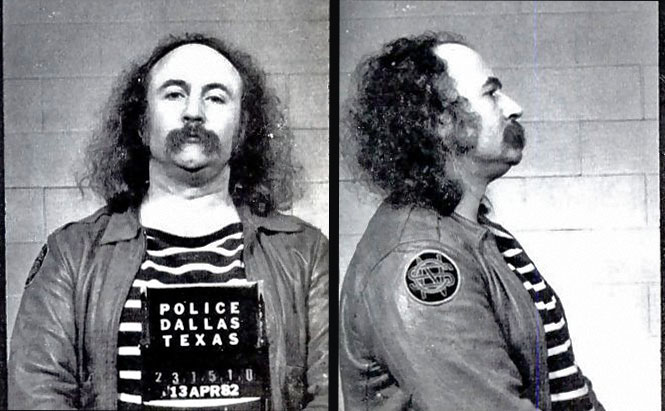
David Crosby helped create two of the most popular and influential American musical groups in the 1960s and ‘70s, the Byrds and Crosby, Stills, Nash & Young. He continued to perform successfully with others and individually until the end of his life. Important here, he endured the ravages of a severe drug problem, including addictions to cocaine and heroin that landed him in jail, as well as obesity and a general lack of self-care. Crosby’s life involved a stark contradiction: while he gave an enormous gift to the world through his music, for many years he badly abused himself and paid a great personal price for it. What first drew my attention to him, it must be a decade ago, was how, in mid-life, he managed to confront his personal demons admirably well, enough to remain productive professionally and, apparently, do well in his personal life, and, as it turned out, make it to 81. I wrote a brief reflection on it at the time and filed it away. I share it here.
In 2016, I authored an article from a White racial angle entitled “Blacks as Emotional Abusers of Whites: The Exploration of a Possibility.” It considered the phenomenon of abuse in the public realm, race relations. Going along with the basic contention in this writing, if public abuse is an important concern, and I hold that it is, very likely so too is its opposite: personal abuse, self-abuse. Thus, and staying within a racial frame of reference, the potential worth in looking into what went on with an individual White man, David Crosby—a prime example of self-abuse if there ever was one—to see what insights can be gained from it. Motivating this activity from the perspective of this publication is the assumption that White racial well-being is advanced by concurrently attending to the state of the race as a whole and the state of the living, breathing, mortal White individuals that comprise it and noting how each affects, contributes to, the other and acting accordingly.
With that as the context, here’s what I wrote about David Crosby these many years ago. In particular, see what you think of my take on what his example implies in the “my commentary” section at the end.
* * *
Excerpts from two hospital intake reports on David Crosby in late 1983.
Ross General Hospital
Crosby, David
42-year-old, single, white male, rock musician.
Patient describes chills and sweats five to six times a day beginning 24 hours after admission and says he “feels bad all over.”
Describes ringing in the ears and a dull headache in the frontal and occipital areas.
He has a stomach ache with nausea. He notes increased bowel rumbling. He has constipation chronically. He last bowel movement, which was hard and dry, was approximately two days ago.
He states that he periodically notices a left pain in the costovertebral angle [abdomen] so that a question of urinary tract obstruction on a periodic or intermittent basis should be considered.
There is a past history of seizure on one occasion. This was apparently a gran mal seizure and may have been related to drug intake.
Physical Examination
Reveals a disheveled man who appears his stated age and is obese.
Reveals long hair that is in need of shampooing, scalp has plaque build-up. The nasal septum is perforate [a hole in the inside wall of the nose from cocaine use] with purulent material [pus], dried and old on either side. Mouth exam reveals four teeth that are broken and badly carious [decayed], left upper, lower and right upper.
Reveals edema [retention of fluid] in the lower legs and hemorrhage of small capillary vessels with subsequent hemosiderin staining [discoloration from internal bleeding]. The skin of the feet is wrinkled and dry. On the upper extremities, his skin is characterized by healing staphylococcus lesions that are pink and slightly pigmented. There are lesions on his right hand, where he has apparently suffered flash fires handling the freebase unit needed to produce his cocaine for inhalation. There are several open draining wounds on the neck.
Diagnostic Impression
Chemical dependency, opiate and cocaine.
Chronic staphylococcal neurodermatitis [infections].
Perforate nasal septum.
History of lower urinary tract obstruction and urinary retention with gross hematuria [blood in the urine] secondary to probable renolithiasis [urinary tract infection] and colic [gas].
Fixed tissue eruption [skin lesions].
Hemosiderin staining of both lower extremities.
Disposition
The patient will be treated for chemical dependency. He will be encouraged to participate in group activities, to begin a program of self care physically by washing and shampooing and then to move into daily exercises, group therapy, and stress management.
Gladman Memorial Hospital
The indications are that this patient has used drugs over the years to contain his agitations and depressions.
* * *
My Commentary
I presume the drugs Crosby used did contain his agitations and depressions—or at least for a time they did, a few hours. The problem, however, is they didn’t bring lasting containment: he was soon back to where he started and even worse. Not only had the agitations and depressions returned, they were more acute than before. Whatever self-abusive actions we—let’s bring this around to you and me and everyone else—take to make things better—drugs, alcohol, food, neurotic buying, promiscuity, gambling, excessive video gaming, pornography, masochistic relationships—works in the short run (or we wouldn’t be doing them), but they intensify whatever issues we are masking and at some level we knew that when we did those things; that’s what makes what we did self-abusive. Plus, we now have new problems to deal with—read through Crosby’s list, constipation and infections and the rest. And if it isn’t Crosby’s list it is some other: broken relationships, lost jobs, missed opportunities, financial hardship, depression and despair, hurt loved ones, etc., etc., etc.
I believe that for just about all people who are torturing themselves, the way out is clear, and it isn’t complicated, and they know what it is, and, even though it may be very tough sledding, it is within their power to go down that path. It’s not that they—we—don’t know what to do, or that we know what to do and can’t do it; rather, we know what to do and can do it, but we don’t do it. And, I offer, the knowledge that we could have done it and didn’t persists within us as a physically felt inner reality and gnaws at us despite all the assurances we may be getting from others and from ourselves that our problems are bigger than we are. Bubbling just beneath the surface and insistingly pressing on us, we know the truth: we are failing ourselves and those in our lives, and we won’t be self-respecting and at peace until we conduct our lives in alignment with that reality.
Other people can help us, programs can help, therapies can help, books can help, but when all is said and done it comes down to invoking two powers that remain available to us no matter how low we get: our rational mind and our power of volition. Even when things hit rock bottom, as long as we are alive, we can pose and answer an existential question: am I going to stop abusing myself and do what reason tells me is the best way to get out of the mess I’ve put myself in or am I not? To his great credit, David Crosby answered “Yes” to that question, and he carried through with it. Creative to the end, his last album was released in October, 2022. He should be an inspiration to all of us.
Endnote
The material below is from David Crosby, with Carl Gottlieb, Long Time Gone: The Autobiography of David Crosby (New York: Doubleday, 1988).