Select date

AFTER HOURS(By Joseph Minion &Amp; Martin Scorsese) Provides Clues as to the Emergence of Globo-Homo, the Fusion of Hipster &Amp; Yuppie Into the ‘Yupster’, the Spread of Decadent Infantilism, and the Rise of PC Mob Mentality, by Jung-Freud


The 1980s were not a good decade for Martin Scorsese. This may sound odd considering he began with a bang, RAGING BULL, a work that was voted by American critics as the best film of the decade. Furthermore, even though KING OF COMEDY, AFTER HOURS, and LAST TEMPTATION OF CHRIST weren’t commercial successes — TKOC was a total flop — , plenty of critics defended or championed them. (Personally, I’d say TKOC works as mordant satire, AH is amusing but mostly fluff, and LTOC is like, Sam Peckinpah’s BRING ME THE HEAD OF ALFREDO GARCIA, powerful as concept but handled poorly, a casualty of self-indulgence.) Scorsese had a moderate hit with COLOR OF MONEY, not least because of its dynamo cast of Paul Newman and Tom Cruise, but I don’t think I ever bothered to watch it from beginning to end; Scorsese seemed more interested in billiard balls than characters or story.
Anyway, given the drift of Scorsese’s career in the 1980s, from the strong RAGING BULL and THE KING OF COMEDY to works that were either superficial or confused, I pretty much wrote him off(like Francis Ford Coppola who’s been unable to make a masterpiece after APOCALYPSE NOW). I felt pretty much the same way about Steven Spielberg who, like Scorsese, began the decade strongly with RAIDERS OF THE LOST ARK and E.T., THE EXTRA-TERRESTRIAL. Then, he got mired in silly stuff like a mini-movie in TWILIGHT ZONE, two lame sequels of Indiana Jones, and the remake ALWAYS(which is nice but hardly special except for Holly Hunter who still had the magic before she made a total ass of herself in the putrid PIANO, a cinematic crime for which there can be no forgiveness for all involved). There was COLOR PURPLE, a movie I haven’t seen. From what I read of it, Spielberg took a rather simple book by Alice Walker and gave it the David Lean treatment, probably as dumb as what Francis Ford Coppola did with THE OUTSIDERS, a story of a bunch of young ne’er-do-wells inflated to GONE WITH THE WIND proportions. But then, there was EMPIRE OF THE SUN, which for all its faults, is truly an audacious and amazing work. Still, by the end of the decade, one couldn’t help but feel that Scorsese and Spielberg had run out of creative fuel; they would just become tired and tiresome journeyman directors like the latter-day Coppola and Mike Nichols(who lost any sign of spark he showed in films from THE GRADUATE to CARNAL KNOWLEDGE, indeed even THE DAY OF THE DOLPHIN). Then, it was all the more surprising that Scorsese and Spielberg had their best decade yet in the 1990s as film-makers still possessed of youthful energy but maturing beyond earlier fixations and limitations.
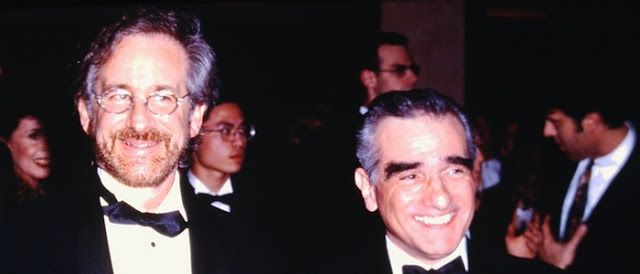
Personally, I never thought very highly of AFTER HOURS even though Kevin Michael Grace makes a good case for reevaluation. But, there is a certain fondness for associative reasons: 1985 was was the year I started college, the rite of passage where one becomes a full adult. Also, regardless of whether 1985 was one of the great years in cinema or not, I remember certain films from that year vividly, partly because some of them were indeed remarkable and partly because I was of a more excitable state of mind — full independence will have that effect. It was the bridge year between finality of youth and beginning of adulthood. Among the great or remarkable works of that year — ones I still revisit with utmost pleasure — are TO LIVE AND DIE IN L.A.(dir. William Friedkin), RAN(dir. Akira Kurosawa), WHEN FATHER WAS AWAY ON BUSINESS(dir. Emir Kusturica), LOST IN AMERICA(dir. Albert Brooks), MY BEAUTIFUL LAUNDRETTE(dir. Stephen Frears), DEATH OF A SALESMAN(dir. Volker Schlondorff), RUNAWAY TRAIN(dir. Andrei Konchalovsky), and HIMATSURI(dir. Mitsuo Yanagimachi). Below top tier were notable works such as COLONEL REDL, ELENI, EMERALD FOREST, THE FALCON AND THE SNOWMAN, FANDANGO, PURPLE ROSE OF CAIRO, THE HOME AND THE WORLD, KING DAVID, MISHIMA, THE OFFICIAL STORY, PEE WEE’S BIG ADVENTURE, PRIZZI’S HONOR, REAL GENIUS, REVOLUTION, THE SURE THING, TAMPOPO, THE TRIP TO BOUNTIFUL, TROUBLE IN MIND, TWICE IN A LIFETIME, DREAMCHILD, 28 UP, and VAGABOND. Not so good and even terrible are certain movies for which I have a special like, if only out of nostalgia: YEAR OF THE DRAGON, WEIRD SCIENCE, WITNESS, VISION QUEST, TUFF TURF, ST. ELMO’S FIRE, RED SONJA, THE QUIET EARTH, PALE RIDER, MASK, MAD MAX BEYOND THUNDERDOME, THE JEWEL OF THE NILE, HAIL MARY, DAY OF THE DEAD, DANCE WITH A STRANGER, CODE OF SILENCE, THE BREAKFAST CLUB, and BRAZIL. If I had a time machine and could go back to any year, my first choice would be 1985 or 1986 when all seemed possible.

TO LIVE AND DIE IN L.A.
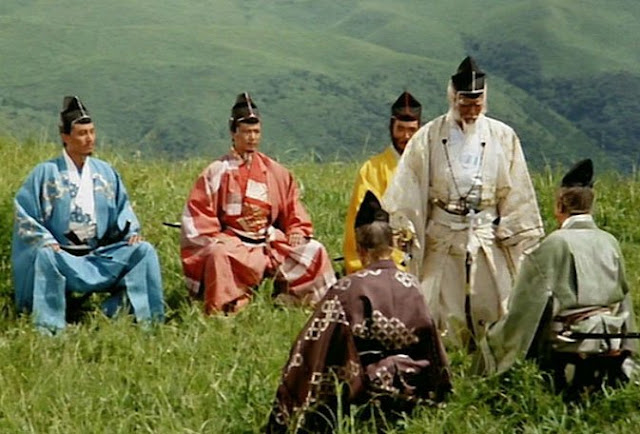
RAN
Of all the 1985 films, the two I prize most are TO LIVE AND DIE IN L.A. and RAN. By a happy chance, I got to see a double-feature of TO LIVE AND DIE IN L.A.(my second viewing) and AFTER HOURS, and so, the two films became inexorably fused in my mind though I believe one is infinitely greater than the other. Even though both films are very much works of their time — Friedkin’s crime thriller was marketed as cinematic MIAMI VICE — , AFTER HOURS now seems a bit dated in its yuppisms whereas TO LIVE AND DIE IN L.A. seems like a timeless work of mythic proportions. Though the scope of AFTER HOURS is as small as that of TO LIVE AND DIE IN L.A. is big, both were relatively low-budget works that go to show what a talented director can squeeze out from limited funds. And as social critique, both works conveyed the soulless materialism and narcissism of the time, though one could argue that there is a certain mad heroism to the reckless drive for revenge in TO LIVE AND DIE IN L.A.
One key difference is that, even though the characters of TLADILA seem more childlike in their game of cops and robbers in contrast to the more ‘cultured’ individuals of AFTER HOURS who apparently live for ideas & creativity, there’s no denying that the former are real men whereas the latter are big children. Even though ‘contact sports’ are simpler than ‘creative pursuits’, there is something real, tough, sobering, and unmistakable about physical conflict — win or lose, a matter of life and death — that is absent in cerebral life that can allow for deep thought & great art but also, more often than not, sophistry, nonsense, and craziness. While cops(or even federal agents) may not be the brightest bulbs or refined sophisticates, they know what crime and race relations are about. One cannot make it as a cop with social constructs and ideological delusions. Bullet from the gun of a thug cannot be stopped with a thought or idea. It’s telling that the elderly agent in TLADILA is blasted in the head by a shotgun. It’s not a war of words but of sticks and stones that break bones.
In contrast, a college professor or some intellectual can make up his own reality with theories favored by his morally narcissistic egotism. (Granted, this can lead to much agony as well, as evinced in David Mamet’s OLEANNA.) This is why people-of-mind can use reason & reflection to attain wisdom OR misuse intellect to surround their know-it-all selves with lies or half-truths to stoke their delusions. Same goes for artists. Genuine artists can create great works that reveal something about truth, beauty, and/or the human condition. Or they can demonstrate the gift of mythic imagination or psychological insight. But because art has an escapist component(and entertainment value) and/or, in the modernist context, the conceit of the avant-garde, it can just as easily lead people away from the truth. Consider how so many people prefer to lose themselves in horror, fantasy, sci-fi, or romance genres than face up to the hard truths of reality.
But then, even more dangerous is lies sold as truth, fantasy sold as fact. Tragically, too much of current media and ‘art’-cinema/TV are participants in the Great Cover-Up. Because they offer their views and narratives in the form of ‘fair & balanced’ News or ‘Serious’ movies or TV docu-drama, people may be fooled into believing something like HIDDEN FIGURES or SOCIAL NETWORK have something ‘important’ to tell us about the world. But, most ‘serious’ movies and TV shows are propaganda that would have you believe that ‘white supremacists’ are responsible for most violence in the US while blacks are always ‘victims’. Or, how about the Russia Collusion Hoax carried out by combination of Deep State, Courts, and Mass Media(while the academia either sat silent or surreptitiously added fuel to the hysteria). Incredibly, the news media now resemble advertising more than serious reporting. And the very Progs who lamented the commercialization of visual medium in the movie BROADCAST NEWS(which itself is dishonest schlock if one thinks about it) are now only too happy that it’s the mouthpiece of the oligarchy. After all, Jewish oligarchs own the media, and most media operators(and Hollywood bigshots) are Jews, and Jews tend to stick together.
Anyway, what can we say about AFTER HOURS and why is it relevant to our times? The film is about a young yuppie(not yet a hipster type exactly) trapped in fast-changing Soho(or So-Homo), a neo-bohemian world of homos, post-beatniks, artists(more like artniks), deracinated yuppies, punks, alienated remnants of urban working class, lonely people, petty criminals, and infantile eccentrics of all kind. There isn’t a single child in the entire movie, but just about everyone is so childish. The lead played by Paul Hackett(Griffin Dunne) is hardly mature himself but an adult compared to nearly everyone else in the film who seemed to have been weaned on junk culture & attitudes, with growth stunted at around 15 or younger. Some of these people may be reasonably intelligent or talented, but a namby-pamby quality infects most of them.
Thankfully, this is not a P.T. Anderson film as each of the characters would have been revealed to possess a heart of gold and for whom we need to lend our shoulders to cry on, boo hoo hoo. Scorsese, the product of Little Italy where youth culture hadn’t fully taken root during his formative years, is made of tougher stuff, at least as an artist(as his public pronouncements on social issues are as inane as those of just about anyone in Hollywood). Also, anyone who grew up in NY in the 60s, 70s, and 80s would have been all-too-aware of the crime problem, especially pertaining to blacks. The millennial children of NY yupsters(yuppie-hipsters as yuppism and hipsterism fully melded together in the 90s) know a very different reality. NY, one of the most dangerous cities, underwent dramatic decline in crime since the Clinton presidency and under mayors such as Rudy Giuliani and Michael Bloomberg. The New York of the 1990s and 2000s could produce a spoiled brat like Lena Dunham who takes everything for granted in the Big Crapple.
Of course, there were always nice parts of NY, and if one knows NY mostly from Woody Allen films like ANNIE HALL, MANHATTAN, HANNAH AND HER SISTERS, CRIMES AND MISDEMEANORS, and MANHATTAN MURDER MYSTERY, one would hardly know the city has a black population and a crime problem. Two most memorable murders in Allen’s movies are both by elderly Jews. In MANHATTAN MURDER MYSTERY, some Jewish guy who looks like Stanley Kauffmann bumps off his wife to go off with some young pretty shikse bimbo who looks like Mia Farrow. In CRIMES AND MISDEMEANORS, an aging Jewish doctor has his underworld brother hire goons to take out a blackmailing mistress. Allen’s first movie, TAKE THE MONEY AND RUN was about crime but as spoof. But then, given sensitivities about blacks and ‘racism’, Hollywood has never been fully honest about crime. DIRTY HARRY movies presents some black thugs, but the big villains are invariably white. DEATH WISH has some black criminals as well, but the worst crooks seem to be white or Hispanic. In reality, the worst criminals are blacks, but in movies, you’re more likely to see blacks as cops, lawyers, and judges than as criminals.
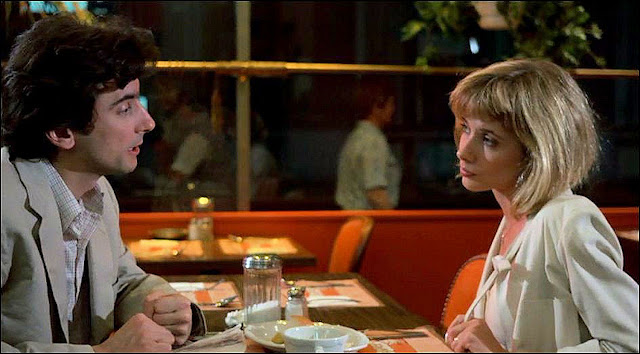
What is interesting about watching AFTER HOURS today is all the oddities, neuroses, and imbecilities in the film now seem so commonplace and even institutionalized. When the film came out, the US was hardly a ‘traditional’ nation. Though the 80s were called the Reagan Decade or Reagan Era, in cultural terms it was the age of Frat Parties and Neon Hedonism. ‘Frat parties’ culturally imply something more than the college partying scene. It’s a cultural template, and the frat-party atmosphere has been a staple of countless movies about youth. Though RISKY BUSINESS is about high-schoolers, it is essentially a frat-party movie. So is SIXTEEN CANDLES. The way young people act in such movies, it’s as if they are prepping for the day when they can go to real frat parties, like the one near the end of THE SURE THING. Even movies about brainy people, such as REVENGE OF THE NERDS and REAL GENIUS, riff on frat-party motifs. Neither is really about geeks and nerds validating their worth with brain-power but more about proving their worth as people who can party and have a good time like anyone else. (In contrast, SOCIAL NETWORK is the real revenge of the nerd tale as its main character appears to eschew social life to gain money and power. But it is also a big lie. Mark Zuckerberg wasn’t driven by ethnic resentment but simply by greed and megalomania.)
Suburbia featured prominently in the ‘Reagan Era’ culture of the 80s, but it was so different from the family-based suburbia of 1950s TV and Advertising. Especially with the rise of Youth Culture beginning in the mid 50s and reaching unforeseen heights in the 60s and thereafter, even the suburban home in Pop Culture was usually bereft of anyone but young people. Parents were virtually non-existent, and if they were seen, they were usually, at best, a nuisance, and more often than not, ‘uncool’ pests, which grew increasingly ironic as the parental figures increasingly became the boomers themselves. (If boomer birth began in 1946, the oldest boomers were already 40 by mid 80s.) Teachers generally fared worse in most movies catering to youth. (Most of these movies and TV shows were written, directed, and/or produced by formerly uncool kids who wanted to be thought ‘cool’ via the stuff they made.) In a movie like RISKY BUSINESS, the parents are conveniently gone, and we see young people in a world of their own doing their thing. In a way, being an upper high school student or college student was to have the best of both worlds. On the one hand, one was still young enough not to work and worry about paying taxes and insurance. Also, parents still provided essential necessities, like allowance, use of car, rent-free living space, and even college tuition. Yet, one was legally an adult and free to pursue one’s whims and dreams.

Tom Cruise in RISKY BUSINESS
Still, the reason why the 80s(especially of high school/college scene and expanding suburbia, not least due to urban problems of black blight that led to white flight) were seen as ‘conservative’ and ‘normal’ despite excesses of hedonism, narcissism, and immaturity had to do with recognizable themes and fixations. So, even if people weren’t exactly moral, traditionalist, sober, or responsible, they were acting recognizably human in the most normal and obvious sense of the word. They represented the Id(in the Freudian sense) of the majority. The young men and women in RISKY BUSINESS are seen acting rather sordid, but it’s readily apparent what it’s all about: Sex, Money, and Good Times. One may say it’s morally wrong, but it’s not weird. We see healthy human drives put to bad use, but there’s no mistake as to what they are after. Naturally, boys in the movie audience are going to identify with good-looking Tom Cruise. Girls in the audience are going to swoon over cute Tom. And everyone’s gonna be grinning from ear to ear as teenage fantasies come true. The characters get to acting risky, even reckless. They overstep their bounds and get in too deep.
But it’s a very ‘normal’ movie in that even the excesses are extensions of all-too-common human drives. It’s like someone eating to excess isn’t commendable but understandable. We all want to have another scoop of ice cream or another serving of pie. It’s not like eating bugs, drinking blood, or making foodstuff out of vaginal yeast or placenta. Following the counterculture conceits of the 60s and militant radicalism of the 70s, there was the hunger for the Return(if not exactly Revenge) of the Normal. It seemed everyone and everything had failed big time. The Left disgraced itself with radicals who turned to terrorism. The black movement spiraled out of control with militants and then with crime. The Right felt betrayed by Richard Nixon’s bold moves with the USSR and China. And then Watergate disgraced Nixon. People looked to Jimmy Carter as the new hope, but the late 70s were marked by stagflation and sense of America’s decline. With the demise of Counterculture and Hippies, the 70s turned to the nihilism of rage(punk music) and nihilism of nightlife(disco), but neither panned out for long. For Middle America, punk was too ugly & abnormal, and disco was too ‘gay’ & polyester.

The rise of ‘cultural neo-conservatism’ was anticipated less by pop music than by Hollywood’s Movie Brat directors. ‘Cultural Neo-Conservatism’ is key here because most of the participants, except for John Milius, were not politically conservative even though they were certainly not on the Hard Left either(like Hollywood communists of the 40s and 50s). People like George Lucas and Steven Spielberg were essentially limousine liberals whose cultural instincts were, at least relative to their peers in arts & culture, rather ‘conventional’, ‘conservative’, and ‘traditionalist’. George Lucas’ paean to youth, AMERICAN GRAFFITI, is set in an America that is still ‘innocent’ and ‘clean-cut’ before Free Love & Drugs really became a thing. Spielberg was in love with Suburbia. To him, it wasn’t boring but a wonderland of low crime where kids could run or bike around freely and dream about the stars.
Indeed, many urban folks loved Spielberg movies as a fantasy of escape from urban crime and grime. Unlike city-scape, there was plenty of space out there in the suburbs. And you might even smell the soil, capture fireflies, and gaze at the constellation(though increasing sprawl since the 70s pretty much blotted out most stars even from the suburbs). While Martin Scorsese presented New York as a menacing & degenerate place in TAXI DRIVER — big cities didn’t come across much better in films like DOG DAY AFTERNOON and DIRTY HARRY — , you might find Lost America in the suburban fantasies of Spielberg. The suburbs were cleaner, quieter, and whiter. (Intellectual Woody Allen, though very different from childlike Spielberg, did something similar for NY in films like ANNIE HALL, MANHATTAN, and HANNAH AND HER SISTERS. Though the stories are set in NY of late 70s and 80s with plenty of messed-up artists, thinkers, & poseurs, there is an old-fashioned sentimentality not unlike what is shown in RADIO DAYS and BROADCAST DANNY ROSE; it’s as if Allen blocked out much of the social & cultural shift that took place since the 60s even though he is very much a product of those changes: A 60s icon whose favored cultural references are of an older New York. There is something old-fashioned about the Coens as well, but then, unlike the world of Pop Culture, the Cinematic Community tends to look deeper into the past[and other cultures, many of them more conservative than the West] for remembrance and appreciation. What Pop Star looks back to the 19th century for inspiration? But Coens remade TRUE GRIT set in a bygone time.)

MTV, though mostly inane and trashy, was part of the ‘cultural neo-conservatism’ in this sense: It catered mainly to the White Suburban demographic. It rejected black acts except for those with crossover appeal, especially to White Middle America. And though MTV celebrated excess, self-indulgence, and wantonness, it was, like RISKY BUSINESS, in tune with majority tastes, appetites, and fantasies. (It was with YO, MTV RAPS that the channel turned decisively urban, jungle, and Anti-Middle-America, especially as it arrived around the time madonna, the top white female pop star, began to parade her jungle fever to white girls all across America.) Given the vast changes since Reagan left office, one might think the Age of Deviancy would have set in soon enough, but it didn’t. The 90s might be called the Black Decade, or the Jungle Era. Not only did the L.A. Riots rock the nation, but there was Bill Clinton as the ‘first black president’. Michael Jordan was seen as a demigod(in a decade when Larry Bird, the 80s sports idol, had faded as a factor). Blacks celebrated over O.J. Simpson. Jews, monopolists of erotica, finally decided to make pornography ‘interracial’. TV shows began to feature black males and white females as mates. Rap and Hip Hop became huge. Though some of these trends intensified further in later years, the template really took hold in the 90s.
Given Bill Clinton’s huge support from the homo community, one might have thought deviancy would have emerged victorious in the 90s, but there was too much of the Old Guard left as voters and players. They had to retire and/or die off for the Age of Deviancy to really take off. (The Old Guard obviously failed to pass down their values, themes, narratives, and symbols to their children and grandchildren because, once they were out of the picture, Old America died almost instantly. In contrast, because older Jews passed down their stories and passions to their children and grandchildren, even their passing will not affect the power of Jewish Tribalism. If the old torch fails to pass the flame to the new torch, its light will fade forever once its fire goes out no matter how brightly it had once burned. It’s like even the biggest forest fire comes to a total end when the last flames are snuffed out.) Because of the backlash against Clintonism with the Republican takeover of Congress in 1994, the Age of Deviancy spearheaded by homos & freaks had to wait even though Jews and homos worked tirelessly behind the scenes to lay the groundwork for the eventual takeover. With the Reagan Era dead(not least because of George H.W. Bush’s lackluster one-term presidency[alongside the insipid Dan Quayle], the end of the Cold War, and Clintonism’s appropriation of ‘free trade’ and ‘law & order’ themes from the GOP) and without Deviancy to take front and center of the New Culture, blackness became the dominant theme of the 1990s. (There was Quentin Tarantino and Eminem, but they seem to see themselves as ‘white niggers’.) The 90s was also the Decade of the Geek as the Internet changed America like nothing before. It also made overnight tech billionaires who became the New Oligarchs. But as rich and powerful as geeks are, they are too lacking in personality and charm to define the zeitgeist of an era.
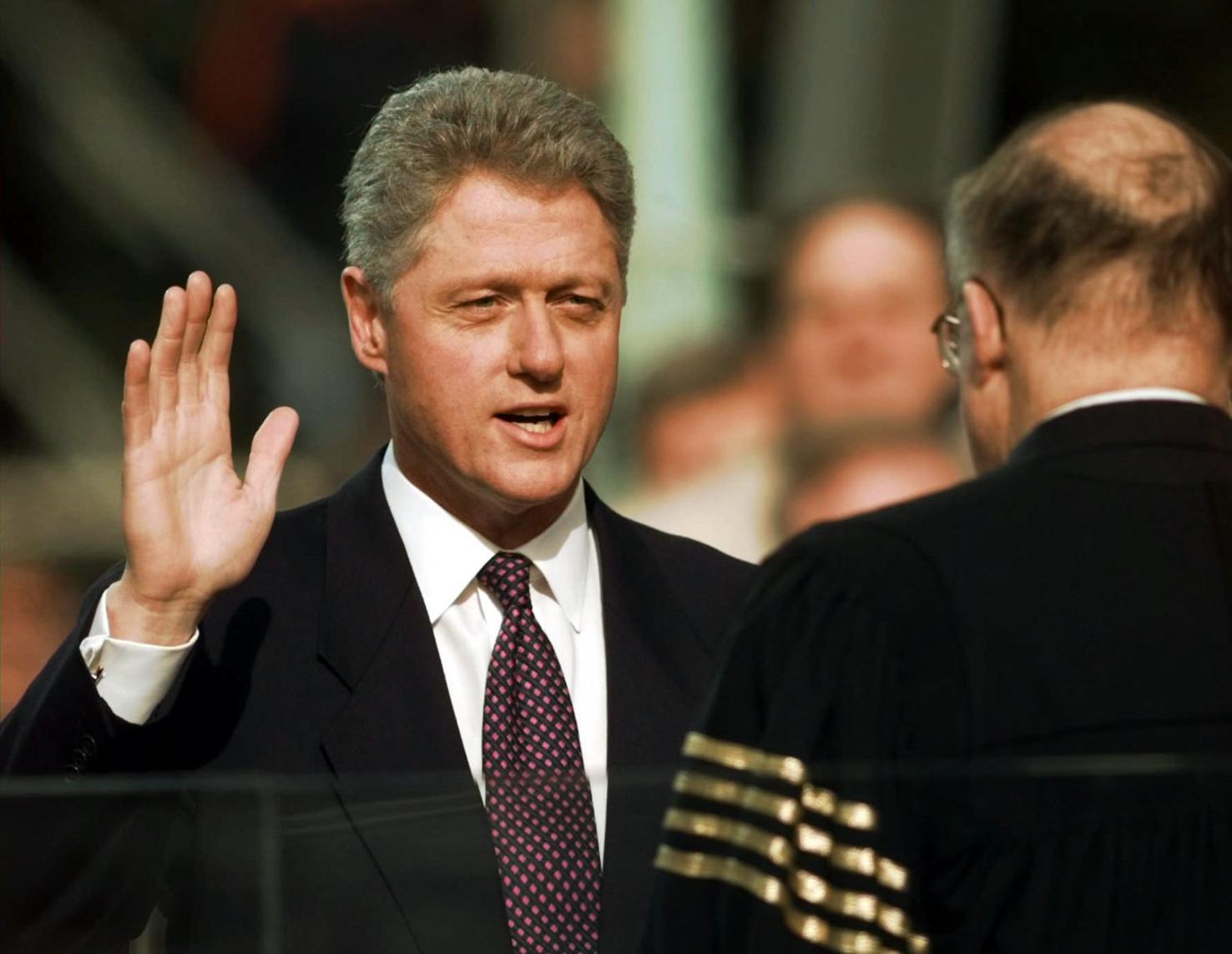
And then, 9/11 and the Iraq War sidelined Cultural Trends for awhile as much of the talk was about Terrorism, WMD, and Spreading Democracy, aka the Return of ‘History’. The financial collapse of 2008 was the final death knell for Bush II and the GOP, and one might have thought that the rise of Obama would have heralded a New Era of Black Power, but more than anything, he was a tool of Jews and Homos, and it was through him that US made the full lurch into the Age of Deviancy.
As different as White Middle America 80s and Black Urban America 90s were from each other, they had one thing in common: They were about excesses and indulgences of normal drives of the respective racial communities. While many white figures in 80s pop culture acted stupid and loutish, they were nevertheless normal white people acting out their fantasies of sex, money, and pleasure. And even though rap thug culture was plenty demented, it was ‘healthy’ and ‘normal’ in the sense that it represented the unleashed Id of most blacks who, once reverted to their jungle-savage state, have little on their minds but ‘muh fist’, ‘muh dick’, and ‘muh booty’.
As such, Jews found both Middle American excesses and Black Thug-and-Biatch excesses problematic. Jews handsomely profited from both, but the 80s put White Gentiles at the center, and 90s put Black Gentiles at the center. How could Jews put their interests at the center? Jews were only 2% of the population and known mainly for neuroticism. What group is most like Jews in high achievement, neuroticism, and being a small minority? It was the homos, of course. And homos were especially useful because they lack continuity + autonomy. In some ways, homos are both the most fragile and most resilient community in the world. There is no homo lineage like there is Jewish lineage or Greek lineage that may go back 1000s of yrs. A Jew can trace his ancestry back to the time of King David. Conceivably, Jews can produce more Jews who produce more Jews ad infinitum to keep the Jewish Race alive forever. There is organic, cultural, and genetic continuity to Jewishness. In contrast, even if a homo man and homo woman procreate, the chances are that the child will be straight. Thus, there is no such thing as homo ancestry(and, of course, homo ‘sex’ cannot produce life). However, there are homos in EVERY COMMUNITY, even in ones that are most anti-homo. The most anti-homo couple can have a homo child. And even if all existing homos were exterminated, new homos will arise in the future from straight couples. If all Jews or all Greeks are killed, that’s the end of the Jewish or Greek race. But homos can never be eradicated from the Earth because no one knows when, where, and to whom the next homo will be born. Jews understood the advantages and disadvantages of homo power. Due to lack of ancestry & continuity, homos needed the support of a community with a strong sense of continuity and unity, and that was the Jews. But precisely because homos are born and exist all over the world, Jews could recruit them in all nations to serve Jewish interests. And why wouldn’t vain & narcissistic homos collaborate with Jews when doing so means the expansion of ‘gay pride’ as the new world faith?
Furthermore, because Jews felt that placing themselves at the cultural center might lead to a backlash(borne of envy and resentment), they figured it’d be safer to use homos as proxies of Urban Elite Neuroticist Supremacism. Jews are too small in number(and perhaps too Semitic in looks) to represent Normal America, which had long been defined as White Middle Class(the groups with most aesthetic appeal). And Jews don’t have the athleticism and vocality to command attention like blacks do. Jews have high-intelligence, but except in comedy(increasingly repressed in range by PC), most people don’t much care for ‘geek’ stuff. If Jews can’t command America by the numbers, looks, sports, & (increasingly rambunctious)music, how can their ilk(mainly known for neuroticism & idiosyncracies) command the cultural center? The solution was through homos as a kind of Proxy Jews with more color, pizzazz(than often off-putting chutzpah), flair, and flamboyance. Unlike Jews whose main mode of expression is the complaint or insult(which can be funny but also annoying and even infuriating), homos have a celebratory air about everything. And yet, no matter how much Homomania becomes part of the New Normal, ‘gay’ stuff will always be deviant because most people are not toots.
Also, there’s a difference between deviance and Deviance. Little ‘d’ deviance is just a part of life as no society is totally normal or ‘natural’, just like no plate of food is totally devoid of germs. It’s like every box of cereal has some trace amount of insect parts and rat feces. In contrast, big ‘D’ Deviance goes out of its way to convince people that the ‘impurities’ are the best part of the serving. Imagine if cereals were especially promoted on account of containing rat shit, insect parts, and other such contents. Naturally, people will recoil from such product. They want ‘normal’ cereal, not ‘deviant’ components. But suppose the cereal box was designed in a colorful way that made rat shit, insect parts, and other impurities seem like the ‘heartiest’ part of breakfast. Such would be the PROMOTION of Deviance as opposed to the mere TOLERATION of deviance. And this is why homos were so useful to Jews. Jews had tried to normalize neuroticism through their ideologues, ‘experts’, and humorists, but no amount of Woody-Allen-isms, Mel-Brooks-isms, and Seinfeld-isms could really make America embrace Urban Neuroticism(esp of the Tribe) as the heart and soul of America. People came back to White Middle America. Now, a more effective bludgeon against White Middle America was Jungle Fever as black prowess is natural and virile(though savage and dangerous).
As such, blackness has visceral power against whiteness that Jewishness doesn’t have. And indeed, Jews used blackness extensively to subvert white pride and white power. Jews used blackness to turn white males into hapless cucks and white girls into race traitors. Then, why didn’t Jews just stick with blacks? Because on some level Jews also feel intimidated by blacks. They notice Jewish women turning ‘mudfish’ too. Also, as blackness is about brawn whereas Jewishness is about brains, the black-Jewish alliance has always been one fraught with contradictions and anxieties. The Jew-Black tension was powerfully dramatized in the encounter between the Jewish cop and black criminal in David Mamet’s HOMICIDE.
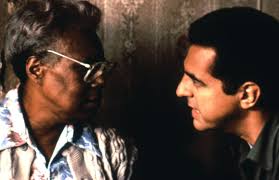
HOMICIDE by David Mamet. Jewish Cop trying to talk sense with the mother of a big black thug.
So, even as Jews use blackness as bludgeon against whites, they also feel uneasy about blackness as the dominant expression of Americanism because the logic of blackness militates against everything Jews stand for: Intellect, neuroticism, anxiety, geekery, nerdonics, ‘faggoty-ass’-ness, and etc. Negroes are the People of the Drum; Jews are the People of the Book. A world of drums will burn the books. Also, even though blackness is wild, savage, and crazy, its essence isn’t deviant or decadent. The black way will seem different(even offensively so) to certain non-black groups, but it’s just blacks naturally being black. It’s like chimps acting like chimps, baboons acting like baboons, and hippos acting like hippos.
Blacks are just heeding the call of nature to be what they really be: Jungle-Jiving Afro-Savages. While black savagery has been amplified by modern technology, the black way is to return to nature. In contrast, there is something very neurotic about Jews and Homos. In some way, their mode is a return to nature as well. Zionist Jews rediscovered their tribalism, and homos now shamelessly indulge in their naturally deviant lusts of bung-banging. And yet, unlike blacks who shamelessly ‘twerk’ and wallow in their savagery, Jews and Homos, due to higher level of intellect and cultural sophistication, have gone about idealizing or theorizing their obsessions and hang-ups. It’s like Sigmund Freud wrote about sex than blew into a sax(as brassy-ass whore).
Instead of rejecting civilizational means like black neo-savages do so shamelessly, Jews and homos cling to arts, culture, & theory to explain and justify why they feel the way they do. Blacks are happy to turn off their brains and let their dongs and butts go on auto-afro-pilot. In contrast, everything must be processed through the mind and theory by homos and especially by Jews. If we let body parts decide the winners of The Culture, blacks can beat Jews as blacks got bigger buns, bigger dongs, and more muscle. But if the ‘owners’ of culture are deemed to be those who are most clever, ‘brilliant’, and ‘insightful’ about their own excessive behaviors, then talk has advantage over walk.
Thus, Lena Dunham and Emma Sulkowicz can be cultural competitors because they’ve expressed their bodily excesses in the form of ‘satire’, ‘manifesto’, or statement. What really distinguishes homo pride is it rests not on absolute superiority but the sheer joy of deviance. After all, homos aren’t the best in anything but maybe fashion. In brains, Jews beat homos. In sports, blacks beat homos(and black straights beat black homos). Homo pseudo-‘sex’ cannot produce life. And even though homos have been disproportionately represented in certain endeavors, especially in creative fields, their sexual ‘orientation’ and ‘lifestyle’ are too weird for widespread appeal. (Indeed, the popularization of the Holy Homo via TV shows relied upon white-washing much of what really happens in the homo community or cum-unity, just like the Magic Negro myth requires much suppression of facts of black criminality and violence.)
After all, women love to swoon over straight men, not homo men, especially ones with curvy ‘gay’ lips. And most men don’t care for lesbians(and I mean REAL lesbians, not straight women play-pretending ‘lesbians’ in male fantasies). What really distinguishes homos is their poopchutzpah, a form of no-holds-barred exhibitionism that wants to be the center of attention and attraction at all times, even if it means risking ridicule. Indeed, homos even used Camp as their Trojan Horse to slip into Mainstream Culture. They acted with good humor, as if they were laughing along with us laughing at them. But once they gained a foothold, they began to gradually turn Camp into Sainthood. Increasingly, homos went from objects of ridicule to objects of reverence… like in movies such as PHILADELPHIA and BROKEBACK MOUNTAIN. And now, we’ve arrived at a point where we are not supposed to find men in women’s dresses as hilarious. Indeed, even to look at such creatures with bemusement is the New Sin. We are to regard and treat them as angels. Thus, we have the Triumph of Neuroticism(sought by Jews), and its final march to victory happened under Obama, the tool of Jews. The Age of Deviance.

This is why AFTER HOURS makes for interesting view in this current age. Though the 1980s had plenty of kooks, there was still a sense of what constituted Middle America & Normality and what constituted Deviant Bohemianism & Neuroticism. Now, both domains have value. A healthy society needs a strong sense of what is normal, natural, and healthy. But the creative impulses of civilization often derive from odd eccentrics and weird outcasts. It’s like the human body must generally function according to its needs. Lungs must pump air, heart must pump blood, stomach must digest food, and etc. Most of society must be like bodily organs. They must perform their natural duties and function normally. And even the mind must, at most times, be sensible and functional, acting in accordance to reality. The last thing we need is the eccentric driver or pilot. When we call a plumber, we want him to use his mind and knowledge to fix the faucet, not pull some weird shit. And yet, there is the part of the mind that can imagine things or see reality in ways hidden to most. And such visions and observations make for a more interesting society. It’s like art isn’t purely the product of reason but inspiration that arises from strange, irrational, and even perverse regions of the soul/mind. And some of the most important artists, philosophers, and intellectuals have been rather odd, one way or another. Obsessive or neurotic. And it’s been a great advantage to the West to give sufficient room for sparks of originality, individuality, and inspiration. What a loss to humanity if Beethoven and Wagner had been forced to lead just normal lives.
And yet, what happens when bohemianism goes from a creative opportunity to a trendy lifestyle for people who are by-and-large untalented, unwilling, and uninteresting? It loses the rebellious edge of carving out free space to fulfill one’s calling and instead cops an attitude of dabbling in tired cliches in the name of ‘art’ that no one really believes anymore. Also, what is the point of bohemianism in a world without bourgeois, let alone aristocratic, restraints? After all, even MTV, beamed into every middle class home, was chock-full of images & sound effects taken from experimental film and video. (Indeed, unemployed graduates of film-school were often hired to make music videos, thereby merging avant-garde-ism with after-school teen commerce.) Looking back into history, even as bohemianism rebelled against the bourgeoisie & aristocracy from the outset, it gained something from the culture of respectability and seriousness. Prior to vulgarizing impact of mass culture and mass markets, bohemians made works for the aristocracy and bourgeoisie.
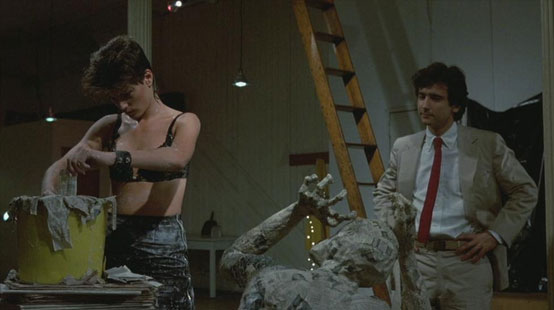
So, no matter how much the bohemians may have detested the aristocrats for being oppressive and the bourgeoisie for being stuffy & conventional, they still had to cater to an audience that believed in respectability, romanticism, seriousness, beauty, and/or transcendence in art. In the 20th century, bourgeois tastes had changed drastically to tolerate and even encourage more ‘radical’ forms of expression, but the element of seriousness was still there. The artist had to be more than clever, glib, egotistical, or fashionable. Someone like Andy Warhol wouldn’t have gotten anywhere in the first half of the 20th century. But, seriousness in art eventually lost out, and there was little if any of it in the 1980s, a time when someone like Basquiat could be deemed an important artist. It was understandable given the rise of Pop Culture, even to the point of transforming elite culture.(HAMILTON and BLACK PANTHER are now rhapsodized by the cultural elites.) Also, as Modernism was predicated on novelty that was soon exhausted in painting, sculpture, music, and architecture, the conceit of ‘novelty’ could only existed in ‘canned form’, which perhaps is why Warhol’s images of cans of Campbell Soup resonated with the art crowd.
A bohemianism that is no longer bound to respectability, seriousness, and originality has nothing to go on except as status valve for soulless materialists. So, naturally the yuppies in the 80s moved into and gentrified neighborhoods that were associated with bohemianism(which would be repeated in a more spectacular way in San Francisco as center of high tech industry). The creative types complained that the yuppies were pricing them out of once-affordable places for artists, writers, eccentrics, and mavericks, but the denunciation was more than a bit disingenuous as many of these run-down neighborhoods were producing drug addicts, lunatics, freaks, and hangers-on than first-rate thinkers or artists in the 70s and 80s. Bohemians need something to struggle and rebel against. They need the stern bourgeois as target of both their frustration and aspiration. To go beyond the bourgeoisie hampered by respectability and conventionality, they must reach further and probe deeper. The bohemian gripe against the Old Bourgeoisie was that the respectable class draped itself in seriousness without fully understanding and appreciating genius, truth, and beauty. It was a shallow seriousness as a matter of status. It was about maintaining the aura of being ‘cultured’ and ‘respectable’.
In contrast, the bohemian artist or thinker, as rebel and maverick, confronted the problems of existence and delved into truth with TRUE seriousness aided by brilliance, originality, & genius. Bourgeoisie worshiped ‘gods’ as revealed or canonized by others, whereas bohemians got to see and touch the gods for themselves and stole fire from them.
But in the 1980s of New York, yuppies were hardly bourgeois in the traditional sense. They were shallow materialists who bid farewell to the warped idealism of the 60s and had almost no memory or interest in the world prior to the boomer generation. Paul’s favored choice of literature, TROPIC OF CANCER by Henry Miller, is self-absorbed to the point of being almost ahistorical. And even though the 80s saw the Return of the Normal, it was a gross and gluttonous kind of Normal without sobriety of restraint.

After all, even Normal Appetites are gross if indulged. It’s normal to like hamburgers, but that doesn’t mean you should pig out on a dozen of them. Return of the Normal without the requisite Return of the Sober was bound to cause problems, and boy, did it ever in the 80s, laying the groundwork for bigger problems later. The 60s youth culture unleashed hedonism and self-indulgence within alternative lifestyles. By the 80s, most of those social experiments had fallen out of favor, but what remained was the shameless outlook on life. And the 80s came to be about Return of Capitalism as a Pig-Out Fest. The Conservatives had been right in their criticism of socialism, big government, and the welfare state. They were right about the superiority of capitalism, market economics, and property rights as basis for an economic system. But what they, at least the libertarian-minded ones, overlooked was that the US had once been far more a Shame Culture prior to the rise of Youth Culture, Black Culture, and Jewish Culture. The culture of shame and propriety had some restraining effect on capitalist tendency toward piggery. It’s like there used to be a time when it was seen as shameful to be grossly obese. (It was during the Gilded Age in the late 19th century and early 20th century where it was a sign of wealth & privilege for a man to have a big tummy like Robert Taft, but that ugly norm passed away thankfully.)
Oliver Stone’s WALL STREET makes this very point(though Stone’s personality is naturally very self-indulgent and adulating, if only viscerally, of people who push things to extremes for self-aggrandizement). Greed was always a part of capitalism, but something happened in the 1980s with New Wall Street. And Albert Brooks’ LOST IN AMERICA gave us a glimpse of the New Las Vegas. Wall Street became more like a casino, and Las Vegas became more like Disneyland. The Counterculture of the 60s had faded in ideological terms, but its attitude of unfettered self-indulgence had lived on and spread to Middle America. For Jordan Belforts of the World, it was time to be wolves on Wall Street. As for low-IQ Americans, it was bread-and-circus of the Jerry Springer Show and ugly professional wrestling. In a way, many people acted as if it was all for the better on account of people being more natural and less ‘repressed’ about what they want in terms of money, sex, and fun.
And yet, it was also a new kind of repression because not everyone has the same personality. Some people are naturally more inhibited and cautious than others(like cats are in contrast to dogs), but EVERYONE was now under pressure by society to put out like a lout. Women used to be shamed in the past for being a slut; now girls are shamed for not losing their virginity sooner than later. Furthermore, most people have some natural sense of shame, and a society that tells people to be ashamed of feeling shame is pushing a new kind of repression. The shame of shame. RISKY BUSINESS is, in some ways, the perfect Reagan Era Return-of-the-Normal Movie. It’s about Middle America(or upper-middle America) and All-American cast of characters. It’s about healthy and virile young men dreaming about and going after what they want: Sex and Money. But the ‘what the fuck’ attitude removes the brakes from Normal Appetites or Accelerator, and things soon go off the rails. When Normal is allowed to indulge in its appetites, it paves the way for the abnormal. Liking pizza is normal, but eating too much leads to obesity that makes way for a host of diseases that messes up the normal functions of the body. The body is soon overcome with all sorts of illnesses and germs that take advantage of failing immunity.
In a way, the rise of the Abnormal in the US(and the West & East) has to do with the excesses of the Normal. Conservatives were right in arguing that communism and leftism in general misunderstood human nature. Human Nature is naturally about self-interest. Individuals working for self-interests is natural and good. But then, this turned into ‘greed is good’. It’s one thing to be self-interested. It’s another thing to push self-interest into a kind of nihilistic self-indulgence of egotism, the New Virtue. But Conservatives, so sure of capitalism as the guarantor of virtue of hard work & enterprise and of socialism as the enabler of vice of laziness & parasitism, didn’t worry about unfettered capitalism and pushed for more and more. And then, Clinton saw the writing on the wall — the triumph of capitalism over socialism, esp. with the fall of the Soviet Union and rise of Free Trade over Big Labor — and decided to throw his lot with Big Capital. And then, both ‘left’ and ‘right’ were telling us that New Finance and New Tech are going to transform the world and make everyone rich and etc.
But what did the culture of soulless greed and materialism produce? A cancerous world of warped values and twisted priorities. Everything, no matter how normal, when pushed to excess, turns cancerous. Nationalism is normal, but when Nazis pushed it to excess, it led to German Imperialism and Genocide. Tribalism is normal, but when Jews push it to excess, there is the ongoing tyranny over Palestinians, devastating Wars for Israel, Hate Campaign against Russia & Iran, and Jewish megalomania. Sexual desire is natural, but a shameless society turns even mainstream culture into yet another branch of pornography. So, when we survey the recent degeneracy and decadence, it’s not enough to explain it in terms of Normal vs Abnormal. Rather, the cancerous rise of the abnormal owes much to the unrestrained indulgence of the normal. When Normal Society gave into excess and self-indulgence, it lost its moral & spiritual bearing. Instead of appetite serving the body, the body came to serve the appetite. Since anything-for–pleasure became the paramount virtue, it was discomfiting for Normal Society to say NO to rise of homo decadence and degeneracy. Even if the sexuality is normal and straight, an ‘orgiastic’ culture is one of excess that has lost a sense of limits. And a society without a sense of limits will have a hard time saying NO to anything.
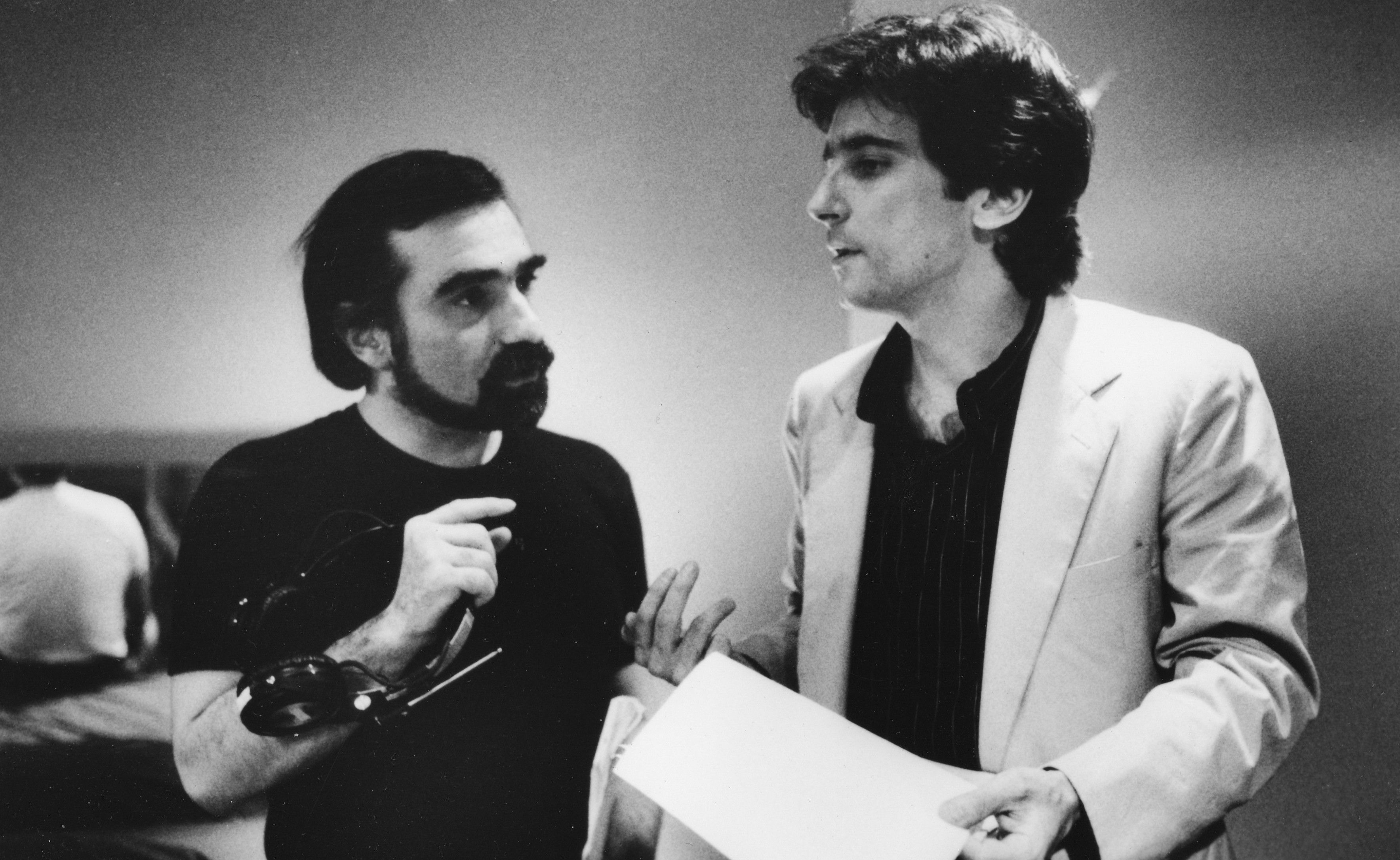
In AFTER HOURS, we see two kinds of people in the bohemian neighborhood. We see the weirdos, eccentrics, and freaks. We also see people who could have and should have been normal except that they feign bohemianism or hang around weirdos because it’s the ‘hip’ thing to do. In a world without a sense of culture and community, people will gravitate to ANYTHING to make them feel a part of something. Indeed, any ‘alternative’ community is composed of real weirdos and wanna-be-weirdos(who are actually normal) who want to feel ‘special’ by casting off ‘lame’ and ‘square’ normality. There is Kiki(Linda Fiorentino), the bogus ‘artist’ who makes bagel paper weights and worthless plaster sculptures. She’s all lazy attitude. There is Marcy(Rosanna Arquette), the suicidal airhead who pretends like she’s a burn victim and mostly talks nonsense. A poor judge of character, she seems to go from man to man, with whom she shares her insipid stories of relations with OTHER ridiculous men. There is Julie(Teri Garr) who seems to be in her 30s or 40s but acts like a teenybopper in the 1960s. Her small apartment infested with rats is her own little ‘neverland’.
If Marcy’s husband has a fetish for THE WIZARD OF OZ, Julie the beehive queen still seems starstruck with the Monkees. From Kiki, Marcie, and Julie, one doesn’t get any sense of seriousness or maturity. Granted, one of the advantages of bohemianism is to cut oneself loose from tradition and obligations to find something new and remarkable. This could be said of men like Paul Gauguin. But the world of AFTER HOURS has an air of smugness and comfort. It’s not about individuals boldly going the extra-mile to find new meaning but about the bored and tired(and tiresome) seeking sanctuary from reality or clutching onto their niches as ‘artists’ in a city that is too cynical to sincerely believe in anything. There seems to be some blue-collar types, mostly men like the high-strung taxi driver or the sullen waiter at the diner, but they seem as alienated as anyone in a city that is, at once, too big and too atomized. Most of the characters in AFTER HOURS seem to live on whims of the moment, the glue they sniff. Stuck in a life of whims, fetishes, fantasies, and rages(that come and go like taxis), maturity is a precious commodity in this ‘community’. The ice-cream seller Gail(Catherine O’Hara) looks like the prototype of the ‘woke’ cat-lady. Had she been born couple of decades later, she might have green or purple hair.
And maybe tattoos and piercings, which thankfully wasn’t so common in the 80s(and if anything, some boomers were trying to be rid of them as they sought out professions). Without maturity, seriousness is impossible. The result is a kind of Mr. Rogers Neighborhood for ‘bobos’(David Brooks’ term for bohemian-bourgeoisie), freaks, weirdos, eccentrics, twerps, and idiots. While the bohemian community of INSIDE LLEWYN DAVIS has its share of weirdos and losers, it features a time when bourgeois respectability & seriousness still exerted some influence influence on society. Folk Music was supposed to be sincere, heartfelt, meaningful, and authentic. It required the meeting of the heart and mind. Llewyn Davis is an irresponsible and often selfish character, but he isn’t intentionally not trying to grow up(like Big Lebowski). He’s just negligent in so much of what he does. But he is not without effort and sincerity behind the effort. He really believes in what he does. He has a kind of faith, a sense of calling. In contrast, there is an emptiness in AFTER HOURS, which followed THE KING OF COMEDY, which came out one year before Robert Bresson’s L’ARGENT.
I don’t know how France compared with the US during this time, but Bresson’s last bitter film about soulless modernity may offer a hint that it was a universal problem. Bresson’s films were always on the depressing side, but they weren’t entirely despairing as there was the element of grace, personal redemption, and tragedy grounded in Catholic themes and/or fascination with art/beauty. But by the time he made L’ARGENT, there was the omnipresent sense of a society inhabited by zombies, a world where sainthood isn’t possible or worth the bother. A forsaken world that is either unaware or uncaring of its unforsaken-ness. Unlike Bresson who didn’t want to make art in a world of dead souls, Scorsese took the opposite tact. But then, Scorsese always felt closer to sinners whereas Bresson felt closest to saints(or the saintly heart within the sinner). Saints always had a difficult place in the world but nevertheless a place, possibly the most meaningful and precious, in a world bound by certain spiritual and moral precepts, however imperfectly. Think of the fool-saint of STALKER(by Andrei Tarkovsky). History was always about greed and power but not only about them.
But Bresson sensed a shift sometime in the late 60s that grew worse in the 70s. The Right was increasingly only about money and materialism, and the Left went crazy with fetish for radical fashions. Both were soul-destroying and vapid, and in a way, L’ARGENT was like a muted prophecy of what France was to become in the coming decades. France now has Macron as president, and there is SERIOUS discussion of turning burned-out Notre Dame into something more ‘fashionable’. Unlike Bresson, Scorsese always had an element of Charles-Manson-like Satanism about him, a quality shared by Roman Polanski. But then, this is why he’s been the artist that he is. Though a Catholic and moralist, Scorsese’s too empathetic, curious, and fascinated not to give the devil his due. Though not an outright Satanist or devil-worshiper, Scorsese understands the allure of sin, serving as both Satan’s chef and God’s inspector. In serving up the devil’s delicious dishes in GOODFELLAS, CASINO, and THE WOLF OF WALL STREET, Scorsese exposes how the power of sin entices and envelops us. And yet, his talent as chef and server is such that one wonders if he’s done more to promote sin as the only thing worth living and dying for. Besides, the nature of cinema is more suited for celebrating sin than commemorating virtue.
 Print
Print