Select date

On Reinventing a Ruling Class, by Andrew Fraser


This essay serves as the Introduction to a book which has just appeared, entitled Reinventing Aristocracy in the Age of Woke Capital (London: Arktos, 2022); it is available at Arktos and Amazon.
The proudest boast of the transnational corporate welfare state is that it has rendered obsolete the political hegemony of traditional ruling classes. Achievement, not ascribed or hereditary status, is said to be the key to material success and political influence. The open society promoted by transnational corporate capitalism has become the template of social progress. Accordingly, in the USA, only a few decades ago, a complacent WASP establishment was sidelined by a new class of brash outsiders. At the highest levels of American society, WASPs simply ceased to dominate. In the media and entertainment industries, in banking, the law and academia, they were replaced, most visibly and dramatically, by Jewish parvenus.
Harvard University, America’s oldest university and long-time gateway to the ruling class, is emblematic of that transformation. Founded as ‘a schoale or colledge’ in 1636 by the first wave of Puritan settlers in New England, Harvard received its corporate charter from the Massachusetts General Court in 1650. By the nineteenth century, the college had become the intellectual bastion of an increasingly secularized, or, perhaps more precisely, deracinated, WASP Ascendancy. To all appearances, it remained a predominantly WASP institution until the mid-twentieth century.
Since then, however, Harvard has been almost completely detached from its ancestral ethno-religious identity. The once Anglocentric college was rebranded by cosmopolitan managers and well-connected overseers as a globalist multiversity. As a consequence, American ‘whites’ (a statistical category which includes Jews and non-WASP, European-descended, ethnicities) presently account for only about 42% of the entering class each year. In a striking sign of the times, there are now more Jews than WASPs among Harvard undergraduates.
In the received narrative of capitalist modernization, the rags-to-riches story of American Jewry is not about ethnic rivalry. Rather, the astonishing upward social mobility enjoyed, inter alia, by American Jews is typically attributed to the economic dynamism, technological prowess, and managerial and professional opportunities created by the modern American business corporation. In industry, education, the law and government, the rise of the managerial class was grounded in the progressive principle of careers open to the talents.
Orthodox Marxist historians emphasized the revolutionary role played by the bourgeoisie in undercutting the authority of established aristocracies. But the social character of the bourgeoisie was very different from the professional and managerial class spawned by the expansion of corporate capitalism. The eighteenth and nineteenth century bourgeoisie was, formally or informally, an estate of the realm. Unlike the relentlessly materialistic, performance-driven, goal-oriented managerial class, the bourgeoisie remained grounded in the status hierarchy of traditionally, and still predominantly Christian societies. In late nineteenth century, England, its Empire, and Europe, generally, authority could be justified credibly, if not exclusively, by reference to its origins. The genetic legitimacy of traditional ruling classes was based upon custom and social convention or in a presumptive divine right. Apart from any other justification, the right of conquest could be invoked. Like slaves captured in war, conquered peoples were fortunate to be allowed to live under the thumb of a victorious ruler.
The old, landed nobilities of Europe did not simply fade into the background amidst the satanic mills of bourgeois capitalist society. They continued to play a prominent role in social and political life until the Great War of the early twentieth century. In fact, ‘it was the rising national bourgeoisies that were obliged to adapt themselves to the nobilities.’ Even the most successful bourgeois merchants, bankers, and industrialists aspired to positions on ‘the high social, cultural, and political terrain’ occupied and controlled by the nobility.
Even so, Anglo-American society provided fertile soil for the growth of a free market society. The English jurisprudence of liberty had deep roots. Britons had long vowed that they never, never, would be slaves. The ancient British constitution married the authority of both the king and patrician parliamentarians to primordial notions of popular consent. The Protestant Reformation rocked the foundations of ecclesiastical authority by licensing the freedom of every individual conscience. Then, in the mid-seventeenth century, the simmering resentment of English commoners towards their aristocratic and ecclesiastical rulers boiled over as Puritan revolutionaries executed the king in the name of parliament and the people. The Puritan struggle for religious liberty not only produced a civil war which upset the traditional balance of the ancient constitution; it also gave great impetus to the rise of capitalism in both England and colonial America.
By the 19th century, Anglo-American political authority was no longer justified primarily by reference to its origins. Leading legal thinkers came to scorn the Lockean obsession with social contract no less than the common lawyer’s veneration of musty precedents. A new ruling class appeared, basing its title to political power on its ability to achieve results. From then on, the source of constitutional legitimacy ceased to be genetic; it became goal-oriented or telic instead. Utilitarianism became the political leitmotif of an erstwhile bourgeois, now professionally managed corporate capitalist regime promising to promote the greatest good for the greatest number.
Corporations in the Early American Republic
Just as the rise of the bourgeoisie did not entirely eliminate aristocratic élites, the mental shift toward a goal-oriented view of politics overshadowed but did not entirely eviscerate traditional forms of genetic legitimacy. Indeed, in England, the aristocracy and landed gentry actually performed the economic role of the bourgeoisie as they pioneered new forms of agrarian capitalism. By the early nineteenth century, the result was ‘an open aristocracy based on property and patronage.’ While the aristocracy and gentry classes were open to new forms of enterprise and political organization, the English bourgeoisie tempered its progressive ethos with a respect for traditional social, political, and legal institutions. The culmination of every truly successful business career was the acquisition of a substantial landed estate and, ideally, a hereditary title of nobility, both of which were then passed on to heirs expected to carry on the erstwhile bourgeois, family’s newly-invented traditions.
In both England and the American republic of the early national period, a patrician ruling class emerged which owed its wealth and social standing to the productive use of property. English common law had developed uniquely extensive and concentrated forms of individual proprietorship over land, which facilitated private, purely economic, ‘capitalist’ modes of appropriation. Elsewhere, in France for example, the state was much more important as a means of appropriating surplus labour from direct producers, as were other forms of politically constituted property, such as corporate privileges. Agrarian capitalism on the Anglo-American model helped to consolidate the distinctively bourgeois hegemony of civil society over the state. It came as no surprise, therefore, when foreign observers characterized the early American republic—sometimes even England—as ‘stateless societies.’
As a matter of constitutional form, early nineteenth century England was a monarchy. In reality, however, like the newly independent USA, it was a patrician republic in which a rising bourgeoisie made up of merchants, professionals and manufacturers constituted a natural aristocracy. By comparison with the continental regimes familiar to Alexis de Tocqueville, the patrician élites in Anglo-American societies favoured a minimalist state, confident that they could deliver the greatest good for the greatest number through the productive use of their private property. This view presumed that the people-at-large would continue to defer to their betters among a natural aristocracy, respecting the constitutional liberty of the latter to do as they chose with their property.
Tocqueville was among the first to warn that radical democratic disdain for aristocratic privilege was bound to give greater weight to popular demands for equality than to inherited traditions of constitutional liberty, much less the political prerogatives of property ownership. It was not long before the rising tide of democratic politics in America displaced the patrician Standing Order that had ruled colonial New England. In Britain and the American South, where the aristocratic ethos of the gentry was more solidly rooted than in New England, the process took longer, but there, too, the writing was on the wall.
The democratic radicalism spawned by the American Revolution trans- formed American society and politics, extending the principle of equality into every aspect of public, and eventually even into private life. Every branch of government now owed its existence to ‘the people.’ As they began to lose control over the newly constituted state and federal governments, patrician élites, especially in New England, began to experiment with new forms of politically constituted property intended to restore their traditional hegemony. They sought and obtained a massive expansion in the number of special corporate charters granted by state legislatures, not just to business enterprises, but to schools, colleges, hospitals, and churches.
For a time, the creative deployment of chartered corporations helped to shore up the sagging social prestige of the old patriciate. But that defensive strategy could be sustained only so long as corporations retained their traditional legal identity as ‘civil bodies politic.’ This concept seems altogether alien to the modern mind, accustomed as it is to think of the corporation as little more than a legal and organizational form designed to facilitate the pursuit of private profit. We take for granted the separation of ownership and control. But, for a patrician élite, the classical republican concept of property was understood as the material foundation of civic virtue. It applied not just to landed property but was embodied as well in the personal rights and responsibilities of the corporate shareholder.
At common law, property, especially landed property, had been conceived as ‘that sole and despotic dominion which one man claims and exercises over the external things of the world, in total exclusion of the right of any other individual.’ Possession of a landed estate ensured not only the economic autonomy of the household but its political independence as well. With the property owner as its head, every household became a little school of self-government. Property was thus directly linked to the responsibilities of rulership. Something like the same result was achieved by the special charter regime that effectively constituted the corporation as a ‘little republic.’
Corporate charters were granted by state legislatures, on a case-by-case basis, to achieve both public and private purposes. The constitutional principle of ultra vires operated to prevent any corporate enterprise from acting to achieve objects not authorized by its charter. Moreover, shareholders were responsible for the uses to which their common property was put. Consequently, limited liability was not an automatic and universal corporate privilege. Shares in a joint-stock enterprise therefore carried an associational element along with a proprietary interest. Shareowners were members of the corporate body politic; in effect, they were citizens of their own little republic. If the corporate charter did not specify the voting rights attached to share ownership, judges sometimes held that, prima facie, the rule should be: ‘one voice, one vote’ (i.e., not ‘one share, one vote’). Such civic concern for the integrity of the corporate body politic also led many to take a dim view of proxy voting. The practice was widely condemned as an abdication of shareholders’ political responsibilities.
It was not long, however, before the corporation as a civil body politic came under sustained attack as a bastion of ‘aristocratic privilege.’ A radical anti-charter movement arose, most notably in New York and Pennsylvania, to demand general incorporation laws and the extension of limited liability to all shareholders. The ‘democratization’ of the corporation did widen investment opportunities for small shareholders, encouraging widespread use of the corporate device as a means of securing firm central direction over the enterprising use of assets.
But precisely because small investors were least likely to value the associational element of share ownership, corporations ceased to be conceived as bodies politic. Soon the law began to treat corporations as private, economic instruments of capital accumulation. Republican resistance to the ‘one share, one vote’ rule became pointless. For the same reason, from being a sign of civic corruption within the corporate body politic, proxy voting became a simple convenience. Both developments may have owed their origins to the democratic rhetoric of the anti-charter movement, but their most important consequence was to entrench the plutocratic principle in corporate governance.
The Managerial Revolution and Corporate Plutocracy
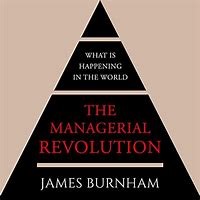
Ironically but logically, the rise of corporate plutocracy signalled the imminent decline of the bourgeoisie. By the end of the American Civil War, the collapse of the corporation as a civil body politic was pretty much complete. Consequently, the patrician bourgeoisie could no longer function as an informal third estate within the civil constitution of Anglo-American society; it was displaced by an increasingly impersonal system of corporate capitalism. Membership in the body corporate became little more than a legal fossil, altogether divorced from patrician norms of honour and responsibility.
Such a change implied a fundamental transformation in property ownership. Marx was among the first to realize that the joint-stock company effectively abolished private property. Share ownership created a novel form of collective or social capital. From being a form of absolute dominion exercised over an autonomous landed household, proprietary interests were disaggregated into a variable bundle of claims to a share of the wealth or income generated within a complex, interdependent process of production, distribution, and exchange. Property ownership lost its civic significance; it no longer served as a school of self-government. Stripped of its patrician role within the body politic, the civic role of the corporate bourgeoisie was replaced by the self-interested avarice of fickle investors, ever on the lookout for the chance to buy on the dip and sell at the peak.
The moral decline and civic irrelevance of corporate shareholders as a class was a consequence of both the democratic and the managerial revolutions. Even a putatively natural aristocracy was ill-placed to compete with organized political machines employing the rhetoric of egalitarian democracy to license the growth of an impersonal public administration. Nor could wealth alone provide its owners with the managerial skills necessary to run a complex, multi-unit, modern business enterprise.
But the haute bourgeoisie in America and elsewhere in the Western world was not forcibly deprived of decision-making authority in the corporate realm. Rather, given the opportunity, moneyed interests were more than willing to abandon the notion that property ownership should carry with it the sort of public responsibility and civic obligation associated with the aristocratic ideal of noblesse oblige. By and large, the bourgeoisie simply abdicated the responsibilities of rulership.
The public burdens of property ownership came to count for much less than its private benefits, nowhere more obviously than in the sphere of corporate governance. Once the ‘one voice, one vote’ principle was replaced by the ‘one share, one vote’ rule, share ownership became a means of systematically negating the civic significance of property ownership. All shares, not all persons, were created equal. Not surprisingly, wealthy investors soon became quite comfortable with that interpretation of democratic equality. The voice of a shareholder with one hundred or one million shares now carried one hundred or one million times the weight of a member holding but one share in a common corporate enterprise. Votes came to be valued, not as an incident of membership in a corporate body politic, but rather for their tactical importance in securing effective control over a valuable bundle of economic and financial assets.
So long as their business was organized as a family firm, a partnership or a close corporation, an entrepreneurial capitalist could remain in control of his own enterprise. But, having chosen homo economicus as their role model, capitalist entrepreneurs became hostages to fortune in the public realm, where a new class of professional politicians and bureaucrats was expanding the state’s administrative capacities. Indeed, even in the economic sphere, the spectacular success of entrepreneurial capitalism spawned a vast network of hugely complex business enterprises organized and run by professional managers with highly specialized technical and administrative skills. More often than not, the most successful enterprises became public corporations whose shares and bonds were traded in national financial markets. Before long, entrepreneurial capitalists lost control over the corporate sector to a rising class of professional managers. By the early twentieth century, the separation of ownership and control had become the default position in the modern business corporation.
Managerial élites are now in the driver’s seat, not just the corporate sector, but in the state as well. Democracy no longer implies that the government will be ‘owned,’ much less ‘controlled,’ by the people of any given nation. The only legitimate form of democracy, according to the multiculturalist mullahs of the managerial state, is cosmopolitan democracy. The state may still claim to act in the name of the people, but the demos has expanded to include the whole of humanity. By virtue of their presumptive enlightenment, the managerial and professional classes now present themselves, or, rather, the global system which they administer, as the virtual representatives of humanity at large.
Corporate capitalism has expanded to become a global system of organized irresponsibility. Precisely because it is a system, it has become a form of no-man rule. No-one can be held responsible for the operation of the system; it has a life and logic of its own. At most, individuals can be held accountable for a failure to behave in accordance with the norms governing the effective management and orderly administration of sub-systems. Entrepreneurial activity, capital investment and managerial oversight have all become specialized functions, no longer united in a single figure responsible for the uses to which property is put. Those who variously own, manage, or regulate the corporate economy generally escape political responsibility for its social costs, much less for the moral hazards and spiritual emptiness that are among its most obvious by-products. Within a global economy detached from and destructive of local communities, the ruling class has disappeared behind the corporate veil.
In these circumstances, the restoration of a ruling class prepared to accept responsibility for the fate of the common world would be a welcome relief. Unfortunately, political, economic, and cultural élites throughout the Anglosphere are steeped in dishonour; they have privatised the privileges of high social status while socialising the public burdens of responsible rulership. The ideology of ‘democratic capitalism’ allows them to dissimulate their actual role as a ruling class, thereby evading personal liability for the adverse consequences (described antiseptically as ‘negative externalities’) of their corporate decisions. Political imagination is surplus to requirements in a bureaucratic corporate hierarchy. Behind the corporate veil, the civic virtues of honourable conduct and personal responsibility have been translated into impersonal standards of accountability for results achieved. The managerial overclass presents, successfully so far, its globalist program of perpetual economic growth as humanity’s highest achievement. In the absence of a noble ruling class, old-fashioned notions of noblesse oblige lose their functional significance.
Resurrecting the Corporation as a Civil Body Politic
Denunciation of the managerial regime serves no useful purpose unless it arises out of a movement aiming to create a new ruling class. This is not an impossible dream. Indeed, given the accelerating crisis of confidence in the corporate sector, it is becoming an urgent practical necessity. In principle, the goal of such a movement is clear: those who nominally own the corporate sector must recover a measure of control over the uses to which their property is put. To make that possible, the public corporation must be reconstituted as a civil body politic. The best citizens among substantial shareholders in public corporations must be allowed, indeed encouraged to become a civic élite within those corporate bodies politic. Reinventing the aristocratic principle of rule by the best and applying it to the governance of the public corporation could help to cope with the multiplying risks generated by a global society of perpetual growth.
When the major task of capitalist development was the conquest of scarcity, it made good sense to privilege the private benefits of corporate share ownership over the public burdens and civic challenges associated with membership in a corporate body politic. It is now high time to tilt the constitutional balance within the corporation away from civic privatism by creating a political role for the active investor. A new emphasis on the political character of membership in the corporate body politic would re-attach civic responsibilities to the proprietary rights of share ownership.
This would mean an end to the plutocratic principle of ‘one share, one vote,’ which did so much to hollow out the civic significance of corporate governance. Only under conditions of political equality can any significant number of share- holders hope to overcome the formidable collective action problems facing activists within the realm of corporate governance. For that reason, all shareholders who hold a substantial threshold stake in an enterprise should be entitled to participate in a process of deliberative decision-making based on one voice, one vote. Property ownership could, once again, serve as a school of self-government.
It may well be that only a relatively few individuals among millions of widely dispersed investors in thousands of firms are ever likely to enrol in such a course in practical civics. Not everyone is moved by the joys of public happiness. But all those who do take up that civic challenge should stand on an equal footing in the corporate body politic. Those who demonstrate by their actions that they value the privileges of membership should bear final responsibility for the good governance of their joint enterprise.
The problem with the governance of corporations as they are presently constituted is that only money talks. At a general meeting, those who hold a majority of the (voting or proxy) shares, even if they are only a small minority of those present, have no need to either to speak or to listen to their fellow members. Even the best corporate citizen is bound to be discouraged by a voting regime that systematically devalues the power of reasoned speech in favour of the sheer dumb weight of proprietary interest. This would not amount to a constitutional issue if corporate decision-making affected only private economic interests. But corporations now exercise powers that are governmental and political in nature.
The constitution of the public corporation must be reconceived as a novel sort of mixed polity in which private ownership interests are balanced against the public responsibilities of governing a body corporate that creates both economic wealth and political power. Corporate governance should be reconstituted to provide a political theatre in which bourgeois investors keeping a sharp eye on their financial interests can also take on the role of citizens striving to distinguish themselves in the service of the common good (and vice versa).
By treating a senatorial élite of shareholders as political equals in fundamental corporate decisions, a reformed constitutional law enables the bourgeois and the citizen to learn the art of corporate governance from each other. If the public corporation is to survive and prosper while doing business in an enlightened and responsible manner, a coalition of interests must learn to balance the economic imperatives which call the business corporation into being against the responsible exercise of its inherent governmental powers. The consequence would be the re-emergence of a patrician bourgeoisie, the very model of a modern natural aristocracy.
Part II
New forms of corporate governance designed to produce not just power and profits, but legitimate constitutional authority as well are desperately needed. Corporate governance need not remain forever a domain ruled in the name of passive investors by their all-powerful managerial surrogates who listen only when money talks. By embedding the property interests of owners in a civic process of decision-making open to all active investors meeting a basic property qualification for the corporate franchise, a balance could be achieved between the self-interested pursuit of long-term share value and the responsible management of socially shared risks.
The reform of corporate governance cannot succeed without a political theory extending beyond the limits of state action. The reconstitution of the corporate sector must balance conformity to the laws of economics with a rebellious politics that creates new spaces for political action. Shareholder senates would become genuinely voluntary associations in the civil constitution of a modern republican society. If all those with a significant stake in a joint enterprise could gain entrance, on the basis of equality, to the corporate body politic, a new civic aristocracy could be selected or, as Hannah Arendt put it, ‘would select itself.’ Whatever authority members of the shareholder senates acquired would rest ‘on nothing but the confidence of their equals.’ The self-selecting membership of those governing councils would not support an attitude of mindless activism or knee-jerk opposition, but they would incite rebellion against managerialist norms of politics and business as usual.
The managerial revolution has subverted the constitutional principles of limited government. The survival of any form of republican government worthy of the name now depends on the ability to institutionalize modernized schemas of civic action within the supposedly sub-political corporate entities straddling the blurred boundary between the state and civil society.
Now that governmental powers have become detached from the formal constitutional structure of the federal polity and are lodged instead in formally ‘private’ forms of corporate enterprise, the constitutional guarantee of republican government should follow in their wake. The original understanding of Anglo-American republicanism is clearly ill-adapted to the operating constitution of the managerial regime. The vital question is whether the idea of the republic can be injected with fresh constitutional meaning in the sphere of corporate governance.
When the first edition of Reinventing Aristocracy appeared in 1998 such an argument was, to say the least, a bit off the beaten track. To my surprise, however, several legal academics in Australia and the UK responded to the book with long review essays, praising the originality of its thesis and the “stylistic flair” with which the argument was presented. My reviewers were somewhat mystified by the book’s radical break from the conventional wisdom about corporate governance. Certainly, they did not see any immediate need, much less practical possibility, for a radical, republican reformation of corporate governance.
Like most academic specialists in corporate law twenty years ago, those reviewers were not enamoured of the credo of ‘greed is good’ openly celebrated within the corporate sector. But most reformist proposals involved little more than tinkering at the edges of an immensely powerful corporate system. No-one dared to upset a managerialist regime seen to be delivering on its promise of perpetual prosperity. Even the edgiest corporate law scholars at the time confined themselves to calls for the representation of ‘stakeholders’ on corporate boards of directors.
My reviewers probably agreed with the author of one popular critique of corporate power when he declared that ‘realism dictates presuming that the corporation’s constitution will remain much as it is: self-interested to the point of psychopathy.’ The most that progressive reform could achieve were improvements in ‘the legitimacy, effectiveness, and accountability of government regulation.’ Having myself taken such a long step outside the managerialist consensus, within and without the legal academy, it was not easy to find a publisher for Reinventing Aristocracy.
In the end, the simplest solution was to have the book published by Ashgate, a niche academic publishing house whose business model was based primarily on sales to university libraries. Little effort was put into marketing the book elsewhere. Indeed, there was little incentive for general readers to buy such a book in the late nineties. Almost no-one then took seriously the possibility that the unreformed model of Anglo-American corporate governance could precipitate systemic crisis and collapse on a global scale.
In the current annus horribilis, it is all-too evident that times have changed. The globalization of the managerial revolution has endowed the demonic power of revolutionary communism with a new lease on life. Progressives are now in bed with corporate oligarchies. Woke capital co-opts the insurgent energy of the left in the service of its own nation-destroying goals.
Having proposed a morally reasonable and spiritually compelling path of virtuous resistance to irresponsible corporate power, Reinventing Aristocracy has at long last become relevant to the most pressing and immediate concerns of the dissident, or, better, restorationist Right. For whites throughout the Anglosphere, the reformation of corporate governance has become a matter of civilizational, even demographic survival; our already abject dependence on globalist corporate élites threatens to become absolute. Let us pray that just such a constitutional crisis will help whites throughout the Anglosphere transcend the conventional left/right divide in political discourse.
Politics is grounded in the existential conflict between friend and enemy. That being so, it is well past time for my own people, the WASPs, to recognize that we have enemies securely ensconced among the upper reaches of the plutocratic managerialist regime. Someone needs to tell the eternal Anglo that our rulers plan to absorb his progeny into a rootless, multiracial multitude of wage slaves and debt-ridden consumers, all held in perpetual bondage to a world-wide network of interlocking corporate fiefdoms.
Woke Capital as Corporate Neo-Communism
In the first edition of Reinventing Aristocracy, I emphasized the dangers of corporate neo-feudalism. No doubt re-feudalisation remains the preferred end state or goal of the globalist managerial revolution. But corporate neo-feudalism is not necessarily at loggerheads with a novel program of corporate neo-communism.
Until 1991, Soviet communism represented itself as more authentic, centrally planned alternative to both Tsarist aristocratic feudalism and the Anglo-American, corporatist model of modern managerialism. Having achieved absolute power, the party-state ruled through a modernized network of organizational fiefdoms. Eventually, the Leninist regime failed to deliver on its utopian promise of freedom and abundance. Instead, a top-heavy, increasingly decrepit, command economy erratically steered by a geriatric party élite simply sputtered to an ignominious standstill. Such stagnation was neither accidental nor unpredictable. After all, absolute power, not permanent revolution, was the true objective of the Soviet model of the managerial revolution.
The collapse of Soviet-style communism, removed the major obstacle to the expansion of the Anglo-American globalist system, driven as it was by an interlocking network of post-national corporate welfare states. Strangely enough, the corporatist drive to re-feudalise the global economy now styles itself as a progressive revolutionary movement striving to unite the whole of humanity under the banner of equality, diversity, and inclusivity. All races, religions, and gender identities (with the probable exception of white heterosexual men) are promised a share in the conspicuous consumption made possible by a borderless economy of perpetual growth engineered by the modern business corporation.
We are now well into the Age of Woke Capital. The business corporation is not simply a legal device to maximise shareholder wealth. Instead, the interlocking structures of corporate, governmental, and media power now pursue an ostensibly ‘humanitarian’ strategy. The crass credo of ‘greed is good’ has been replaced by novel forms of corporate neo-communism. The Leninist dictatorship of the proletariat has morphed into the cult of the Other. ‘Socialism in one country’ as managed by the party-state has been superseded by a globalist system of corporate capital upon which the wretched of the entire earth are to be rendered utterly dependent.
Even at the height of the Cold War, progressive American intellectuals such as John Kenneth Galbraith and Arthur Schlesinger, Jr. often remarked on the underlying convergence of the managerial mind-set shared by corporate and governmental élites, whether in charge of Soviet communism or of American corporate capitalism. In our own time, we can see a clear similarity in the long-term developmental trajectory of both regimes.
The first Leninist revolution was led by a radical party élite promoting unceasing cultural change and social upheaval to achieve their goal of absolute power. But, once Stalinist power was consolidated, the state became the servant of the party; stability was restored and enforced by a cohesive party oligarchy whose status depended upon the party leader.
At this point, the global hegemony of the Anglo-American corporate system is far from secure and unchallenged. Apart from geopolitical rivalry with China, corporate oligarchs clearly worry about the potential re-emergence of self-conscious racial and ethnic-national identities among the Anglo-American and European peoples.
To head off any such possibility, globalist media corporations openly stoke racial animosity towards whites among so-called ‘people of colour’. White people have been cast as the new kulaks in a global racial revolution. This time around, those charged with the management of the revolutionary process incite their dependent followers to attack the interests and even the persons of ordinary working- and middle-class whites. Corporate oligarchies ally themselves with the lower orders to squeeze the middle ranks of the status hierarchy. White European-descended peoples are still deemed to be capable of resisting globalist hegemony. Indeed, they provide the biocultural seedbed for a rival, counter-revolutionary ruling class.

We have been here before. An anonymous blogger, known as Spandrell, suggests that Soviet communism represented a crude caricature of the more sophisticated Anglo-American managerial revolution. True, American managers employ philanthropic foundations and the transnational corporate welfare state, rather than a totalitarian party apparatus as their primary organizational vehicles. But it was the Soviet party-state which pioneered the organising principle that is now being re-deployed by the hyper-modern, techno-financial forces of globalist, increasingly Woke, corporate capital. Spandrell describes that managerial technique as ‘biological Leninism,’ or ‘bioleninism’. It was and remains a means to an end; namely, absolute power.
In its original incarnation, bioleninism aimed to ‘exterminate the natural aristocracy of Russia and build a ruling class with a bunch of low status people’. Candidates aplenty were found among workers, peasants, Jews, Latvians, Ukrainians. In fact, ‘Lenin went out of his way to recruit everyone who had a grudge against Imperial Russian society. And, it worked, brilliantly’! Like the corporate plutocracy of our own time, the Bolsheviks of the ‘early Soviet Union promoted minorities, women, sexual deviants, atheists, cultists and every kind of weirdo.’
Bioleninism 2.0 enables the managerial overlords of the transnational corporate welfare state to deconstruct the traditions, mores, and folkways of every once-proudly white Anglo-Saxon Protestant society. Those who seek to replace the founding people of every White Anglo-Saxon nation have deployed the weapon of mass migration as a central feature of the current cultural revolution. Globalist élites tear down every barrier to the rising tide of colour. It is on the ruins of the WASP Ascendancy, wherever it once held sway, that Globohomo strives to construct its own dystopian system of corporate neo-feudalism.
The contemporary corporatist model of bioleninism has adapted to the circumstances of the modern Western world. Western societies in 1960 were very different from the society of 1860 in which Karl Marx plotted the communist revolution. His prediction that the proletariat of the advanced capitalist countries would unite to overthrow the bourgeoisie foundered in the affluent Western societies of the mid-twentieth century where most people worked only 8 hours a day, had cars and TVs, and girls who put out pretty easily. There was always a party on somewhere. Communist revolution just wasn’t much fun in the consumerist ‘society of the spectacle.’ Eventually, however, leftist groups wised up and, more or less openly, allied with the commanding heights of the corporate economy in support of revolutionary social and cultural change. Their joint modus operandi is to agitate among low status people, life’s losers of all sorts, offering to enhance their status, at the expense, of course, of the middling ranks of more successful white people; particularly, white men.
Black Lives Matter this year; lower-case white lives never do. Trannies, fat-shamed feminists, even ‘furries’: who can keep track of the rapidly multiplying marginal identity groups (composed largely of ‘spiteful mutants’) included within the progressive stack? In 2020, we came to expect one unpleasant surprise after another amid lockdowns, the prospect of mass unemployment and, perhaps, another great depression. We may or may not be experiencing a deliberately engineered reset of the globalist system. Either way, it feels very much as if we are entering the early stages of what James Howard Kunstler calls ‘the long emergency.’ Almost day by day, the globalist phase of the managerial revolution becomes more irrational, if only because its systemic end-state, the absolute concentration of global power, remains, frustratingly, just beyond the Inner Party’s reach. Their problem seems insoluble in the absence of a woke Stalin empowered finally to freeze the fully consummated New World Order.
But all is not lost. Nobody really seems to know how to determine just what the ‘new normal’ will entail. It remains possible, therefore, to imagine a different future. The embryonic spirit of a new, counter-revolutionary, ruling class might already be stirring in our hearts and souls. White Anglo-Saxon Protestants can and should redeem themselves by playing a leading role in the reincarnation of a corporate bourgeoisie. As a people reborn, WASPs can derive inspiration from the principles and practices of their ancestral, distinctively Anglo-American republican tradition.
Any such palingenetic project entails much more than just another political campaign aiming at the recapture of state power. The goal must be to create public spaces for republican modes of civic action in both the corporate sector and civil society generally. Of course, the republican reformation of corporate governance will remain pie in the sky unless and until the wheels of the Woke capital juggernaut begin to wobble. But who knows? Multiplying catastrophes could converge, engulfing Globohomo in a systemic crisis. In such circumstances, the reformation of corporate governance will become an urgent necessity. So, take heart: while the idea of the corporation as a little republic is now beyond our ken, it most definitely represents the rational structure of actual political reality.
The Restoration of a WASP Patriciate

Clearly, any such ‘idea of reason’ is far from the minds of contemporary WASP men of property. Unlike the Jewish moneyed élites who bested them in the struggle for corporate control, WASPs are not yet ready, willing, or able to act in defence of their collective ethnic interests. Until Anglo-Saxon men reconnect, consciously and deliberately, with their ancestral aptitude for republican modes of civic activism, the republican resurrection of a patrician corporate élite must remain a nostalgic pipe dream. Anglo-American élites gave birth to the organizational Frankenstein monster known as the modern business corporation. It is altogether fitting, therefore, that their descendants recognize a collective duty to undo the damage done and limit the risks imposed upon the community-at-large by an irresponsible corporate plutocracy.
Just how can WASP men be roused from their slumber, awakened to a renewed consciousness of their collective ethno-religious identity and readied to assume their rightful political responsibilities? Needless to say, the restoration of anything resembling a WASP ruling class will require much more than the stand-alone reformation of corporate governance.
Clearly, the republican reformation of corporate governance can never become a practical political reality unless accompanied by the revival of WASP identity politics. No other race or ethnicity has such an in-born affinity for civic republicanism. Certainly, when the movement known to historians as ‘the Atlantic republican tradition’ first flowered between the seventeenth and early nineteenth century it was pretty much an exclusively Anglo-American phenomenon. Republican modes of civic action came naturally to white Anglo-Saxon Protestants in both England and America. Republicanism runs in the blood, as it were. Insofar as WASPs will be competing with other racial, religious, and ethnic groups in struggles for corporate control, they may even possess a distinct evolutionary advantage. After all, we live in a corporatist society that earlier generations of WASP lawyers and businessmen conceived, created, and set in motion.
WASPs today should work within civil society to multiply modern public spaces open to the sort of natural aristocracy that their Anglo-American ancestors fostered in the early republic. If only WASP men of property today were to recognize in-group solidarity as a virtue associated with nobility, they could restore key elements of the world we have lost.
Nowhere is it written that we are bound morally to accept the revolutionary transmogrification of the successful white Anglo-Saxon Protestant nations created by our ancestors. Globalist corporatism treats society as a soulless, polyglot perpetual innovation machine, populated by hybridized androids, and presided over by rootless and irresponsible corporate plutocracies.
One indispensable prerequisite for a renewed WASP ascendancy, therefore, is the concomitant rebirth of ethno-religious spirituality in a post-creedal Anglican church (and in its dissenting cousins). For far too long, the Church of England and its Anglican offshoots in the British dominions have sacrificed the spiritual and temporal interests of the Anglo-Saxon peoples on the altar of a fictive Universal Church. By contrast, churches in colonial and post-revolutionary New England belonged to a particular time, place, and political community; they received special corporate charters by legislative grant. Similarly, the European university was also conceived as a corporate entity, originally created by the church. The church and the university served as the intellectual and spiritual seedbed of the various European ruling classes.
In our own future, the restoration of a WASP patriciate will be inseparable from the corporate reformation of the Anglican church. University corporations, too, stand in need of reform. Whether founded by the state or by the church, almost all the oldest universities throughout the Anglosphere have ceased to serve the white Anglo-Saxon Protestant peoples in whose name, and for the sake of whose posterity, they received their corporate charters. Harvard University, as discussed earlier, is a prime example. Universities incorporated in the past seventy-five years are, of course, altogether devoid of any distinctive ethnocultural identity. Instead, universities and churches, alike, have become little more than arms of the managerial therapeutic state.
To reverse the wholesale corruption of ecclesiastical and academic institutions, the corporate bodies of WASPs who pray must set out to establish rejuvenated, explicitly white Anglo-Saxon schools and colleges. Such autonomous ethno-religious institutions are essential to the growth and development of a WASP patriciate. Only when a cohesive, self-consciously Anglo-Saxon, élite holds modern business corporations responsible will global capital serve the collective well-being of British-descended peoples, at home and throughout the diaspora. Such a fusion of spiritual strength, ancestral identity, and temporal interests, embodied in a governing class drawn from their own kinfolk, will—at long last—empower deracinated WASPs to rediscover and reshape their shared destiny.
Notes
See, e.g., E.Digby Baltzell, The Protestant Establishment: Aristocracy & Caste in America (New Haven, CN: Yale University Press, 1987); and Eric P. Kaufmann, The Rise and Fall of Anglo-America (Cambridge, MA: Harvard University Press, 2004).
Ronald Story, The Forging of an Aristocracy: Harvard & the Boston Upper Class (Middletown, CN: Wesleyan University Press, 1980)
https://datausa.io/profile/university/harvarduniversity/#enrollment_race ; see also, Ron Unz, ‘The Myth of American Meritocracy,’ at: https://www.unz.com/runz/meritocracy-appendices/#3 .
Eric Hobsbawm, Age of Revolution:1789-1848 (London: Weidenfeld & Nicolson, 1962).
Arno J. Mayer, The Persistence of the Old Regime: Europe to the Great War (New York: Pantheon, 1981), 80-81.
R.H. Tawney, Religion and the Rise of Capitalism: A Historical Study (New York: Mentor, 1946 [orig pub. 1926]), 164.
Harold Perkin, The Origins of Modern English Society, 1780-1880 (London: Routledge & Kegan Paul, 1969), 17.
See, especially, Stephen Skowronek, Building a New American State: The Expansion of National Administrative Capacities, 1877-1920 (New York: Cambridge University Press, 1981), 3-8.
Alexis de Tocqueville, Democracy in America 2 Vols [original edition, 1835 and 1840] (New York: Alfred A. Knopf, 1945).
Gordon S. Wood, The Radicalism of the American Revolution (New York: Vintage, 1993).
William Blackstone, Commentaries on the Law of England, Vol II (Chicago: University of Chicago Press, 1979 [orig. pub. 1766]), 2.
Andrew Fraser, Reinventing Aristocracy: The Constitutional Reformation of Corporate Governance (Aldershot: Ashgate, 1998)
See, e.g. Joellen